







The Daily Battleground of Urban Life
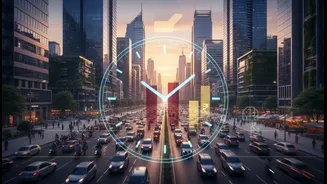
For millions of Indians, the city itself is the first hurdle to a healthy life. The environment is often working directly against our best intentions. Many Indian cities are marked by crowded streets, unsafe pedestrian infrastructure, and a significant
lack of accessible green spaces. This reality turns a simple decision, like going for a morning jog, into a calculation of navigating traffic, pollution, and safety. Long commutes, a daily reality for a huge portion of the workforce, eat into personal time, leaving little energy for exercise or cooking. The very design of our urban centers—concrete-heavy landscapes that trap heat and are dominated by vehicle traffic—discourages the kind of active lifestyle that is fundamental to well-being. It’s not just an inconvenience; it’s a systemic barrier. When the environment makes the unhealthy choice easy and the healthy one difficult, willpower becomes a finite resource that gets depleted quickly.
An Economy Built on Instant Gratification
The modern digital economy has added another layer of complexity. Food delivery apps, while convenient, have made high-calorie, processed meals available in minutes. This immediate access to indulgence often wins against the delayed gratification of a home-cooked meal, which requires planning, shopping, and preparation. Every decision to eat healthy is a battle against a powerful, algorithm-driven system designed to make ordering easy and frequent. This is happening in a country where diets are already characterised by high-glycaemic carbohydrates and low protein intake. The convenience economy thrives on removing friction, and unfortunately, it has made it frictionless to make poor dietary choices, while the friction of making healthy ones—like finding and preparing fresh produce—remains high.
The Psychological Weight of a Hustle Culture
The psychological toll of modern urban work culture cannot be overstated. A staggering 88% of Indian professionals report a poor work-life balance, with many working over 50 hours a week and feeling constantly connected through technology. This creates a state of chronic stress and decision fatigue. Our brains have a limited capacity for making thoughtful, deliberate choices each day. After a long day of high-stakes decisions at work, the mental energy required to choose a workout over the sofa, or to cook a healthy dinner instead of ordering takeaway, is often gone. This isn't a sign of personal failure; it's a predictable outcome of a culture that celebrates overwork and treats rest as laziness rather than a necessity for productivity and health. The resulting burnout leaves people feeling exhausted and unable to meet constant demands, making self-care feel like another task on an already overwhelming to-do list.
When 'Knowing' Isn't Knowing Enough
There's also a cultural tendency to view health in a reactive, rather than proactive, way. Many people treat their bodies like machines that only need fixing when they break down. Preventive health care is often neglected, with doctor's visits only occurring when symptoms become impossible to ignore. This is compounded by a psychological phenomenon where our brains are not wired to appreciate rewards that are years away. The immediate pleasure of an unhealthy snack feels more rewarding than the distant, abstract benefit of preventing heart disease in two decades. Furthermore, while information is abundant, it is often fragmented or not integrated into a practical system for daily life. A doctor might advise a patient to eat better, but without a concrete plan or support system, that advice rarely translates into action when faced with the realities of a busy life and an empty fridge.