


In a dramatic display of high-risk, high-reward innovation, SpaceX achieved a monumental first by catching its Starship upper stage with giant mechanical arms, a feat never before accomplished. Yet, the triumph was paired with a setback.
A Groundbreaking Catch from Orbit
The star of the
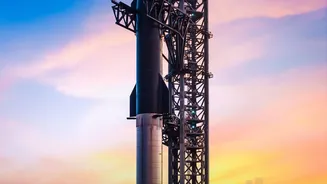
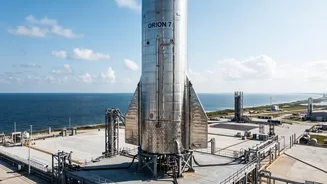
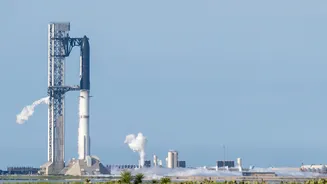
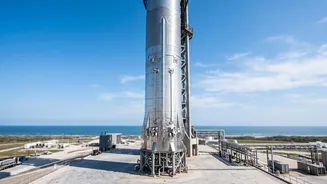
show was undoubtedly the Starship upper stage, or 'Ship'. After launching into orbit, deploying 26 Starlink satellites, and circling the Earth 14 times over 22 hours, the vehicle performed a precise, fiery reentry. It navigated back to its launch site in Texas, slowed itself with its engines, and descended perfectly into the grasp of two massive arms on the launch tower, a system nicknamed 'Mechazilla'. This was the first time in history an orbital-class upper stage has been recovered this way, a maneuver essential to SpaceX's goal of making its rockets as reusable as airplanes. Previously, SpaceX had caught three of its Super Heavy boosters, but never the upper stage, which travels much faster and must survive the intense heat of returning from orbit.
The Booster's Unsuccessful Return
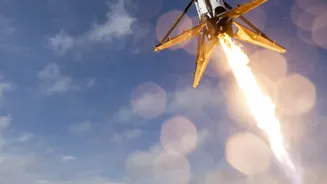
The mission's other primary objective did not go to plan. The Super Heavy booster, the first stage of the rocket, separated from the Ship as intended and began its return journey. However, its automated systems detected a problem during descent, reportedly related to low fuel levels. This triggered a safety abort, causing the booster to divert away from the launch tower and perform a controlled detonation over the Gulf of Mexico. While losing the booster is a significant setback, it was an intentional safety measure to protect ground infrastructure. This failure prevented SpaceX from achieving its ambitious goal for this flight: catching both stages on the same mission.
Why This 'Partial' Success Matters
In the world of SpaceX, not every failure is a total loss. The company's philosophy of 'rapid iterative development' means it builds, flies, and learns from both successes and failures at a pace unmatched in the aerospace industry. While the loss of the booster stings, the successful catch of the Starship upper stage is widely seen as the far more significant achievement of the two. Proving that the Ship can be brought back from orbital speeds and recovered intact is the single biggest technical hurdle to making the entire system fully and rapidly reusable. Full reusability is the key that unlocks SpaceX's business model, which aims to drastically lower the cost of accessing space by flying the same hardware repeatedly, much like a commercial airline.
The Road to the Moon and Mars
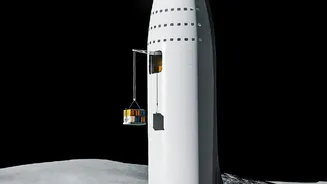
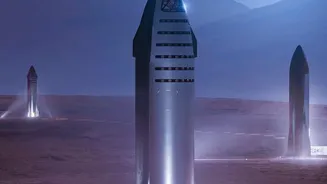
This test flight was not just an engineering demonstration; it was a critical step in a much larger plan. NASA is relying on a version of Starship to act as the lunar lander for its Artemis program, which aims to return humans to the Moon. Achieving rapid reusability is vital for the multiple launches required for a lunar mission, which will involve in-space refueling—another complex maneuver SpaceX must still master. Beyond the Moon, CEO Elon Musk's ultimate goal is to use a fleet of reusable Starships to build a self-sustaining city on Mars. Each successful test, even one with mixed results like this, brings that long-term vision a little closer to reality. The focus now shifts to inspecting the recovered Ship, analyzing what went wrong with the booster, and preparing for the next flight.