



The Historical Source of the São Francisco River
A trip to Serra da Canastra is incomplete without visiting the birthplace of one of Brazil's most important waterways, the São Francisco River. Located at an altitude of over 1,300 meters, the historical source is more of a marshy ground where water seeps
up than a single dramatic spring. A modest stone marker indicates the spot where the 'Velho Chico' begins its nearly 3,000-kilometer journey to the Atlantic Ocean. The trail to the Nascente Histórica is accessible and offers a profound sense of connection to the country's geography and history, set against the backdrop of the park's expansive high-altitude grasslands.
The Lower Casca D'Anta Waterfall
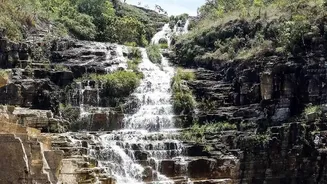
The Casca D'Anta waterfall is the park's most iconic image, and its first major drop of the São Francisco River is a sight to behold. Visiting the lower part offers a powerful, ground-level perspective of the fall's immense scale—a staggering 186-meter free fall into a wide pool. Access is via Portaria 4 and involves a relatively short and well-marked trail of about 700 meters that takes you through the forest along the riverbed. The closer you get, the more you feel the spray from the cascade, a refreshing and humbling experience. While swimming is possible, caution is advised due to the strong currents. The accessibility of the lower falls makes it a popular stop for most visitors.
The Upper Casca D'Anta Waterfall
For a completely different perspective, the upper part of Casca D'Anta provides panoramic views and a series of smaller pools and rapids perfect for a swim before the river makes its dramatic plunge. Reached via a separate entrance (typically Portaria 1), the journey to the top is an adventure in itself, often requiring a 4x4 vehicle, especially during the rainy season. From the viewpoint, you can gaze down into the valley and witness the sheer drop you saw from below. For the truly adventurous, a steep and challenging trail connects the upper and lower parts, though it requires good physical condition and can sometimes be closed.
The Curral de Pedras (Stone Corral)
Dotted across the Canastra landscape are traces of its human history, and the Curral de Pedras is one of the most fascinating. This large, well-preserved stone enclosure was built without any mortar, showcasing a traditional construction technique of the region. It once served as a 'retiro', or temporary holding pen, for cattle that were brought to the high pastures during certain seasons. Today, it stands as a silent monument to the area's ranching past. Located on the high plateau, the site also doubles as a natural lookout point, offering spectacular views and a quiet spot to contemplate the history etched into the land.
The Garagem de Pedras (Stone Garage)
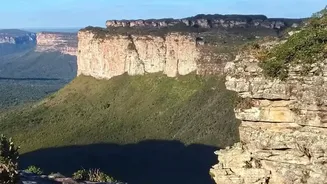
Another peculiar historical structure, the Garagem de Pedras is an old stone outpost that once served as a garage for a farm located deep within the Cândidos Valley. As the story goes, the farm's owner would drive his car to this point, leave it in the stone shelter, and fire a signal. Workers would then bring horses up the steep path for him to complete the journey home. While the farm itself is now a research base and closed to visitors, the stone garage remains accessible. It stands as a viewpoint looking out over the impressive Serra da Babilônia, a parallel mountain range, offering a stunning vista and another link to the region's resourceful past.