


Defining a Day and a Year
Before we dive into Venus’s oddities, let’s quickly recap how we measure time on a planet. A ‘year’ is the time it takes for a planet to complete one full orbit around the sun. For Earth, that’s roughly 365 days. A ‘day’ is the time it takes for a planet to complete one full rotation
on its own axis. For Earth, that's about 24 hours. On our planet, these two cycles are neatly nested: we experience 365 rotations (days) within one orbit (year). We take this for granted, but the solar system is filled with examples that defy our Earth-based logic. And no planet is a better example of this strangeness than Venus.
Venus by the Numbers
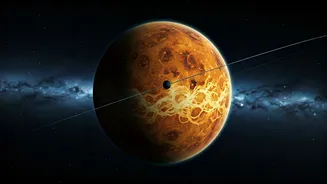
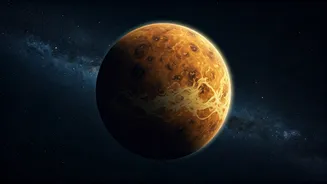
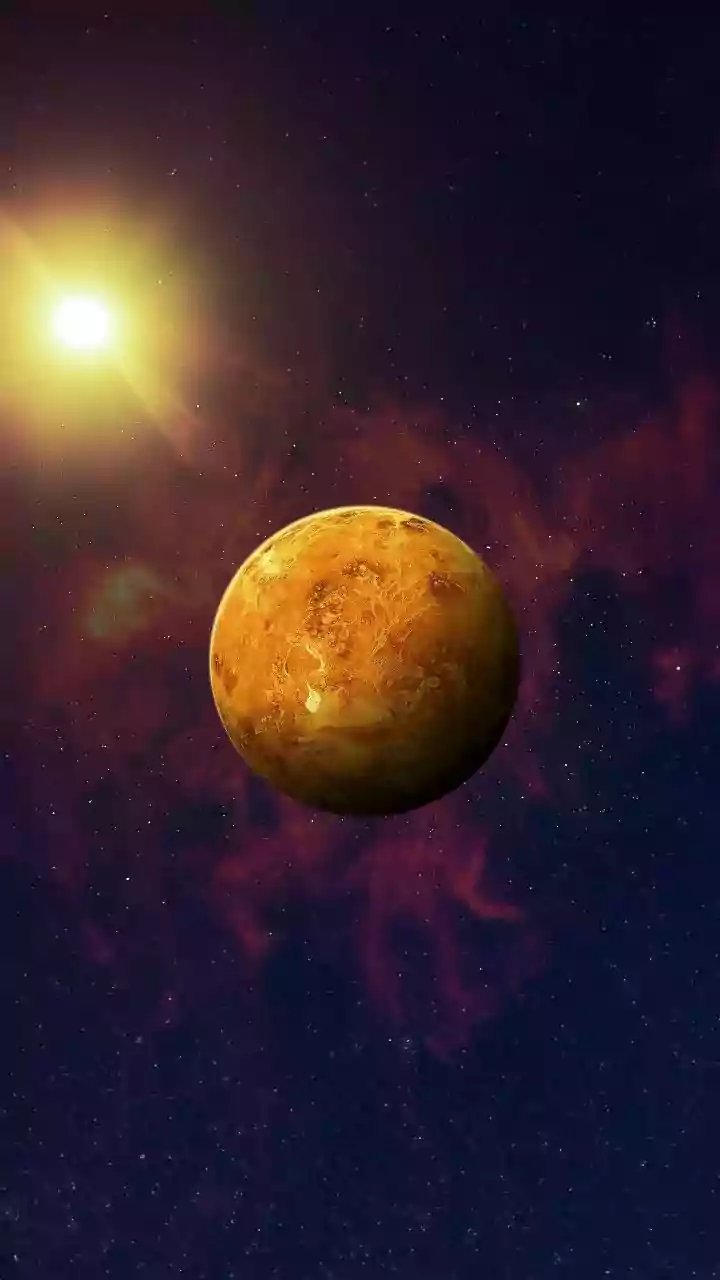
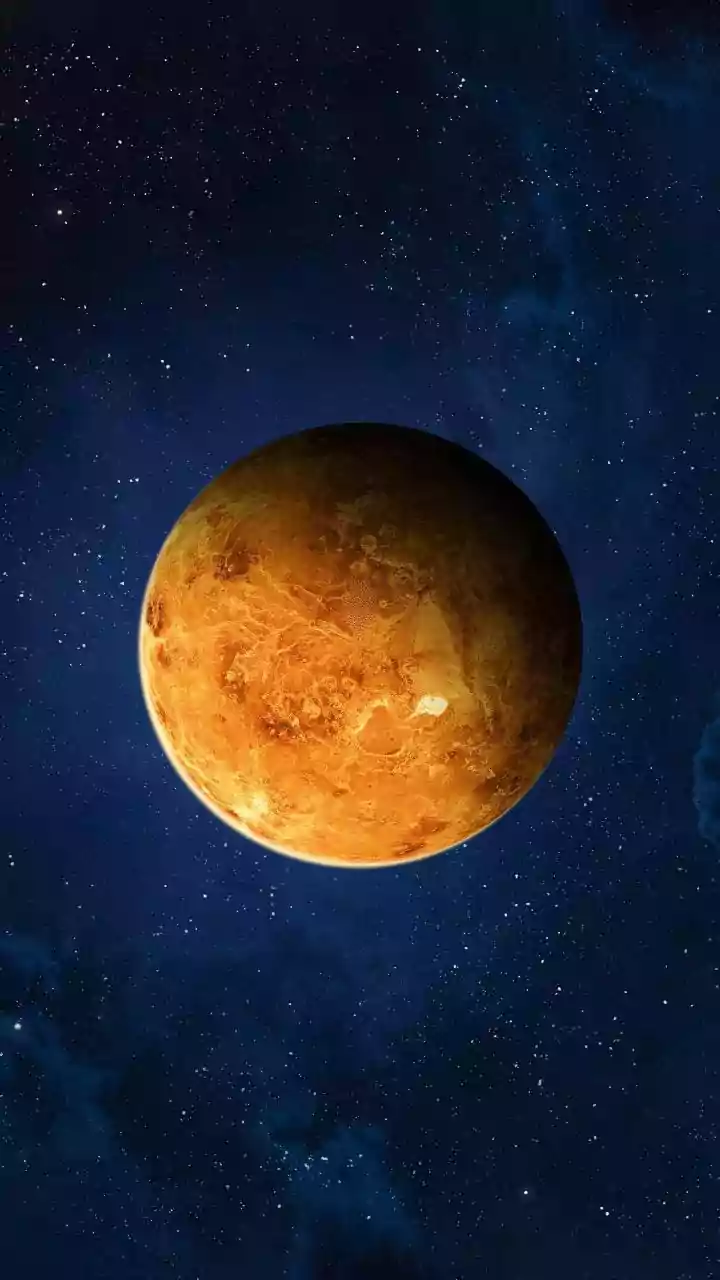
Here's where things get truly mind-bending. Venus completes one orbit around the sun in about 225 Earth days. So, a Venusian year is shorter than ours. However, it rotates on its axis incredibly slowly. A single rotation—its sidereal day—takes a staggering 243 Earth days. Let that sink in: it takes longer for Venus to spin around once than it does for it to travel all the way around the sun. This means that if you could stand on the surface of Venus, a single day would feel longer than the entire year. It’s a place where you could celebrate your first birthday before you’ve even seen your first sunset.
The Slow, Backward Spin
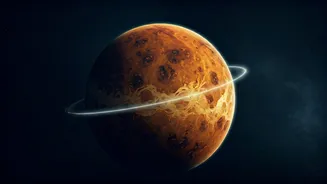
To make matters even weirder, Venus spins backwards. Nearly every planet in our solar system, including Earth, rotates counter-clockwise on its axis. This is known as prograde rotation. Venus, however, has what’s called retrograde rotation—it spins clockwise. This means the sun (if you could see it through the thick clouds) would rise in the west and set in the east. This slow, backward spin is the fundamental reason its day is so long. While the planet itself takes 243 Earth days to rotate, the time from one sunrise to the next (a solar day) is actually shorter, about 117 Earth days, because the planet is moving in its orbit while it's slowly spinning backwards. It's a complex dance of conflicting motions.
Theory 1: A Catastrophic Collision
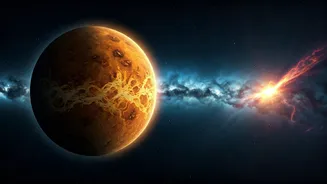
So, why is Venus so different? Scientists don't have a single definitive answer, but there are two leading theories. The first involves a dramatic, ancient catastrophe. In the early, chaotic days of the solar system, it’s possible that Venus was struck by a massive object—perhaps a planet-sized body. Such a colossal impact could have been powerful enough to not only slow Venus’s original rotation to a crawl but also knock it off its axis, effectively flipping it upside down and causing its current retrograde spin. This theory suggests Venus’s strange day is the result of a violent cosmic accident billions of years ago.
Theory 2: The Crushing Atmosphere
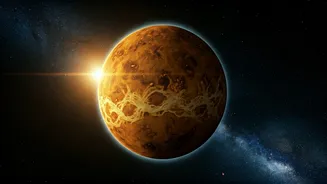
The second major theory is more gradual and focuses on Venus’s most famous feature: its incredibly thick atmosphere. Venus's atmosphere is about 90 times denser than Earth's, creating an immense surface pressure. This heavy, churning sea of gas is thought to create powerful atmospheric tides. Over billions of years, the friction between this heavy, fast-moving atmosphere and the solid planet below could have acted like a powerful brake, gradually slowing its rotation down to its current leisurely pace. Some models suggest that this atmospheric drag, combined with gravitational tidal forces from the Sun, could be strong enough to explain both the slow speed and the backward direction of its spin. Many scientists now lean towards this atmospheric model as the more likely explanation.