






Prepare Before the First Rain
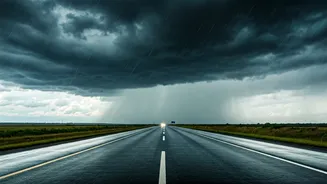
The best way to handle the monsoon is to prepare before it arrives. For car owners, this means a thorough vehicle health check. Many crucial inspections can be performed at home. Key areas to focus on are your tyres, brakes, wipers, lights, and battery.
High humidity can accelerate battery corrosion and weaken connections, so ensure terminals are clean and tight. Check fluid levels, including engine oil and coolant. A pre-monsoon service at a trusted workshop can spot potential issues before they become a problem on a waterlogged street.
Inspect Your Tyres and Brakes
Your tyres are the only point of contact with the road, making them critical for monsoon safety. Ensure they have adequate tread depth—at least 2-3mm—to effectively channel water away and prevent skidding. Worn-out tyres significantly increase the risk of hydroplaning. Also, check that your tyres are inflated to the manufacturer's recommended pressure. Wet roads increase braking distances, so your braking system must be in top condition. Listen for any squealing sounds and get your brake pads and fluid checked. After driving through water, gently tap your brakes to help dry them and restore performance.
Ensure Clear Visibility
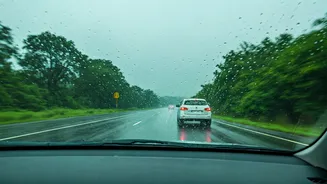
Heavy rain drastically reduces visibility. Your first line of defence is a good set of wiper blades. Inspect them for cracks or hardening and replace them if they leave streaks. Keep your windshield washer fluid topped up, preferably with a proper cleaning solution to cut through road grime. It's equally important to be seen by others. Ensure all your lights—headlights, tail lights, and indicators—are working correctly. Use low-beam headlights even during the day in heavy rain to improve your visibility to other drivers.
Adjust Your Driving Style
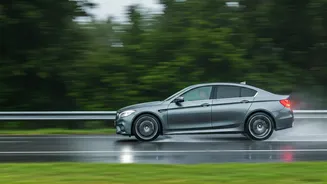
Driving on wet roads demands a change in habits. The most important rule is to slow down. Reducing your speed gives you more time to react and helps your tyres maintain grip. Braking distances can double on wet surfaces, so maintain a much larger gap between your vehicle and the one ahead. Avoid sudden acceleration, hard braking, and abrupt steering movements, as these can easily cause a loss of traction. Be especially cautious on painted surfaces like zebra crossings, which become extremely slippery when wet.
Beware the Invisible Skid: Hydroplaning
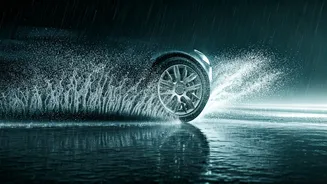
Hydroplaning (or aquaplaning) is one of the most dangerous monsoon hazards. It occurs when a layer of water builds up between your tyres and the road surface, causing a loss of traction and control. It can happen at speeds as low as 50-60 km/h. Worn tyres are a major cause, but speed is the critical factor. To avoid it, slow down, especially in standing water. If you feel the steering become light and the car start to skid, do not panic or brake hard. Ease off the accelerator and steer gently in the direction you want to go until you feel the tyres regain grip.
Navigate Waterlogged Roads Safely
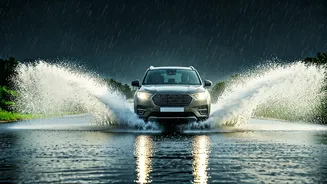
Indian city streets are notorious for waterlogging. The best advice is to avoid driving through flooded areas if you can. The water can conceal deep potholes or open manholes, and just 15 cm of moving water can cause you to lose control, while 30 cm can float most cars. If you must proceed, estimate the water's depth; it should not be higher than the middle of your wheels. Drive slowly but steadily in a low gear, keeping engine revs up to prevent water from entering the exhaust. If your engine stalls, do not attempt to restart it, as this can cause a 'hydrostatic lock' and destroy the engine.