
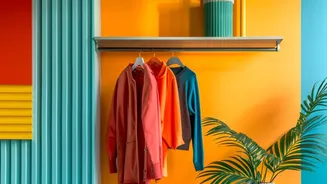
The End of the Beige Age
Let’s be honest, the all-beige interior had a good run. It was the unofficial uniform of minimalist aesthetics like Japandi and Scandinavian design, promising a serene escape from a chaotic world. On social media, these spaces looked flawless—uncluttered,
harmonious, and simple. Beige felt like a safe choice, a quiet luxury that wouldn't go out of style. It was easy to coordinate and created a clean canvas that, in theory, was supposed to feel calming. For a time, it worked. We craved simplicity, and a monochrome palette felt like a visual declutter. But after years of seeing the same oat-coloured sofas and ecru walls, what once felt serene started to feel sterile. The 'sad beige' jokes began to hit a little too close to home. The problem with perfection is that it often lacks personality. A home that looks like a catalogue can also feel like one: impersonal, untouchable, and devoid of the beautiful messiness of real life. What started as a quest for calm ended in a landscape that many found to be predictable and emotionally flat.
Craving Connection and Comfort
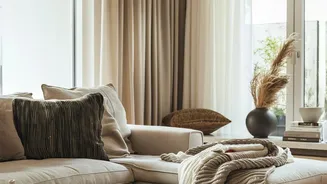
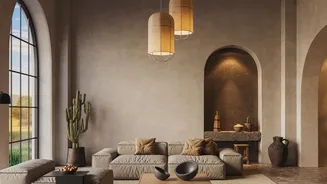
The rebellion against beige isn't just about being tired of a colour; it's about a fundamental shift in how we want our homes to feel. After spending more time than ever within our own four walls, we’re looking for more from our spaces. We don't just want them to look good; we want them to feel good. We’re moving away from the visual and toward the sensory. This is where texture comes in. Texture is the tactile quality of a surface, and it’s the design element that beige rooms often forgot. While monochrome focuses on a single colour, texture invites you to experience a room through touch and sight, adding layers of interest that colour alone cannot provide. It’s the difference between a flat, painted wall and one with the subtle variations of lime wash; the difference between a standard polyester cushion and a chunky knit wool throw. This shift is a collective desire for spaces that feel grounding, safe, and, most importantly, human.
The Power of a Textured World
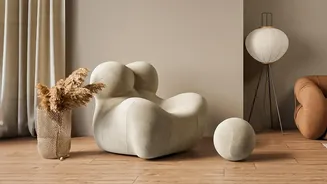
So, what exactly is the magic of texture? Psychologically, varied textures make a space more engaging and comfortable. Smooth, reflective surfaces can make a room feel larger and more modern, but an excess can feel cold. In contrast, rough and natural textures like wood, stone, and woven fabrics absorb light and sound, creating a feeling of warmth, intimacy, and cosiness. Think about the feeling of running your hand over a fluted wooden cabinet, sinking your feet into a deep-pile rug, or curling up with a soft boucle armchair. These are multi-sensory experiences that a visually flat environment simply can't offer. By mixing different textures—smooth with rough, soft with hard—you create a dynamic interplay of light and shadow. This adds visual depth and complexity, preventing a room from feeling one-dimensional, even if you stick to a relatively neutral colour palette.
How to Weave Texture Into Your Home
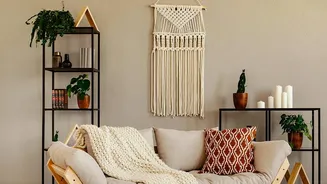
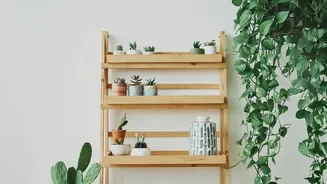
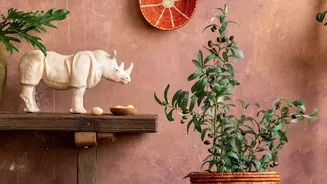
Embracing texture doesn't mean you have to undertake a complete renovation or abandon your love for neutral tones. The beauty of this trend is that it’s all about layering and can be started small. Begin with textiles. Swap out plain cushions for ones made of velvet, linen, or a chunky knit. Drape a woven throw over your sofa or the end of your bed. A jute or wool rug can instantly add warmth and define a space. Look at your surfaces. Can you introduce a rattan side table, a marble tray, or a ceramic lamp with a matte glaze? These small additions create points of interest. Plants are another fantastic way to introduce natural texture. Their organic shapes and varied foliage break up straight lines and add life to a room. The goal isn't to overwhelm the space but to create a 'tactile landscape' that is rich, inviting, and a true reflection of you.