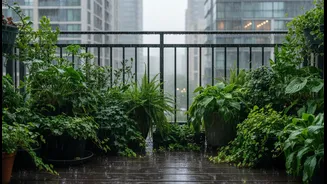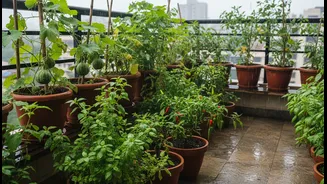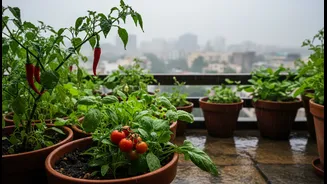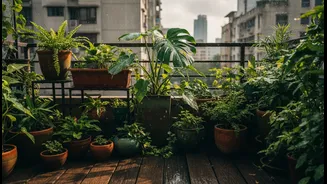





Choose Plants That Love the Rain
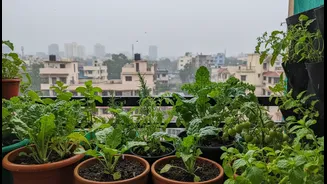
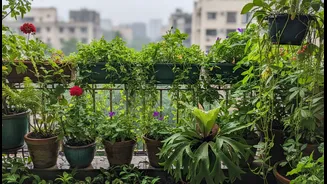
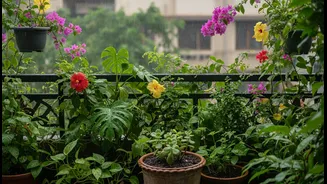
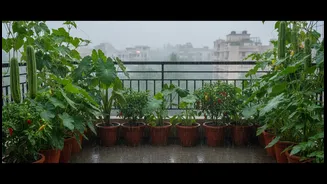
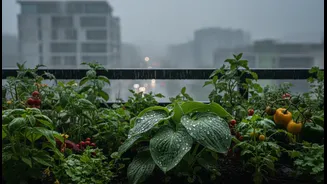
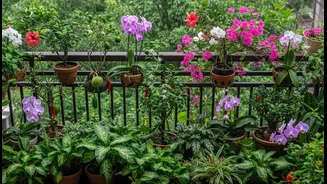
The first step is selecting plants that thrive in the high humidity and moist conditions of the Indian monsoon. Opt for varieties that are well-suited to the rainy season to ensure success. For vibrant flowers, consider hibiscus, balsam, periwinkle, and jasmine.
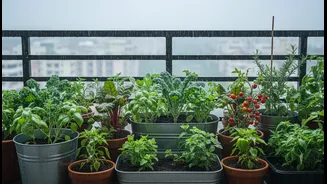
These plants often bloom more vigorously during this time. Rain lilies are particularly magical, often sprouting delicate flowers overnight after a shower. If you're looking to grow edibles, herbs like tulsi (holy basil), mint, and coriander do exceptionally well. For vegetables, consider fast-growing options like amaranth (chaulai), spinach, okra, and various gourds. Many foliage plants like money plants, ferns, and peace lilies also enjoy the monsoon conditions.
Prioritise Drainage Above All
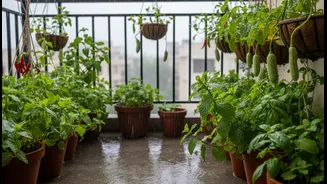
The biggest threat to balcony plants during the monsoon is waterlogging, which leads to root rot. Your top priority must be excellent drainage. Ensure every pot has at least one, if not several, drainage holes at the bottom. It is a simple but critical step. To further improve drainage, elevate your pots using bricks or pot stands. This prevents them from sitting in pools of water that can collect on the balcony floor after heavy rain. If you notice a plant's leaves turning yellow or its stem feeling mushy despite the wet weather, it is a sign of overwatering and poor drainage.
Create a Lightweight, Well-Draining Soil Mix
Garden soil straight from the ground is too heavy and dense for containers. It compacts easily and retains too much water, which is a recipe for disaster in the monsoon. Instead, use a light, porous potting mix. A good formula combines garden soil with compost and a material that improves aeration and drainage, such as cocopeat, perlite, or sand. A suggested mix could be one-third soil, one-third compost (like vermicompost), and one-third drainage material. This ensures that while the soil holds enough moisture and nutrients, any excess water from heavy rains can easily escape, protecting the roots.
Manage Watering and Sunlight
It may seem counterintuitive, but you still need to monitor your plants' water needs during the monsoon. Plants located under a deep overhang may not receive any rainwater at all. Always check the soil before watering; poke your finger an inch deep, and if it feels dry, then it's time to water. Avoid watering the leaves and aim for the base of the plant to reduce the risk of fungal diseases. Also, consider your balcony's orientation. An east-facing balcony that gets gentle morning sun is ideal for many herbs, while a south-facing one might still provide enough sun for flowering plants like hibiscus. If possible, move sensitive plants to a spot where they are sheltered from the most intense downpours.
Stay Vigilant Against Pests and Diseases
High humidity creates a breeding ground for pests and fungal diseases. Common monsoon problems include powdery mildew, leaf spot, and root rot, along with pests like mealybugs, aphids, and slugs. Prevention is the best strategy. Ensure good air circulation by not overcrowding your plants. Regularly remove any yellowing or dead leaves, as they can trap moisture and encourage fungal growth. A preventive spray of neem oil solution every 10-14 days can be a powerful organic tool to keep many pests and fungal issues at bay. If you spot any diseased leaves, prune them immediately to prevent the problem from spreading.
Renter-Friendly and Space-Saving Solutions
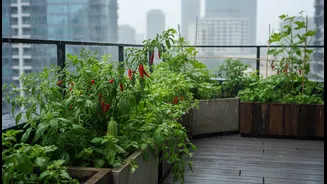
Renters can create beautiful gardens without making permanent changes. Container gardening is inherently portable. Opt for lightweight grow bags or plastic pots that are easy to move. To maximize a small space, think vertically. Use freestanding ladder shelves, tiered racks, or hang pots from railings. You can even create a vertical garden by placing a trellis inside a large pot for climbers like money plant or morning glory, avoiding any drilling into walls. These solutions allow you to build a substantial garden that can move with you to your next home, making it a truly personal and portable green space.