




A New Star in the Serpent's Foot
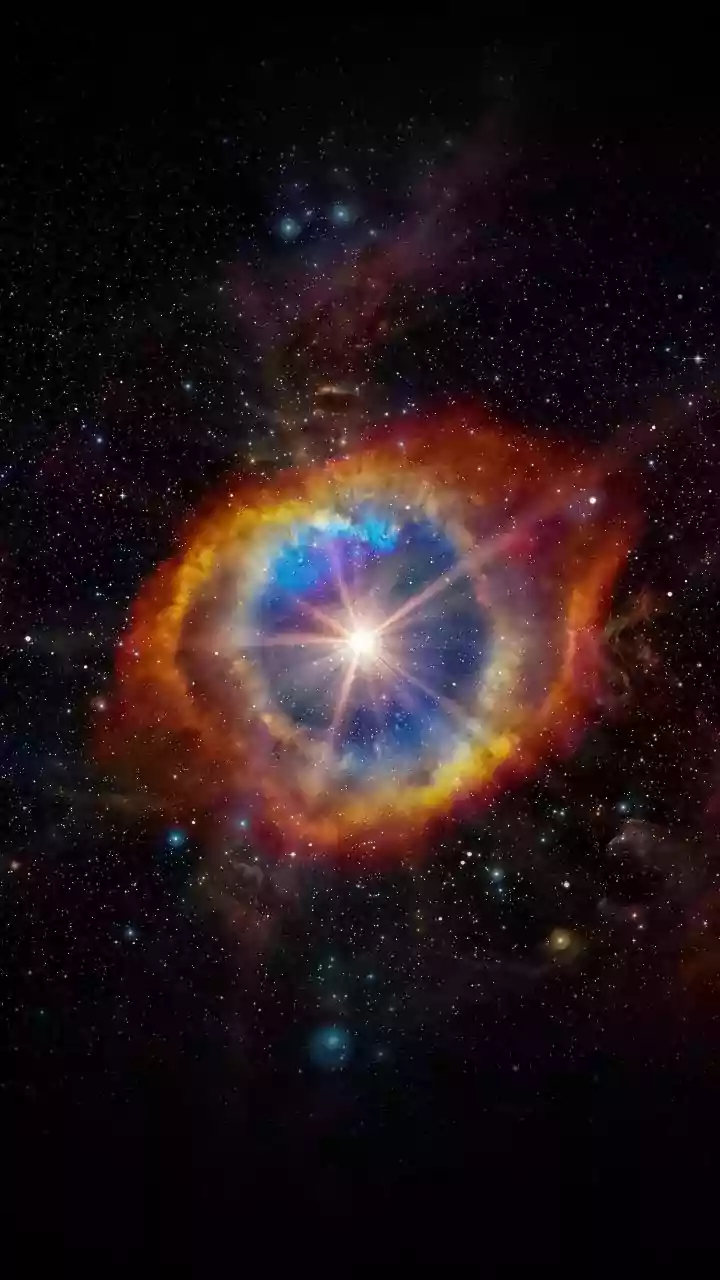
In early October 1604, observers across Europe looked up to see a startling sight: a 'new star' had appeared in the constellation Ophiuchus, the Serpent Bearer. First recorded in Italy on October 9, the star was so bright it was visible during the day
for over three weeks. At its peak, it outshone every star and even the planet Jupiter, changing colours from yellow and red to a brilliant white. The event caused a sensation, not just among astronomers but the general public. In an age when the heavens were believed to be perfect and unchanging, the sudden appearance of a new celestial body was a profound and unsettling mystery.
Kepler's Meticulous Observations
Though he wasn't the first to see it, the event is famously known as 'Kepler's Supernova' thanks to the German astronomer Johannes Kepler. Working in Prague, Kepler began his systematic study on October 17 and documented the star for over a year until it faded from view. He published his exhaustive findings in the 1606 book 'De Stella Nova in Pede Serpentarii' (On the New Star in the Foot of the Serpent Bearer). His work was a monumental piece of observational astronomy. It provided meticulous data on the star's brightness and position, which proved invaluable for future generations of scientists. More importantly, Kepler and his contemporary Galileo Galilei used the event to argue against the long-held Aristotelian belief that the stars were eternal and unchangeable.
Global Eyes on the Sky
The 1604 event wasn't just a European spectacle; it was a global one. Crucially, astronomers in Ming dynasty China and Joseon dynasty Korea also recorded the 'guest star'. In fact, Korean records from the court of King Seonjo are considered among the most detailed in existence, even beginning four days before Kepler's first observation. These records, which noted the star's position, brightness, and colour, provide an essential, independent dataset. At the time, such 'guest stars' were often viewed as important omens. Today, the convergence of these independent historical accounts from different cultures allows modern astronomers to build a more complete and accurate picture of the event.
What They Saw: A Star's Violent Death
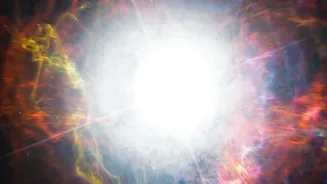
While 17th-century observers believed they were seeing the birth of a star, we now know they were witnessing the exact opposite. SN 1604 was a Type Ia supernova, the cataclysmic explosion of a white dwarf star. Located about 20,000 light-years from Earth, a star in a binary system reached a critical mass and detonated in a thermonuclear explosion, briefly blazing with the light of billions of suns. This event was a major turning point in the history of science. Coming just decades after Tycho Brahe's supernova of 1572, it provided powerful evidence that the heavens were not immutable, helping to pave the way for the astronomical revolution and a new understanding of the cosmos.
The Lasting Legacy of SN 1604
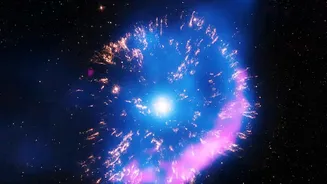
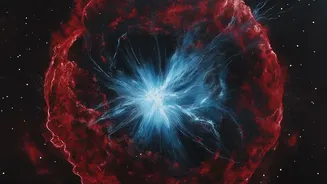
Kepler's Supernova holds a unique place in history: it is the most recent supernova to have been definitively observed with the naked eye in our own Milky Way galaxy. No other supernova has been seen in our galaxy since, though astronomers know they have occurred, hidden from view by vast clouds of interstellar dust. Today, the expanding cloud of gas and dust from the explosion, known as the Kepler Supernova Remnant, is still an object of intense study. Using powerful modern instruments like the Chandra X-ray Observatory, scientists examine the remnant to better understand the physics of supernovae, the origin of elements, and the expansion of the universe.