



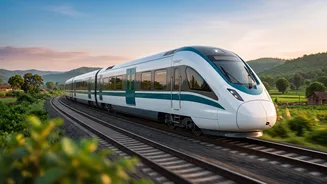
The Race to Net-Zero
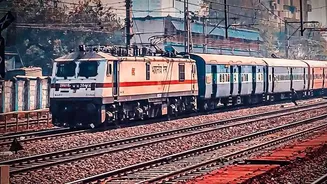
Indian Railways is on a mission to achieve net-zero carbon emissions by 2030, a monumental task for one of the world's largest rail networks. This goal is a cornerstone of India's broader climate commitments. The primary strategy has been rapid electrification
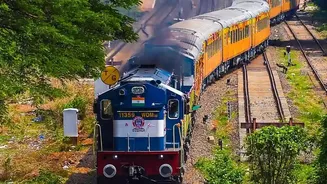
of its broad gauge network, which is nearly complete. However, for routes where electrification is difficult or not cost-effective, such as heritage and hilly lines, a different solution is needed. This is where hydrogen trains enter the picture as a clean alternative to diesel locomotives.
So, How Do These Trains Work?
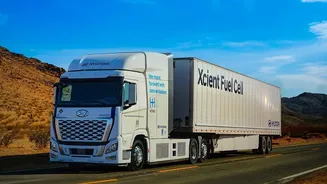
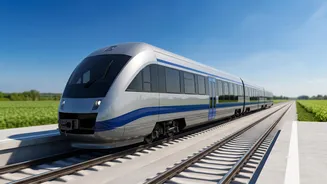
A hydrogen train is essentially an electric train that carries its own power plant. Instead of drawing electricity from overhead wires, it uses a fuel cell. Inside the fuel cell, hydrogen stored in tanks on the train combines with oxygen taken from the air. This electrochemical reaction generates electricity to power the motors, with the only by-products being heat and pure water vapour. This means zero carbon dioxide, particulate matter, or other pollutants from the train itself, making it a truly clean mode of transport.
India's 'Hydrogen for Heritage' Project
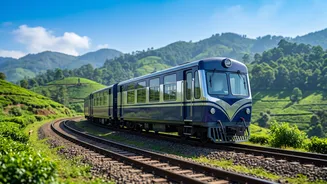
India's journey into hydrogen rail began with the 'Hydrogen for Heritage' project. The first hydrogen-powered train was launched in July 2026, running on the Jind-Sonipat route in Haryana. This initial deployment serves as a pilot to test the technology in real-world conditions. The plan is to eventually run 35 such trains, primarily on scenic and heritage routes like the Kalka-Shimla railway. These routes are often ecologically sensitive, making zero-emission transport particularly valuable. Choosing these lines first allows the Railways to showcase green technology while tackling routes where conventional electrification is challenging.
The Big Hurdles: Cost and Colour of Hydrogen
Despite the promise, significant challenges remain. The primary obstacle is cost. Hydrogen fuel cells are expensive, as is retrofitting existing diesel units. More importantly, the cost of 'green' hydrogen—produced using renewable energy like solar or wind—is currently much higher than diesel or even 'grey' hydrogen made from fossil fuels. As of 2026, green hydrogen costs in India are still two to three times higher than grey hydrogen. Building the necessary infrastructure for production, storage, and refuelling is another massive, capital-intensive undertaking.
Building a National Hydrogen Economy
The push for hydrogen trains is part of a much larger national strategy. India's National Green Hydrogen Mission aims to make the country a global hub for producing and exporting green hydrogen. The government is providing significant financial incentives to boost domestic manufacturing of electrolysers (the devices that produce green hydrogen) and to bring down production costs. The goal is to create an entire ecosystem that not only powers trains but also decarbonises other hard-to-abate sectors like steel, cement, and shipping. Success with the railways would provide a major boost to this nascent hydrogen economy.