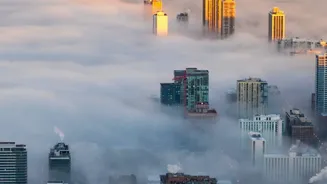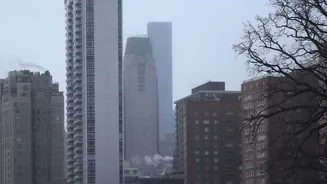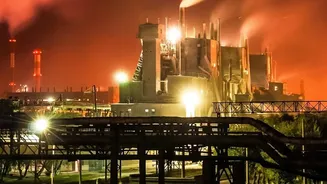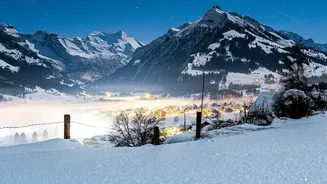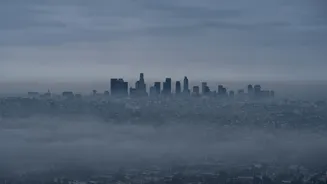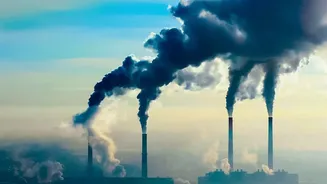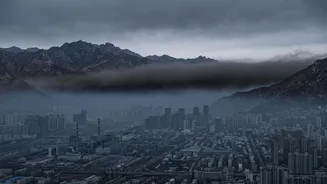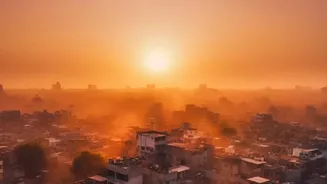



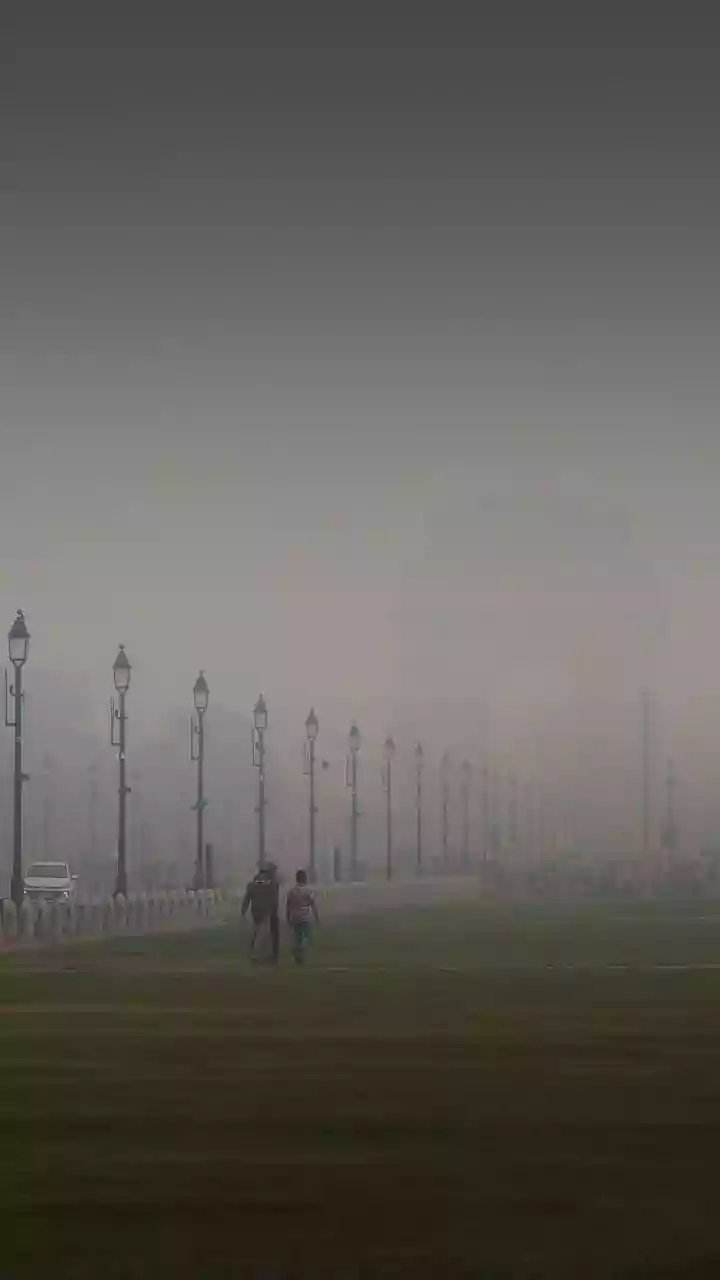
Ever notice how smog seems to hang heavier in the air on a cold, still winter morning? The culprit is often a phenomenon called thermal inversion, which acts like an invisible lid on the sky, trapping pollution right where we breathe.
The Atmosphere's Normal Routine
On a typical day,
the air closest to the ground is the warmest. This is because the sun heats the Earth's surface, which in turn warms the layer of air directly above it. Like a hot air balloon, this warm, less-dense air rises. As it ascends into the upper atmosphere, it cools and disperses, carrying pollutants from sources like traffic and industry up and away from the ground. This constant vertical mixing is the atmosphere's natural self-cleaning mechanism, helping to keep the air we breathe relatively fresh.
The Winter Flip: How Inversions Form
Thermal inversion flips this normal process on its head. It most often occurs during long, cold, and calm winter nights. Without the sun's warmth, the ground rapidly loses heat, drastically chilling the air layer nearest to the surface. This results in a layer of very cold, dense air being stuck at ground level, while a layer of warmer, lighter air sits on top of it. This 'inversion' of the usual temperature gradient is the key to creating a pollution trap. Clear skies and low winds exacerbate the situation, allowing this stratified setup to become stable and pronounced.
An Invisible Ceiling in the Sky
The layer of warm air acts like a lid or a ceiling. Because the cold, heavy air at the bottom has no upward momentum and is blocked by the lighter, warmer air above, it can't rise. This effectively stops the vertical mixing that would normally clear the air. Everything emitted into this trapped layer of cold air—from car exhaust to industrial smoke—has nowhere to go. It is stuck, accumulating closer to the ground until the weather pattern changes, for instance, when the sun becomes strong enough to reheat the ground and break the inversion.
Why Vehicle Exhaust Gets Trapped
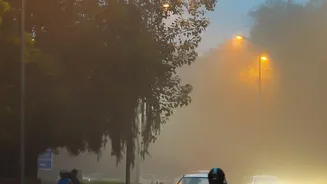
Cities are hotspots for this problem. Every car, bus, and truck releases a cocktail of pollutants, including fine particulate matter (PM2.5), nitrogen oxides, and carbon monoxide. These emissions are released directly into the trapped, cold air layer at street level. Instead of dispersing, these pollutants become increasingly concentrated. In areas with specific geography, like valleys or basins surrounded by hills, the effect is even worse, as the terrain can prevent winds from breaking up the stagnant air pool.
The Health Impact of Trapped Pollution
The consequences for public health are significant. Breathing this concentrated mix of pollutants can cause or worsen a range of health issues. The fine particulate matter, known as PM2.5, is particularly dangerous because its particles are small enough to penetrate deep into the lungs and even enter the bloodstream. Shortterm exposure can lead to respiratory irritation and acute cardiac events, while longterm exposure is linked to conditions like asthma, bronchitis, heart disease, and increased hospitalisation rates. The Great Smog of London in 1952, which was exacerbated by a strong thermal inversion, is a historic example of how deadly these conditions can become.