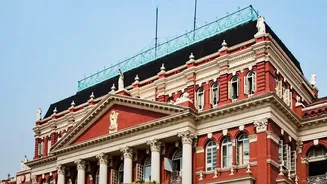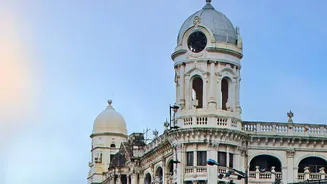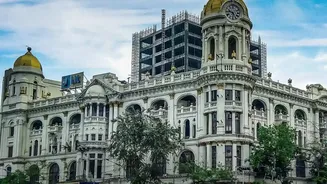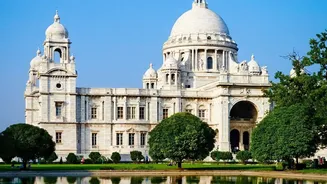





Kolkata carries many titles, but 'London of India' is one that speaks directly to its past. This nickname isn't just a saying; it’s written in the stone, marble, and grand designs of the city’s most iconic historical buildings.
The 'City of Palaces'
Before it was the 'London
of India', Kolkata was famously known as the 'City of Palaces'. This earlier nickname sets the stage, hinting at a city filled with an unusual number of grand, palatial buildings. For nearly 140 years, from 1772 until 1911, Kolkata—then Calcutta—served as the capital of British India. As the second most important city in the British Empire after London, it became a hub of immense political and economic power. The British East India Company, along with wealthy Indian zamindars and merchants, constructed magnificent mansions and public buildings, transforming the city's landscape into a showcase of architectural grandeur. This explosion of construction, blending European styles with Indian sensibilities, laid the groundwork for the city's London-esque reputation.
Victoria Memorial: The Crown Jewel
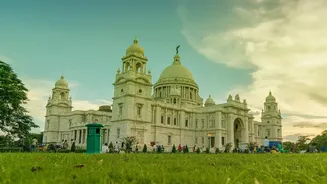
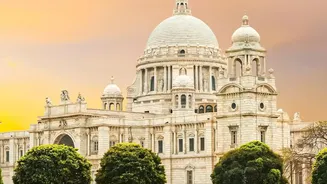
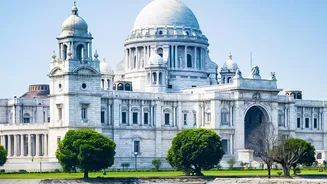
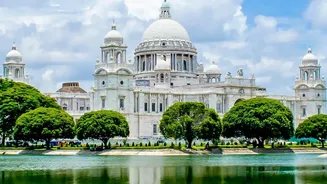
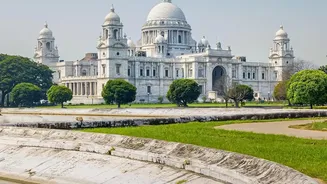
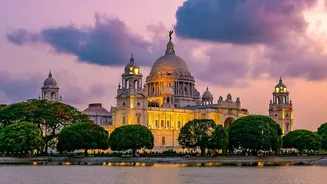
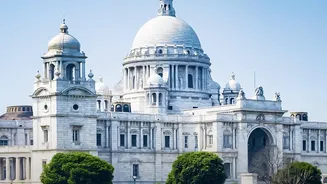
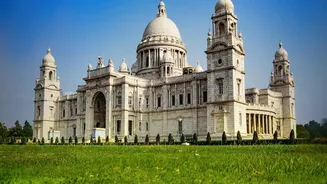
At the heart of Kolkata's colonial architectural identity is the Victoria Memorial. Conceived by Lord Curzon after Queen Victoria's death in 1901 and completed in 1921, this sprawling white marble monument is the city's most recognisable landmark. Designed by architect William Emerson, its style is a deliberate fusion known as Indo-Saracenic, which combines British architectural principles with Mughal, Venetian, and other Indian design elements. Made from the same Makrana marble as the Taj Mahal, the structure features a massive central dome, subsidiary domed 'chhatris' (pavilions), and elegant statues, all hallmarks that contribute to its majestic presence. While built as a tribute to the British empress, its blended design symbolises the unique architectural fabric of colonial India.
Gothic and Neoclassical Echoes
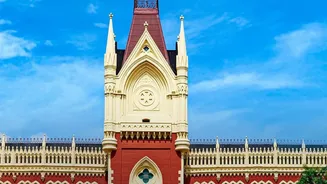
Beyond the Victoria Memorial, a walk through Kolkata's central districts reveals a striking collection of buildings that echo London's own architectural heritage. The Calcutta High Court, the oldest in India, is a prime example. Designed by Walter Granville and completed in 1872, its neo-Gothic style was directly modelled after the 13th-century Cloth Hall in Ypres, Belgium. Its towering spires and ornate arches are a classic European Gothic statement. Nearby, St. Paul's Cathedral, another Gothic Revival masterpiece, was the first Anglican cathedral in Asia. Its tower was even remodelled to reflect the 'Bell Harry' tower of England's Canterbury Cathedral, creating a direct architectural link. Other structures like the General Post Office, with its grand Victorian dome, and the Neoclassical Writers' Building further solidify the city's European aesthetic.
More Than Just Architecture
The 'London of India' nickname is rooted in more than just stone and marble. The urban planning of colonial Calcutta, with its wide roads and public squares, was heavily influenced by European design principles, giving it a feel distinct from many other Indian cities. The city's location on the Hooghly River drew comparisons to London's position on the Thames, both vital waterways for trade and development. Furthermore, Kolkata is the only city in India that still operates a tram network, a mode of transport that was once common in London and other European capitals. This combination of grand architecture, urban layout, and surviving cultural elements like the tram system creates a powerful sense of an old-world, European-influenced charm that continues to evoke comparisons to the British capital.