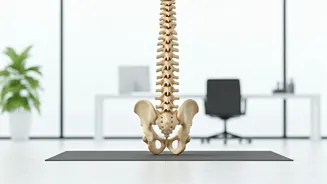









The Surprising Link Between Shoulders and Sight
It might seem odd to connect shoulder exercises with eye health, but the relationship is grounded in our anatomy. Chronic tension in the neck, shoulders, and upper back is a hallmark of modern life, largely due to poor posture while using computers and phones.
[14, 10] This tightness can have a cascading effect. Strained muscles can compress nerves and restrict blood flow to the head. [7, 14] When the intricate network of muscles and nerves in your neck and shoulders is tense, it can contribute to tension headaches, blurred vision, and a feeling of pressure behind the eyes. [6, 2] By addressing this root cause of tension, you can help improve circulation and alleviate some of the symptoms associated with digital eye strain. [6, 10]
Fluid Shoulder Movements to Release Tension
The goal of these movements isn't strenuous exercise, but gentle, fluid release. You can do these while sitting at your desk or as part of a morning routine. Start by sitting or standing with a straight but relaxed spine. 1. **Shoulder Rolls:** Inhale as you lift your shoulders up toward your ears. Exhale as you roll them back and down, squeezing your shoulder blades together gently. Repeat this 5-10 times, then reverse the direction, rolling them forward and down. This helps to release the trapezius muscles, which often hold significant tension. 2. **Neck and Shoulder Stretch:** Gently lower your right ear toward your right shoulder, feeling a light stretch along the left side of your neck. Hold for 15-20 seconds while breathing deeply. Return to the center and repeat on the left side. Never force the movement; the weight of your head is enough.
More Movements for Mobility
3. **Scapular Squeezes:** Extend your arms straight out in front of you at shoulder height. Without bending your elbows, draw your shoulder blades together as if you're trying to hold a pencil between them. Hold for a few seconds, then release. Repeat this 10 times to activate the muscles in your upper back and counteract the slumping posture that contributes to neck strain. 4. **Arm Circles:** Stand with your feet shoulder-width apart and extend your arms out to the sides. Make small, controlled circles with your arms, completing 10-15 circles in a forward direction. Then, reverse and make 10-15 circles backward. This improves mobility in the shoulder joint and encourages blood flow.
The Role of Rhythmic Breathwork
Just as muscle tension can affect your eyes, so can stress. Rhythmic, conscious breathing is a powerful tool for calming the entire nervous system. When you are stressed, your breathing becomes shallow and rapid. This can exacerbate muscle tension throughout your body, including the tiny muscles around your eyes. [1, 24] Slow, deep breathing signals to your brain that it's safe to relax, helping to reduce overall physical and mental strain. One particularly calming practice is Bhramari Pranayama, or "bee breath," which involves making a gentle humming sound on the exhale. [1] The vibrations are thought to be particularly soothing for the mind and eyes.
A Simple Breathing Technique to Try
The 4-7-8 breathing technique is a simple and effective way to induce relaxation. Find a comfortable seated position with your back straight. 1. Place the tip of your tongue against the ridge of tissue just behind your upper front teeth. 2. Exhale completely through your mouth, making a whoosh sound. 3. Close your mouth and inhale quietly through your nose to a mental count of four. 4. Hold your breath for a count of seven. 5. Exhale completely through your mouth, making a whoosh sound, to a count of eight. This completes one breath cycle. Repeat the cycle three to four times, twice a day. This practice can help lower your heart rate and promote a sense of calm. [16]
Creating a Holistic Daily Ritual
Combining these practices offers a more comprehensive approach to combating eye strain. While these exercises can support comfort and reduce fatigue, they are not a cure for underlying eye diseases or refractive errors like nearsightedness. [3, 19] Think of this as supportive care. A simple daily ritual could look like this: Take a 5-minute break from your screen. Perform 10 shoulder rolls in each direction. Follow with a gentle neck stretch on each side. Finish with four cycles of the 4-7-8 breath. This small investment of time can help release accumulated tension in your upper body, calm your nervous system, and give your hard-working eyes a much-needed break. [4]