



A World of Wind
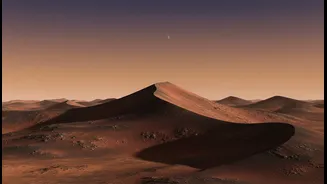
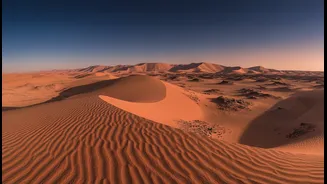
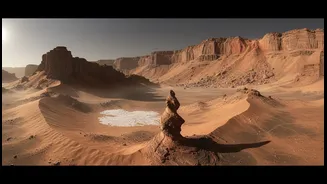
The primary artist of Martian change is the wind. Despite its atmosphere being just 1% as dense as Earth's, Mars experiences powerful winds that can reach speeds of up to 100 kilometers per hour. This is more than enough force to lift sand and dust, creating
a planetary-scale sandpaper effect. Over millions of years, this process, known as saltation, has eroded rock and carved vast dune fields. This relentless wind action is the most dominant geological force on Mars today, constantly moving material and reshaping the terrain since its water dried up billions of years ago. This activity ranges from small-scale ripples to planet-enveloping dust storms that can obscure the entire surface for weeks.
The Power of Dust Devils
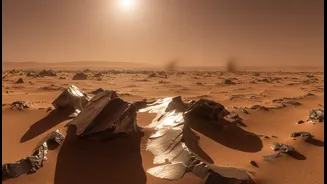
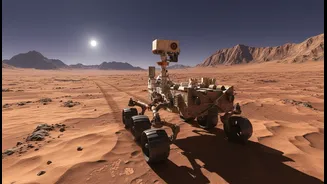
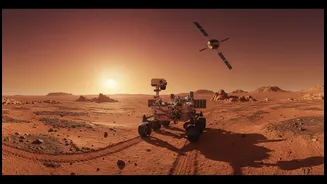
Beyond large-scale storms, Mars is famous for its dust devils. These swirling vortices are similar to their terrestrial counterparts but can grow to monstrous sizes, sometimes reaching several kilometers high. Far from being mere curiosities, they are a key part of the Martian climate system, lifting significant amounts of dust high into the atmosphere. As they travel, they sweep the ground clean of its thin coating of light-colored dust, exposing the darker rock beneath. This creates long, dark tracks visible from orbit, effectively redrawing the landscape one whirlwind at a time. In a remarkable first, the Perseverance rover even managed to record the sound of a dust devil passing directly over it, adding an auditory dimension to our understanding of these phenomena.
The Seasonal Sculptor: Ice Avalanches
Wind isn't the only force at play. The seasonal cycle on Mars brings about dramatic changes, particularly at the poles. Unlike Earth, Mars has polar caps made of both water ice and carbon dioxide ice, or "dry ice". During the Martian spring, as temperatures rise, this CO2 ice doesn't melt but sublimates—turning directly into gas. This process can destabilize massive blocks of ice resting on steep cliffs, triggering colossal avalanches. NASA's Mars Reconnaissance Orbiter has captured stunning images of these events in action, showing vast clouds of dust and ice plummeting down slopes up to 500 meters tall. These avalanches are a powerful and sudden agent of erosion, carving new features into the polar landscapes each year.
An Ever-Changing Understanding
For years, scientists have been intrigued by dark streaks called Recurring Slope Lineae (RSL) that appear on warm, steep slopes during summer months. One leading hypothesis was that these might be caused by flowing liquid brine. However, the debate continues, with other evidence suggesting they could be flows of dry, granular material like sand. The very existence of this debate, fueled by high-resolution imagery and ongoing observation, highlights how our picture of Mars is constantly being refined. Recent data from NASA's MAVEN mission also revealed unexpected magnetic plasma behavior in Mars' upper atmosphere during a solar storm, a phenomenon scientists had not anticipated on a planet without a global magnetic field. This discovery once again proves that Mars holds many surprises.
Listening to an Alien World
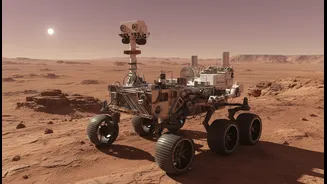
Our newest tools for studying Martian weather are microphones, like those on the Perseverance rover. For the first time, we have been able to hear the sounds of another planet, from the low rumble of the wind to the crunch of the rover's metal wheels on the rocky ground. These audio recordings are more than just a novelty; they provide valuable data. The sounds help scientists understand the turbulence of the wind and the atmosphere's density. Listening to the zaps of the rover's laser hitting rocks can reveal information about their hardness and composition. These otherworldly sounds confirm that Mars, while quiet by Earth's standards, is a world of constant, subtle activity.