




For decades, bringing a piece of Mars to Earth has been the holy grail for planetary scientists. Now, NASA has dramatically reshaped that quest, unveiling a new plan for its Mars Sample Return mission born from a stark reality check.
The Original Grand Design
The initial blueprint
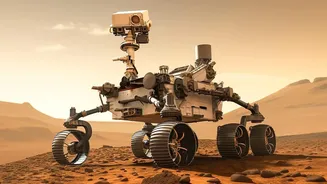
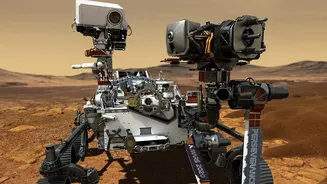
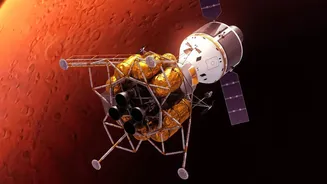
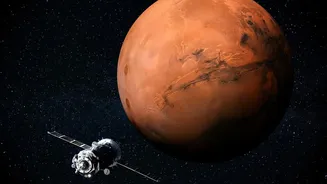
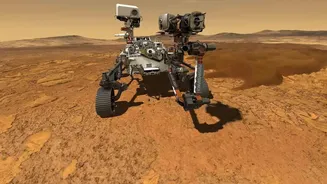
for the Mars Sample Return (MSR) mission was a marvel of ambition and complexity, straight out of science fiction. The multi-stage plan involved sending a Sample Retrieval Lander to the Martian surface to pick up the precious rock and soil cores collected by the Perseverance rover. This lander would carry a small rocket, the Mars Ascent Vehicle (MAV), which would then launch the sample container into Martian orbit. From there, an Earth Return Orbiter, a separate spacecraft built by the European Space Agency (ESA), would rendezvous with the container, capture it, and fly it back to Earth for a dramatic desert landing. It was an intricate interplanetary relay race, requiring multiple launches and flawless coordination across billions of kilometres. This architecture was designed to be robust and was celebrated as a testament to human ingenuity, representing the next giant leap in our exploration of the solar system. For years, this was the accepted path forward to answering the ultimate question: did life ever exist on Mars?
A Costly and Complex Reality
The grand design, however, ran into a wall of harsh reality. An independent review board, tasked with scrutinizing the mission in late 2025, delivered a sobering verdict. Their report concluded that the original MSR architecture had an unrealistic budget and an unachievable schedule. The technical complexity was spiralling, and the projected cost soared past initial estimates, threatening to consume a significant portion of NASA's entire planetary science budget. The board warned that the mission, as planned, had a low probability of success and risked jeopardizing other vital science missions. This forced NASA into a period of deep introspection. The agency established a Programmatic and Strategic Review and Assessment (PSRA) team to go back to the drawing board and find a viable, more sustainable path forward. The dream was not dead, but the method had to change.
NASA’s New, Pragmatic Blueprint
In response to the PSRA's findings, NASA has now unveiled a leaner, more focused approach. Gone are the multiple landers and complex surface handoffs. The new plan centers on a single, larger lander that will serve as the primary platform for the mission. This lander will carry a simplified Mars Ascent Vehicle. Crucially, the plan also pushes the timeline significantly to the right. Instead of a return in the early 2030s, NASA is now targeting a launch from Earth no earlier than 2031, with the precious Martian samples arriving back in the latter half of the 2030s. This revised schedule is designed to allow for more development time and to spread the costs over a longer period, making the budget more manageable. It is, as NASA officials have described it, a more 'realistic' and 'achievable' pathway, prioritizing the successful return of the samples over a faster, riskier timeline.
Scientists Respond with Cautious Optimism
For the scientists who have dedicated their careers to studying Mars, the announcement is a mixed bag of emotions. There is palpable relief that NASA has committed to a concrete, funded path forward, ensuring the mission will happen. The prospect of analyzing pristine Martian rock in laboratories on Earth remains the highest priority for the planetary science community. However, this relief is tempered by disappointment over the significant delays. An arrival in the late 2030s means a whole new generation of scientists may be the ones to finally analyze these historic samples. There are also lingering concerns about potential scientific compromises that may have been made to simplify the mission. Ultimately, the consensus is one of pragmatic acceptance. Scientists understand the immense technical and financial challenges and agree that a successful, albeit delayed, mission is far better than an ambitious failure.