


What Exactly Are You Seeing?
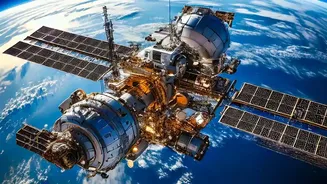
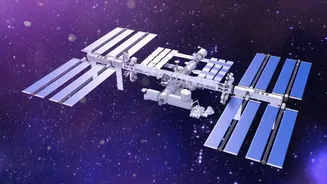
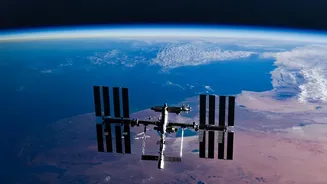
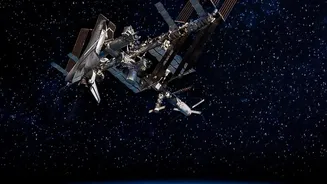
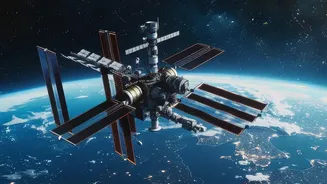
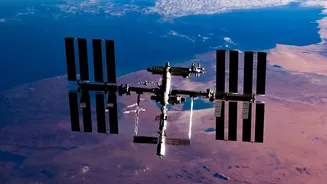
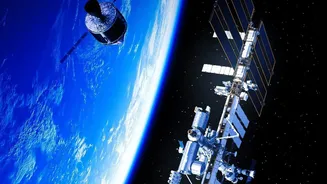
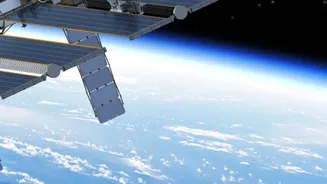
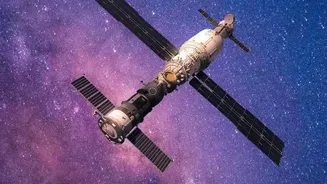
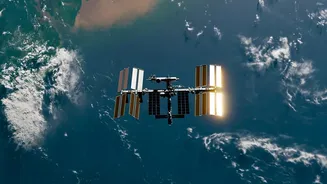
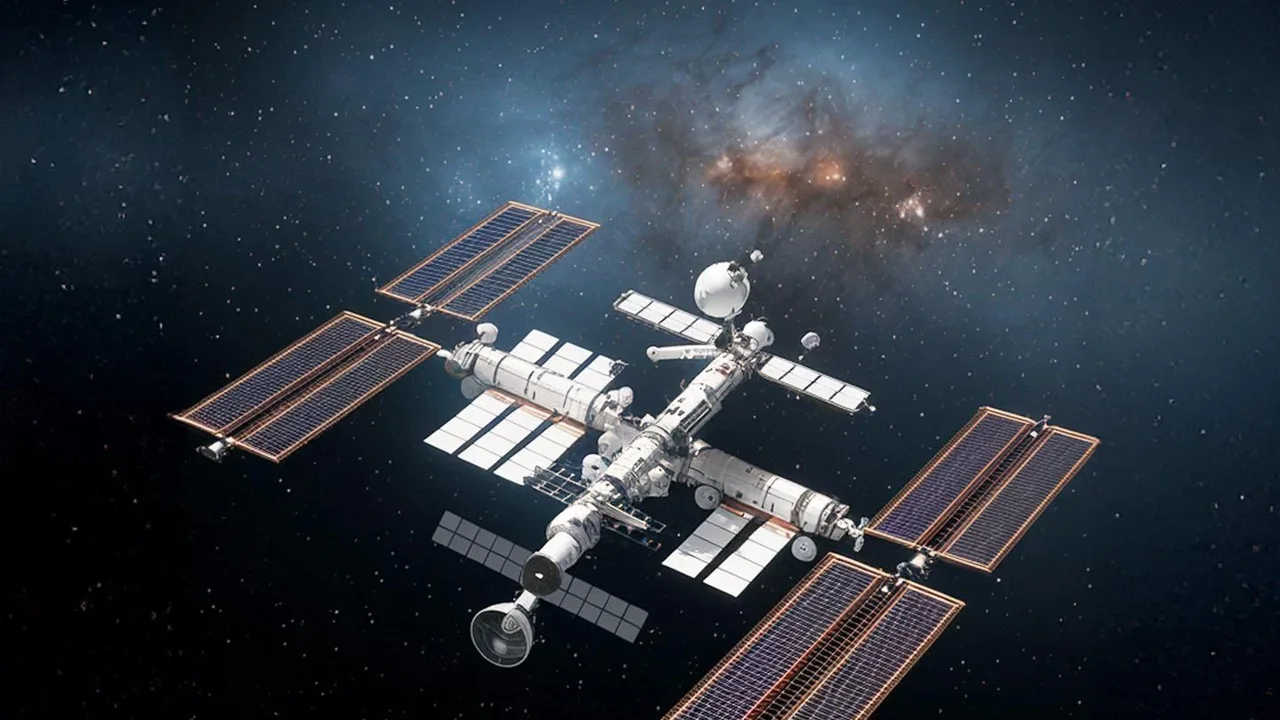
The International Space Station (ISS) is a remarkable feat of human collaboration, continuously crewed by astronauts since the year 2000. Orbiting about 400 kilometres above us, it zips around the planet every 90 minutes at a staggering 28,000 km/h. The station
doesn't have its own bright lights; what you see is sunlight reflecting off its massive solar panels and modules. This is why the best time to spot it is during the hours around dawn and dusk. At these times, the sky is dark where you are, but the ISS is high enough to still be bathed in sunlight, appearing like a brilliant, steady point of light moving purposefully across the sky. Unlike an airplane, it doesn't blink or have coloured lights.
Your Pocket Guide to the Cosmos
While the ISS passes over 90% of the Earth's population, knowing exactly when to look up is key. The headline's promise of a "nightly" viewing is optimistic; in reality, visible passes for any given location can range from several times a week to just once a month. This is where technology becomes your best friend. A handful of user-friendly mobile apps can turn your smartphone into a personal mission control, giving you precise alerts and viewing schedules for your specific location. These apps do the complex orbital calculations for you, so all you have to do is show up and look in the right direction.
Top Apps for Spotting the Station
Finding the right app is the first step. Most are free and available for both iOS and Android. Here are three of the most popular and reliable choices: 1. Spot The Station (NASA): As the official NASA app, this is a must-have. It provides a simple, clean interface with a list of upcoming sighting opportunities, including details on duration and direction. Its best feature is the augmented reality (AR) compass, which uses your phone's camera to show you the station's exact trajectory across the sky. 2. Heavens-Above: A long-time favourite among amateur astronomers, this app offers detailed predictions for the ISS and many other satellites. It features a live sky chart and a special 'night mode' with a red-light filter to help preserve your night vision while you’re outside. Its calculations are done on the device, so you only need an internet connection every few days to update the orbital data. 3. SkyView Lite: This app takes a broader approach. While it tracks the ISS, its main function is to serve as an AR guide to the entire night sky. Simply point your phone upward, and the app will identify stars, constellations, planets, and satellites passing overhead. It’s incredibly intuitive and a fantastic way to learn more about the cosmos while you wait for the station to appear.
Your First Sighting: A Step-by-Step Guide
Once you've downloaded an app, the process is straightforward. First, allow the app to use your location to generate accurate local sighting times. Then, enable notifications. Most apps will send you an alert anywhere from 15 minutes to a few hours before a visible pass is about to occur. When you get an alert, open the app to check the key details. You'll typically see: Time: The exact moment the pass will begin. Duration: How long the ISS will be visible, usually between one and six minutes. Max Height: This is the highest point the station will reach, measured in degrees from the horizon (0° is the horizon, 90° is directly overhead). Passes higher than 40° are typically the best and easiest to see. Appears/Disappears: The compass direction where the station will first become visible and where it will vanish, often as it enters Earth's shadow.
Tips for the Perfect Viewing
To make the most of your sighting, a little preparation goes a long way. Find a spot with a clear view of the sky, away from tall buildings or trees. While the ISS is often bright enough to be seen from light-polluted cities, heading to a darker area will always enhance the experience. Arrive a few minutes early to let your eyes adjust to the dark. You don't need binoculars or a telescope; the station is easily visible to the naked eye. Use your app's compass or AR feature to pinpoint where on the horizon to start looking. Then, just watch as a steady, brilliant light emerges and sails across the heavens. It's a powerful reminder of the human ingenuity and exploration happening just above our heads, connecting you directly to the astronauts living and working in space.