






The Most Critical Phase of Re-entry
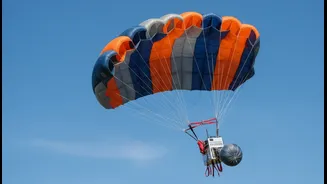
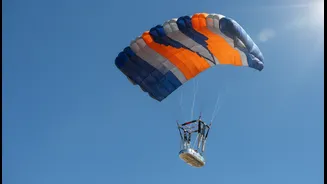
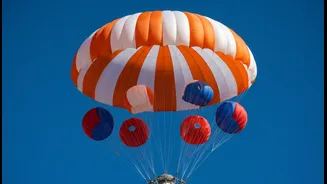
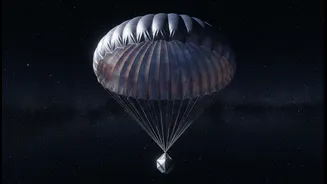
For any human spaceflight mission, the return journey is fraught with peril. The Gaganyaan crew module will re-enter Earth's atmosphere at blistering speeds, relying on a complex sequence of parachutes to slow its descent from hypersonic velocity to a gentle
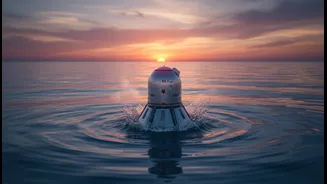
splashdown in the ocean. The capsule's deceleration system features ten parachutes of four different types, working in a perfectly timed sequence to ensure the vehicle is stable and slow enough for a safe landing in the Arabian Sea. This final stage, from atmospheric re-entry to the moment the crew is safely back on land, is where the mission's success is ultimately defined. There is no room for error.
A Partnership Forged for Precision
Recognising the high stakes, the Indian Space Research Organisation (ISRO) has teamed up with the Indian Navy, the designated lead agency for recovering the crew module. This collaboration marries ISRO's advanced space technology with the Navy's unparalleled expertise in maritime operations. The partnership involves extensive joint trials to rehearse every conceivable aspect of the recovery. These exercises are not just about theory; they are hands-on drills conducted in realistic conditions to build muscle memory and refine every step of the complex procedure, ensuring the astronauts are retrieved from the sea with minimum delay.
Simulating the Splashdown
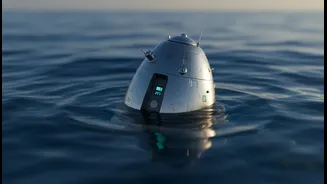
The joint exercises are conducted in multiple phases, starting in the controlled environment of the Navy's Water Survival Test Facility in Kochi and moving to open sea trials off the coast of Visakhapatnam. For these drills, ISRO provides a Crew Module Recovery Model (CMRM), a mock-up that perfectly simulates the weight, size, and shape of the actual capsule. Navy divers, ships, and helicopters then practice the entire recovery sequence. This includes approaching the floating module, attaching buoys and tow lines, and carefully hoisting it onto the deck of a naval ship. Some trials have even validated using a ship's well deck—a floodable internal dock—to bring the module inside the ship before the crew egresses, offering a more stable and comfortable exit for the returning astronauts.
Refining Procedures for Mission Day
Every trial provides invaluable data. The feedback gathered from the naval teams helps ISRO and the Navy jointly fine-tune the Standard Operating Procedures (SOPs) for both nominal and off-nominal landing scenarios. These SOPs are detailed checklists and protocols that will govern the actions of every person involved on mission day, from the divers in the water to the commanders on the ship's bridge. This meticulous preparation ensures that when Indian astronauts splash down after their historic journey, the recovery operation unfolds like a well-rehearsed symphony, testament to the seamless collaboration between India's premier space and naval forces.
The Road to India's First Crewed Flight
These recovery exercises are a critical part of the larger Gaganyaan programme, which aims to launch three Indian astronauts into a 400 km orbit for a three-day mission. Before the first crewed flight, now targeted for 2027, ISRO will conduct a series of uncrewed test missions to validate all systems, including the launch vehicle, life support, and the crucial re-entry and recovery phases. The successful completion of parachute tests and sea recovery trials brings India one significant step closer to becoming only the fourth nation in the world to possess independent human spaceflight capability.