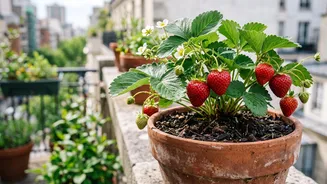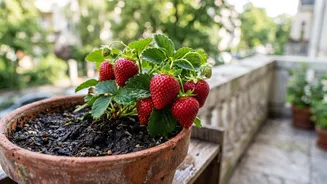





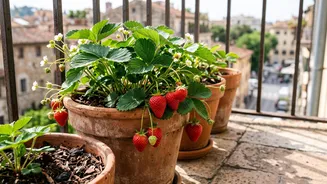


Sunlight: The Golden Rule for Sweet Berries
The most critical element for growing plump, sweet strawberries is sunlight. These plants are sun-worshippers and need at least six to eight hours of direct sunlight every day to produce fruit. An east or south-facing balcony is often ideal. Without enough
sun, your plants may produce lush leaves but very few, small, or sour berries. The sugars that make strawberries delicious are a direct product of photosynthesis, so ample light equals a sweet harvest. If your balcony is partially shaded, try to ensure the plants get plenty of morning sun. You can even move the pots during the day to 'chase the sun'—a key advantage of container gardening.
Choosing the Right Strawberry Variety
Not all strawberries are created equal, especially for pots in Indian climates. Varieties like Chandler, Sweet Charlie, Camarosa, and Winter Dawn have shown good results in Indian conditions. Many home gardeners prefer 'everbearing' or 'day-neutral' types, as they produce fruit over a longer season instead of all at once. When you buy saplings, ask your local nursery which varieties perform best in your specific region. Starting with healthy, disease-free runners or plants from a reliable source is far easier and faster than attempting to grow from seed.
The Perfect Pot and Soil Mix
Strawberries have shallow roots, so a wide pot is better than a very deep one. Choose a container that is at least 8 to 12 inches deep and 10 to 12 inches wide. This provides enough space for a few plants without overcrowding. Terracotta pots are a great choice as they breathe and keep roots cooler, but any container with excellent drainage holes will work. The right soil is just as important. Strawberries detest 'wet feet', which can cause root rot. Avoid using heavy garden soil. Instead, create a light, airy potting mix. A proven formula for Indian balconies is an equal-parts blend of garden soil, cocopeat, and rich compost or vermicompost. This mix holds moisture without becoming waterlogged, providing the perfect environment for healthy roots.
Planting Your Strawberries Correctly
The best time to plant strawberries in most of India is during the cooler months, typically from September to November. Proper planting depth is crucial. The 'crown' of the plant—the part where the leaves emerge from the roots—must sit exactly at the soil level. If you plant it too deep, the crown will rot; if it's too high, the roots will dry out. After filling your pot with the soil mix, make a small hole, spread the roots of the sapling, and place it so the crown is level with the soil surface. Firm the soil gently around it and water thoroughly to settle everything in.
Watering and Feeding Essentials
Potted plants dry out much faster than those in the ground. Check your strawberries daily, especially in warm or windy weather. Water them whenever the top inch of soil feels dry. It’s best to water at the base of the plant in the morning, avoiding the leaves and fruit to prevent fungal diseases. Strawberries are also heavy feeders. Once the plants start flowering, feed them every two to three weeks with a balanced liquid fertiliser or organic compost. A fertiliser slightly higher in potassium can help encourage better fruit production. Avoid fertilisers with too much nitrogen, as this will give you lots of leaves but few berries.
Protecting Your Harvest from Pests
You won't be the only one excited about your homegrown berries. Birds are a common problem; covering your plants with a fine mesh net as the fruits ripen is a simple and effective solution. Other common pests include aphids and spider mites, which feed on leaves. Slugs and snails may also appear, especially if the pot stays too damp. Watering correctly and ensuring good air circulation around the plant can help prevent many issues. A layer of straw or dried leaves (mulch) on the soil can keep the fruit clean and off the damp soil, reducing the risk of rot.