


Why Your Desk Is the Culprit
Our bodies are designed for movement. When you sit for extended periods, your hip flexor muscles remain in a shortened, compressed position, leading to tightness. This tightness can pull on your pelvis, contributing to lower back pain and stiffness. Meanwhile,
the gentle curves of your spine can flatten or exaggerate as you slouch, putting strain on your vertebrae and the supporting muscles. Over time, this can reduce your range of motion and lead to chronic discomfort. The goal of a daily stretching routine is to counteract these effects by elongating tight muscles and encouraging better spinal alignment.
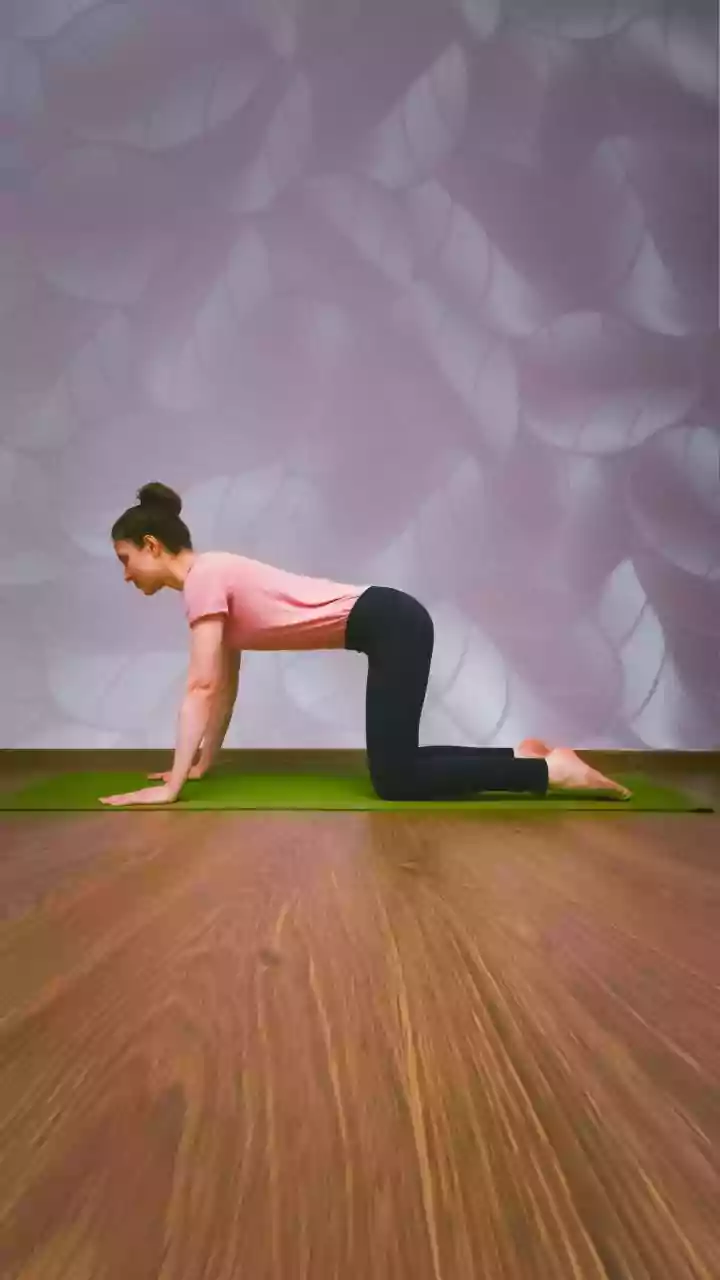
Cat-Cow for Spinal Warm-Up
Start on your hands and knees, with your wrists directly under your shoulders and your knees under your hips. Inhale as you drop your belly, lift your chest, and look forward, creating a gentle arch in your back (Cow Pose). Exhale as you round your spine toward the ceiling, tucking your chin to your chest and pressing the floor away (Cat Pose). This dynamic movement gently warms up the spine, improves circulation between the vertebrae, and relieves tension in the back and shoulders. Flow between the two poses for 60 seconds, syncing the movement with your breath.
Kneeling Hip Flexor Stretch
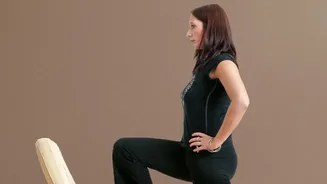
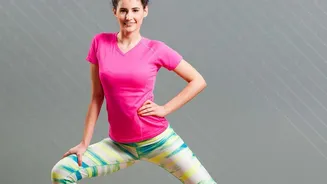
To directly target those tight hip flexors, come into a low lunge position. Kneel on your right knee (use a cushion if needed) and place your left foot on the floor in front of you with your knee bent at a 90-degree angle. Keeping your back straight and core engaged, gently shift your hips forward until you feel a stretch in the front of your right hip. Avoid arching your lower back. For a deeper stretch, you can reach your right arm overhead. Hold for 30-45 seconds, breathing deeply, before switching to the other side.
Seated Pigeon Pose for Glute Release
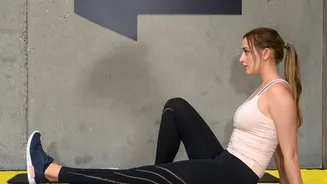
Tight glutes can also contribute to hip and back pain. The pigeon pose is excellent for this, and you can do a modified version right in your chair. While sitting upright, cross your right ankle over your left knee, creating a figure-four shape. Keep your back straight and gently hinge forward at your hips until you feel a stretch in your right glute and hip. To increase the intensity, you can apply gentle pressure to your right knee. Hold for 30 seconds, then repeat on the other side. This helps release the piriformis, a deep gluteal muscle that can irritate the sciatic nerve when tight.
Supine Spinal Twist for Decompression
Lie on your back with your knees bent and feet flat on the floor. Extend your arms out to the sides in a 'T' shape. Gently let both knees fall to your left side while keeping your shoulders pressed to the floor. Turn your head to the right, if comfortable. This position provides a gentle, restorative twist for your lower and middle back, helping to decompress the spine and relieve tension built up from sitting. Hold for 45 seconds to a minute, focusing on your breath, before slowly returning to the center and repeating on the other side.
Chest and Shoulder Opener
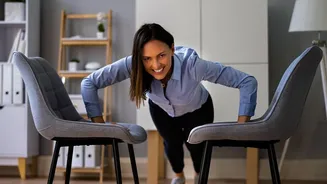
To counteract the forward hunch of desk work, finish with a stretch that opens the chest. Stand in a doorway and place your forearms on the frame, with your elbows just below shoulder height. Step forward with one foot until you feel a stretch across your chest and the front of your shoulders. This helps lengthen the pectoral muscles, which become shortened from slouching, and promotes better posture. Hold for 30 seconds, ensuring you are breathing comfortably throughout the stretch.