
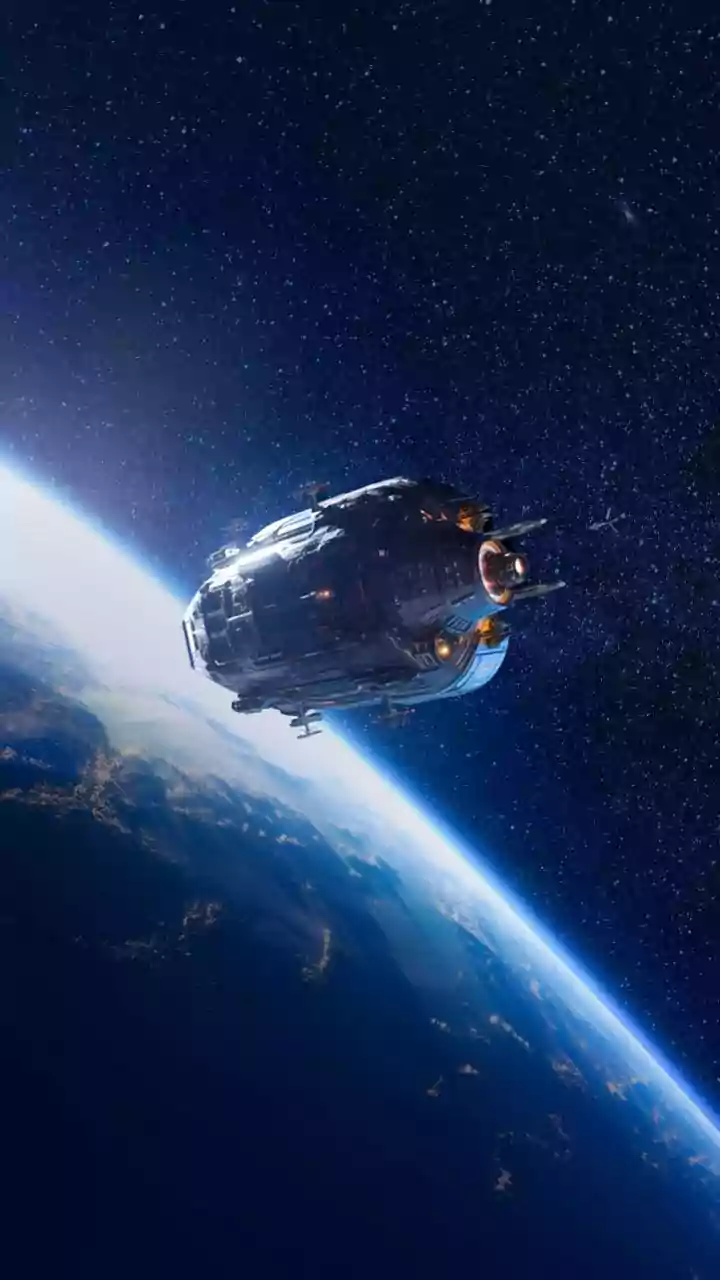
For decades, we've understood the universe to be about 13.8 billion years old. Now, new research from the University of Ottawa is challenging that fundamental number, suggesting our cosmos might actually be nearly twice as old.
The Universe We Thought We Knew
The widely accepted age
of the universe is a cornerstone of modern cosmology, known as the Lambda-CDM model. This model suggests the universe began with the Big Bang and has been expanding and cooling ever since. Scientists arrive at the 13.8-billion-year figure by measuring the oldest light in the cosmos, the cosmic microwave background (CMB), and calculating the rate of cosmic expansion. This age has been remarkably consistent across various measurement methods, giving scientists confidence in the standard model. It provides a timeline for everything: how long it took for the first stars and galaxies to form and for the universe to evolve into the complex structure we see today.
A Wrinkle in Cosmic Time
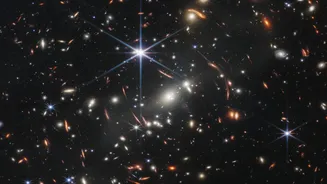
However, recent observations from the James Webb Space Telescope (JWST) have presented a significant puzzle. The powerful telescope has spotted galaxies in the early universe that are surprisingly mature and massive. According to the standard 13.8-billion-year timeline, these galaxies appear to have grown too big, too quickly. This 'impossible early galaxy problem' has led some scientists to question whether there's a flaw in our understanding. It’s like finding a towering oak tree where you only expected a sapling to have had time to grow.
A Radical New Timeline
Enter Rajendra Gupta, a physics professor at the University of Ottawa. He proposes a new model that estimates the universe's age at a staggering 26.7 billion years. Published in the Monthly Notices of the Royal Astronomical Society, Gupta's work offers a potential solution to the early galaxy problem by simply giving them more time to form. In his model, a galaxy observed by the JWST that appears to be just 300 million years old would, in this revised timeline, actually be several billion years old, easily explaining its advanced state of development.
An Old Idea Gets a New Look
Gupta's model, called CCC+TL, combines two different ideas. The first is 'Covarying Coupling Constants' (CCC), which suggests that the fundamental forces of nature might not be constant and could weaken over time. The second is a modified version of the 'Tired Light' (TL) theory, first proposed by Fritz Zwicky in 1929. The original tired light theory, which suggests light loses energy as it travels vast distances, has been largely discredited because it conflicts with several observations. However, Gupta argues that by combining a tired light effect with an expanding universe and evolving physical constants, it's possible to create a model that aligns with observations without needing dark matter or dark energy — two mysterious components that make up 95% of the standard model but have never been directly detected.
Awaiting a Scientific Verdict
It is crucial to understand that Gupta's theory is a new proposal and stands outside of mainstream cosmology. The Lambda-CDM model, with its 13.8-billion-year age, remains the overwhelming consensus, supported by decades of evidence from multiple sources. Many alternative theories, including tired light, have been proposed over the years but have failed to hold up to the rigorous scrutiny that the standard model has endured. Gupta's hybrid model will need to be tested against many more observations, such as the fine details of the cosmic microwave background, before it can be considered a serious challenger. The scientific community will now begin the long process of examining, testing, and debating these findings.