
From Textbooks to Touchdown
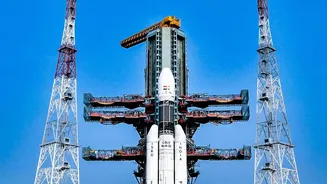
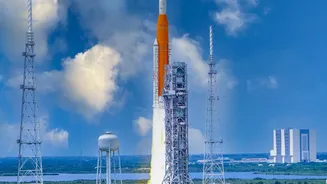
Reading about the physics of a rocket launch is one thing; standing in the shadow of a launch vehicle is another. ISRO actively facilitates educational visits for school and college groups to several of its centres, including the Vikram Sarabhai Space
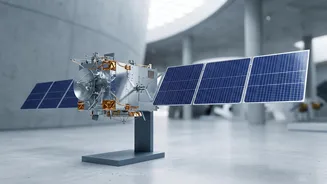
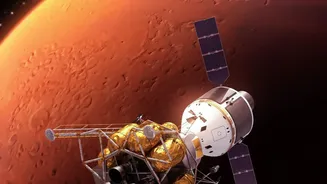
Centre (VSSC) in Thiruvananthapuram and the Satish Dhawan Space Centre (SDSC) in Sriharikota. These visits move science from the theoretical to the tangible. Students can see full-scale models of celebrated satellites like Chandrayaan and Mars Orbiter, walk through exhibition halls detailing India's space journey, and in some cases, view the massive Vehicle Assembly Building where rockets are prepared for their journey to the stars. This direct experience demystifies the complex science and engineering behind space exploration, making it feel achievable and real. It bridges the gap between classroom equations and the awe-inspiring reality of space technology.
Meeting the Minds Behind the Missions
A crucial element of these outreach efforts is the interaction with the people who make the missions happen. ISRO organises programmes that allow students to engage with its scientists and engineers. This personal connection is often the most powerful catalyst for inspiration. Hearing directly from experts about their work, challenges, and the excitement of discovery provides students with relatable role models. It transforms the abstract title of 'scientist' into a real person with a real job. These interactions prove that a career at ISRO is not an impossible feat reserved for a genius few, but a goal that can be achieved through dedication and a passion for science, technology, engineering, and mathematics (STEM).
A Universe of Career Opportunities
One of the most important outcomes of these visits is broadening students' understanding of what a 'space career' actually entails. The popular image is often limited to astronauts and rocket scientists, but the reality is far more diverse. The Indian space economy, projected to grow significantly, needs a wide array of specialists. This includes aerospace, mechanical, and electronics engineers, but also materials scientists who develop heat-resistant alloys, and software engineers who write the code for satellite control systems. Furthermore, there is a growing demand for data scientists who analyse satellite imagery for applications in agriculture and disaster management, and even specialists in space law and policy. By showcasing this variety, ISRO helps students from diverse academic backgrounds see a place for themselves in India's space journey.
Structured Pathways to the Stars
Beyond general visits, ISRO has created structured programmes to formally nurture young talent. The most prominent of these is the 'Young Scientist Programme', or YUVIKA (YUva VIgyani KAryakram). This two-week residential programme immerses selected Class 9 students in the world of space science. Participants attend lectures, engage in hands-on activities like assembling DIY satellite kits, visit labs, and interact with senior scientists. The selection process is merit-based, considering academic performance, but also includes weightage for participation in science fairs, Olympiads, and for students from rural areas, ensuring a wide talent pool is reached. Initiatives like these, along with online courses and student satellite programmes, provide a clear, guided pathway for students to transition from initial interest to dedicated pursuit.