
A Journey Beginning in Persia
The story of the kofta begins in ancient Persia. The name itself is a clue to its origins, derived from the Persian word 'kufteh', which means 'to pound' or 'to grind'. This points to the essential preparation method: taking meat and pounding it into
a fine mince. The earliest recipes, found in medieval Arab cookbooks, describe meatballs made from ground lamb. This was a practical way to tenderise tougher cuts of meat and infuse them with flavour. These early koftas were not just rustic fare; they could be luxurious dishes fit for royalty, sometimes glazed with saffron and egg yolk. From these Persian origins, the concept of the pounded meatball began to travel, carried along bustling trade routes and with the movement of armies and empires.
The Mughal Arrival in India
The kofta’s grand entrance into the Indian subcontinent happened with the arrival of the Mughals in the 16th century. The Mughals, with their Central Asian and Persian heritage, brought their sophisticated culinary traditions to India. Their royal kitchens became legendary centres of gastronomic innovation, where Persian techniques were masterfully blended with the abundance of Indian spices and ingredients. Here, the kofta was transformed. Cooks in the imperial courts elevated the dish, creating elaborate versions that became hallmarks of Mughlai cuisine. It was during this period that iconic dishes like the Nargisi kofta—a hard-boiled egg encased in minced meat—were created, a favourite of the nobility. This dish was named after the 'nargis' or narcissus flower, which it resembles when sliced open.
An Indian Reinvention
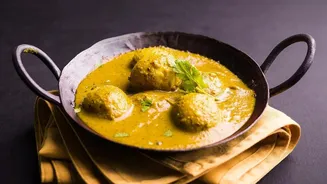
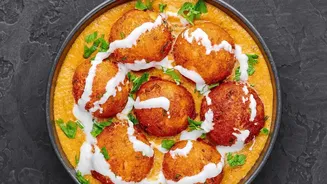
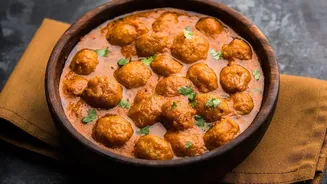
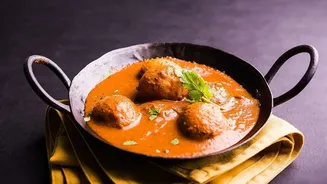
Perhaps the most significant chapter in the kofta’s history was its adaptation within India. To cater to the large vegetarian population and local tastes, Indian cooks creatively substituted meat with vegetables and dairy. This innovation gave birth to some of the most beloved kofta varieties eaten today. The Malai Kofta, with its soft dumplings of paneer and potato in a creamy, tomato-based gravy, became a staple in North Indian cuisine and a celebratory dish. But the creativity didn't stop there. Across the country, you can find koftas made from a huge variety of ingredients, including bottle gourd (lauki), raw banana, lotus stem, and cabbage. This ability to adapt and reinvent the dish using local produce showcases India's unique culinary genius, taking a foreign concept and making it entirely its own.
A Truly Global Dish
While the kofta found a special home in India, its journey didn't end there. The influence of the Ottoman Empire helped spread the dish far and wide, from the Balkans to North Africa. Each region put its own distinct spin on the core concept. In Turkey, you'll find 'köfte', which are often grilled as patties or skewers and seasoned with cumin and paprika. In the Balkans, the dish evolved into 'ćevapi', a type of grilled, skinless sausage. In Greece, 'keftedes' are popular, sometimes even made with pork, and served with yogurt-based sauces. From the Middle East to Central and South Asia, the kofta family is vast and varied, with hundreds of versions reflecting local palates. It exists as meatballs, patties, and skewers, served grilled, fried, or simmered in fragrant stews.