





An Overlooked Piece of the Climate Puzzle
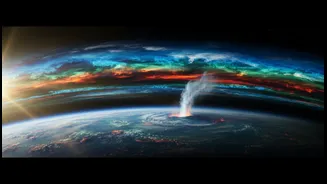
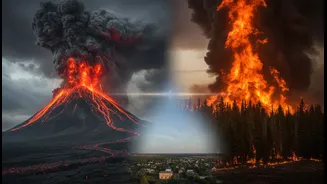
The stratosphere, the atmospheric layer about 10 to 50 kilometres above Earth, is typically extremely dry. However, recent studies combining satellite data and climate models have revealed that this is changing. New research indicates that moderate volcanic
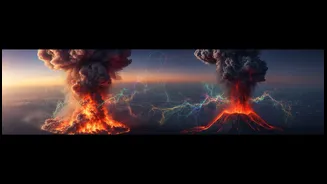
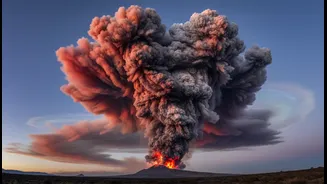
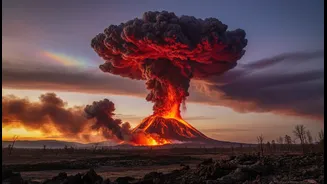
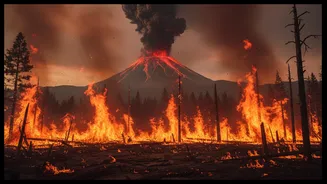
eruptions and an increase in extreme wildfires are systematically injecting significant amounts of water vapour into this arid layer. For a long time, scientists believed that the amount of water vapour entering the stratosphere was primarily controlled by temperatures at the tropical tropopause—the boundary between the lower atmosphere and the stratosphere. This new evidence challenges that assumption, elevating wildfires and volcanoes from secondary players to primary drivers of stratospheric moisture since at least 2005.
How Smoke and Eruptions Act as Elevators
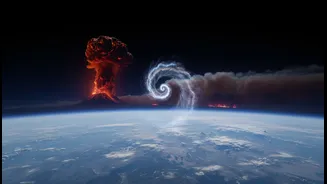
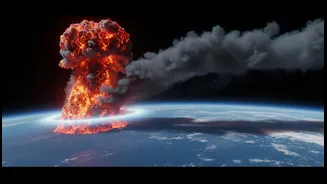
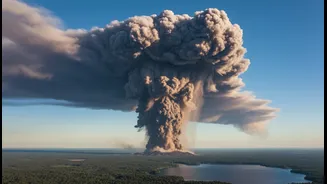
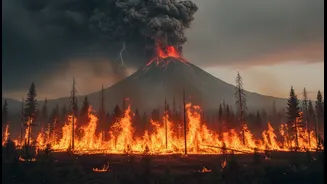
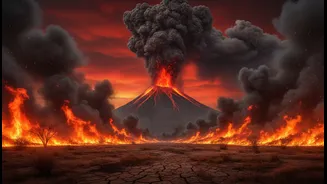
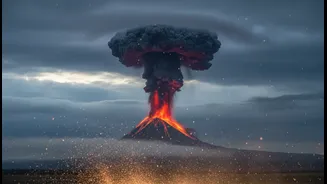
So how exactly does water from a fire or volcano reach such extreme altitudes? For volcanoes, the sheer explosive force can blast water vapour directly into the stratosphere. The 2022 Hunga Tonga-Hunga Ha'apai underwater eruption, for instance, was the largest of its kind ever recorded by modern instruments and injected an unprecedented 150 million tons of water high into the atmosphere. Wildfires have a more complex method. The intense heat from a massive blaze can generate its own powerful thunderstorm, a phenomenon known as a pyrocumulonimbus (pyroCb) cloud. These fire-driven storms act like powerful elevators, carrying a cocktail of smoke, ash, and moisture far beyond the troposphere where our weather occurs, and directly into the stratosphere. This 'self-lofting' mechanism is a newly identified pathway for terrestrial processes to influence the upper atmosphere's composition.
Why More Water Vapour Up High Matters
An increase in stratospheric water vapour is significant because it acts as a powerful greenhouse gas. While water vapour in the lower atmosphere is a well-known part of the climate system, its presence in the normally dry stratosphere has a particularly potent warming effect. It traps outgoing heat that would otherwise escape into space, creating a feedback loop: a warmer surface can lead to more moisture in the stratosphere, which in turn leads to more warming. Some studies estimate this feedback could be responsible for 5-10% of the total warming we experience from carbon dioxide emissions. Furthermore, this added moisture can alter stratospheric chemistry, including chemical cycles related to the ozone layer, which protects us from the sun's harmful ultraviolet radiation.
A New Era for Climate Models
These findings are a crucial development for scientists working to predict the future of our climate. For climate models to be accurate, they must correctly account for all the variables that influence global temperatures. The realisation that episodic events like wildfires and moderate eruptions are a significant and ongoing source of stratospheric water vapour means they can no longer be overlooked. The contribution from these events is now seen as comparable to the increase caused by global surface temperature rise. As global warming is predicted to increase the frequency and intensity of extreme wildfires, this feedback loop is likely to become an even more critical factor in Earth's future climate dynamics. Scientists must now integrate these aerosol-driven processes into future projections of stratospheric composition, warming, and ozone recovery to paint a more complete picture of our changing planet.