
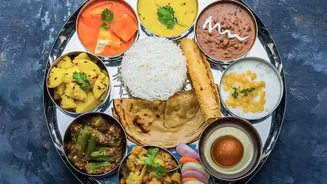
A Story of the Land on a Plate
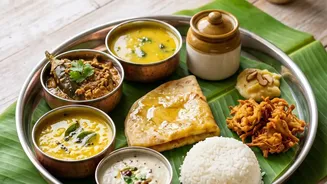
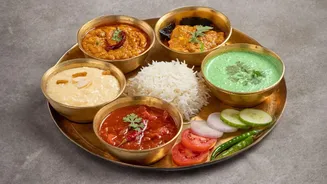
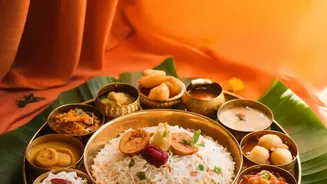
To understand a Rajasthani thali is to understand Rajasthan itself. The cuisine is a direct reflection of its arid geography and history. With scarce rainfall and limited fresh vegetables, the region's cooks historically relied on ingredients with a long
shelf life: lentils, beans, millets, and gram flour (besan). Dishes like Ker Sangri, made from indigenous desert beans and berries, are a testament to the ingenuity of a people who created flavourful, nutritious meals from what the harsh landscape provided. The use of milk, buttermilk, and ghee is also prevalent, not just for flavour but to add moisture and richness in a dry climate. Every spoonful tells a story of resilience and adaptation.
The Undisputed King: Dal, Baati, Churma
No discussion of Rajasthani food is complete without mentioning Dal, Baati, Churma. This iconic trio is considered the state's signature dish. The baati, a hard, unleavened wheat roll, has its origins as a convenient wartime food for Rajput soldiers. They would bury balls of dough in the hot sand to bake, creating a long-lasting bread that could be carried into battle. Today, these baked dumplings are cracked open, drenched in ghee, and served alongside a spicy panchmel dal (a mix of five lentils) and churma. The churma itself was a happy accident, reportedly created when a cook mistakenly poured sugarcane juice over some baatis, creating a sweet, crumbly dessert that perfectly balances the savoury meal.
A Symphony of Flavours and Textures
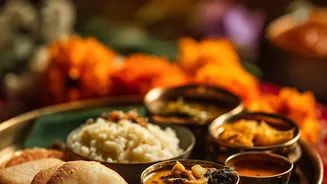
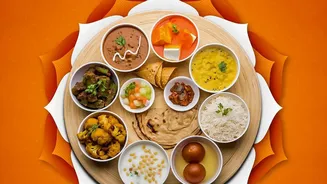
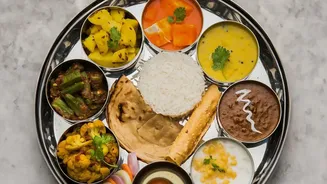
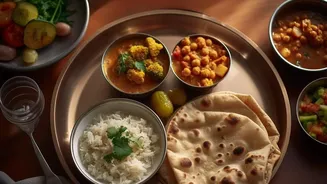
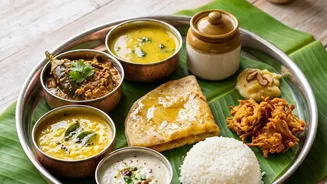
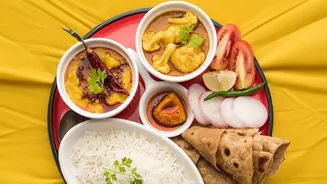
Beyond the famous baati, a thali presents a curated collection of complementary dishes. You will almost always find Gatte ki Sabzi, which features steamed and fried gram flour dumplings in a tangy yoghurt-based curry—another clever creation in a land with few fresh vegetables. A variety of breads, from millet-based bajra roti to chickpea flour missi roti, accompany the curries. These are served with sharp, pungent chutneys like lahsun ki chutney (garlic chutney) and sweet-sour pickles like aam ki launji (raw mango pickle), designed to cut through the richness of the ghee-laden dishes and awaken the palate. The entire meal is a masterful exercise in balancing the six essential tastes of Ayurveda: sweet, sour, salty, bitter, pungent, and astringent.
The Culture of ‘Manuhar’
The experience of eating a thali in Rajasthan is deeply connected to the local concept of hospitality, often referred to as 'manuhar'. In Marwari, the word means 'to request', but in practice, it translates to a loving insistence from the host to eat more. It's considered a way of showing affection and respect. As you finish a portion of a dish, don't be surprised if your bowl is immediately refilled, often despite polite protests. This isn't just about providing food; it's a cultural ritual where the host takes immense pride in ensuring their guest is well-fed and content. Accepting this generosity is part of the experience, turning a simple meal into a memorable interaction.
A Sweet and Royal Conclusion
A Rajasthani thali always ends on a sweet note, reaffirming the state's love for mithai. Besides the churma, you might find Ghevar, a disc-shaped, honeycomb-like dessert soaked in sugar syrup. This sweet is especially popular during festivals like Teej and Raksha Bandhan. Other common desserts include rich moong dal halwa or malpua, a type of pancake dipped in syrup. These sweets are not mere afterthoughts; they are integral to the meal's structure, providing a final, indulgent flourish that completes the grand culinary tour of Rajasthan's heritage.