






Who is Lalit Modi and What Are the Allegations?
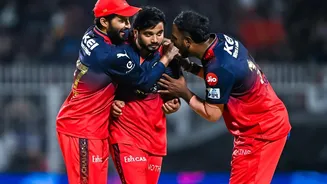
Lalit Modi was the founder, first chairman, and commissioner of the Indian Premier League (IPL), a multi-billion dollar cricketing tournament he spearheaded until 2010. He fled India in 2010 amid allegations of serious financial irregularities. The Enforcement
Directorate (ED) has multiple cases against him, including charges of money laundering and foreign exchange violations. One of the key allegations is that he manipulated the process of assigning IPL's broadcast rights in 2009, which allegedly involved a kickback of over ₹125 crore. A non-bailable arrest warrant was issued against him in Mumbai after he failed to respond to summons from the ED. For his part, Modi has consistently denied any wrongdoing, claiming he is the victim of a political 'witch-hunt' and that he left India due to credible threats to his life.
The Citizenship Change: What Does it Mean?
After residing in the United Kingdom for over a decade, Lalit Modi announced in November 2026 that he had become a British citizen. As India does not permit dual citizenship, this means he has ceased to be an Indian citizen. This development significantly alters the diplomatic and legal landscape. Previously, Indian authorities could have requested his deportation, a simpler process where a country sends back a foreign national. With his British citizenship, deportation is no longer an option. This leaves India with only one, much more complex route: formal extradition. While the new citizenship doesn't grant him legal immunity, it forces Indian agencies to navigate a more rigorous and challenging legal process in a foreign jurisdiction.
The Primary Tool: Formal Extradition
Extradition is the formal legal process where one country surrenders an individual to another for prosecution or punishment. This process is governed by treaties between nations. India and the UK have an extradition treaty dating back to 1992, which, importantly, does not prevent the UK from extraditing its own nationals. However, the process is far from straightforward. Indian authorities must submit a formal request through diplomatic channels, supported by substantial evidence that meets the legal standards of UK courts. This often involves lengthy court battles where the individual can challenge the extradition on various grounds, including human rights concerns about prison conditions in the requesting country. The cases of other high-profile fugitives like Vijay Mallya and Nirav Modi demonstrate that even when UK courts approve an extradition, the final execution can be delayed for years.
Navigating a Complex Legal Maze
Acquiring British citizenship is a strategic move that adds significant hurdles for Indian authorities. The burden of proof rests entirely on India to convince the British judicial and executive branches. The case must satisfy the principle of 'dual criminality', meaning the alleged offence must be a crime in both India and the UK. Furthermore, the entire process is subject to political and diplomatic considerations, which can influence the speed and outcome of the request. While his new citizenship doesn't provide a shield against criminal liability for offences allegedly committed in India, it complicates the procedure immensely. India's success rate in extraditing fugitives has historically been low, making each step a meticulous and resource-intensive effort.
Beyond Extradition: What Other Tools Exist?
While extradition is the main path for securing his return, other legal instruments remain in play. Indian investigative agencies like the ED can continue their probe and build the case against him. India can also rely on the Mutual Legal Assistance Treaty (MLAT) with the UK to seek help in gathering evidence and documents. Another tool is a Red Corner Notice from Interpol, which acts as a global alert to locate and provisionally arrest an individual pending extradition. However, Interpol had previously rejected India's request for such a notice against Modi, and he has stated that no active alert currently exists against him. Ultimately, these tools are supplementary; without a successful extradition, bringing him to India to face trial remains a formidable challenge.