



A Sweet and Storied Past
Gajar ka Halwa, also known as Gajrela in Punjab, has a history as rich as its flavour. Its story is intertwined with the Mughal Empire, whose culinary experts were known for their elaborate sweets. The term 'halwa' itself is derived from the Arabic word
'hulw', meaning sweet, and was introduced to India through trade with the Middle East. While early halwas were made with ingredients like flour or nuts, the introduction of sweeter, orange carrots to the subcontinent, likely via Dutch traders, paved the way for this iconic carrot-based dessert to be born. The Punjab region, in particular, embraced the new vegetable, and it quickly became a beloved dish from royal kitchens to common households.
The Alchemy of Simple Ingredients
The beauty of Gajar ka Halwa lies in its simplicity. At its core, the traditional recipe requires just a few key ingredients: grated carrots, milk, sugar, and ghee. The magic happens in the process—a labour of love that involves slow-cooking the grated carrots in milk until all the liquid is absorbed. This patient simmering coaxes out the natural sweetness of the carrots, allowing them to soften and develop a deep, caramelised flavour. Ghee, a type of clarified butter, is essential, adding a nutty richness and aroma that is unmistakable. The final addition of sugar completes the sweet symphony.
A Symphony of Flavour and Aroma
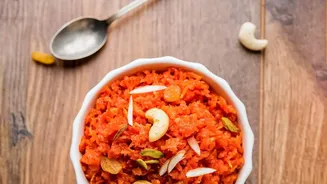
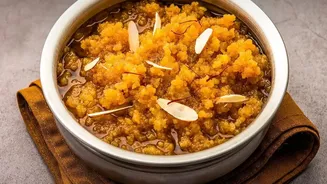
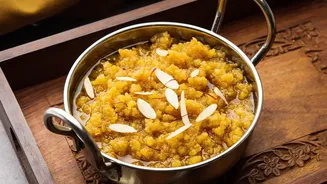
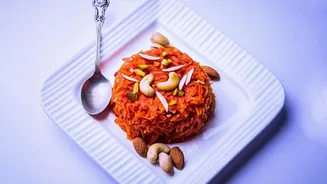
What elevates Gajar ka Halwa from simply sweet to truly sublime are the aromatics and garnishes. Ground cardamom is a non-negotiable addition, infusing the dessert with its warm, floral, and slightly spicy notes that perfectly complement the carrots. Many cooks also add a pinch of saffron for a luxurious colour and subtle fragrance. The finishing touch comes from a generous scattering of nuts and raisins. Almonds, pistachios, and cashews, often lightly fried in ghee to enhance their flavour, provide a delightful crunch against the soft, fudgy texture of the halwa.
The Quintessential Winter Comfort
In North India, the arrival of winter is synonymous with Gajar ka Halwa. This is because winter is the season for 'Delhi carrots', a specific variety of red carrot that is exceptionally sweet, tender, and juicy—perfect for making halwa. The dessert is cherished not just for its taste but for the warmth it provides. Served steaming hot, a bowl of Gajar ka Halwa is the ultimate comfort food on a chilly evening. It's a staple at winter festivals, weddings, and celebrations like Diwali and Eid, symbolizing prosperity and joy.
Making It Your Own
While the traditional slow-cooked method yields incredible results, modern variations offer convenient shortcuts. Many home cooks now use condensed milk or khoya (dried milk solids) to speed up the cooking process and achieve an even richer, creamier texture. These methods reduce the time spent simmering milk while still delivering a decadent dessert. Some even prepare it in an Instant Pot for a quick and hands-off approach. You can also customize the nuts and spices to your preference, making each batch of halwa uniquely yours. No matter how it's made, the end result is a testament to the versatility of the carrot.