







The AI and Digital Boom's Hidden Cost
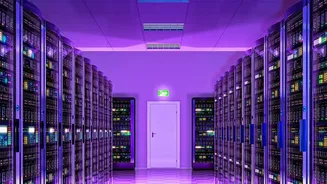
Every time you stream a movie, join a video call, or use a generative AI application, you are tapping into a data centre. These sprawling, factory-scale facilities house the powerful computers and storage systems that form the backbone of the internet.
For years, their energy consumption grew at a manageable pace. That has changed dramatically. The explosion in artificial intelligence, from training complex models to processing billions of user queries, has created an unprecedented thirst for power. A single AI query consumes significantly more energy than a traditional web search. When scaled globally, this creates a staggering new load on electricity systems. According to the IEA, global data centre electricity use was around 415 Terawatt-hours (TWh) in 2024, but is on a trajectory to more than double to nearly 950 TWh by 2030.
IEA's Sobering Projections Explained
The IEA's warning is not just about the total amount of energy, but the speed of the increase. It projects that electricity demand from data centres will grow by about 15% every year until 2030, a rate more than four times faster than the growth of all other electricity use combined. This surge is primarily driven by the United States and China, but its effects will be felt everywhere, including India. The core driver is AI, which is expected to account for almost half of the total increase in data centre electricity consumption between 2024 and 2030. This is a fundamental reversal of a long-standing trend where efficiency gains in computing (known as Moore's Law) kept energy demand relatively flat despite massive increases in data processing. That era now appears to be over.
The Challenge for India's Power Grid
For India, this global trend presents a unique and urgent challenge. The country is in the midst of a massive data centre construction boom, projected to become the second-largest market in the Asia-Pacific region. Estimates suggest India's data centre capacity, which was around 1.8 gigawatts (GW) in mid-2026, has a development pipeline of nearly 3.9 GW. This expansion is crucial for the 'Digital India' initiative, supporting everything from digital payments to cloud adoption. However, this growth puts immense pressure on an already stretched power infrastructure. The Indian government projects that data centres could demand up to 17 GW of power by 2031-32. The problem isn't just generating enough electricity, but ensuring it is stable, reliable, and available in the concentrated urban hubs where most data centres are being built, like Mumbai and Navi Mumbai.
A Question of Sustainability and Cost
The surging demand also complicates India's clean energy goals. With the current energy mix, a significant portion of this new demand could be met by fossil fuels in the short term. This not only threatens to increase carbon emissions but also exposes data centre operators and their customers to volatile energy prices. Furthermore, these power-hungry facilities also require vast amounts of water for cooling, a resource that is already scarce in many parts of the country. The decisions made over the next four years about how to power these new facilities are therefore critical. They will effectively 'lock in' the energy and environmental footprint of our digital infrastructure for decades to come, as these centres have operational lifespans of 15 to 20 years.
The Path Forward: Efficiency and Renewables
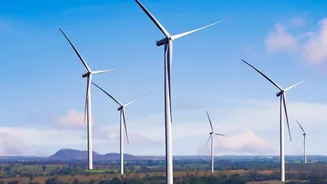
Addressing this challenge requires a two-pronged approach. First, a relentless focus on efficiency is paramount. This includes innovations in cooling technology, such as liquid cooling, which can be 30-40% more efficient than traditional air cooling, and building facilities that use waste heat for other purposes. Second, and more importantly, is accelerating the shift to renewable energy. Many data centre operators are already pursuing this through direct power purchase agreements (PPAs) with solar and wind farms. Hybrid models combining solar, wind, and battery storage are emerging as a viable solution to provide the 24/7, reliable, green power that modern data centres demand. For India, this represents not just a challenge, but an opportunity to align its digital ambitions with its renewable energy leadership, driving investment in a cleaner, more resilient grid.