





Understanding Spinal Loading
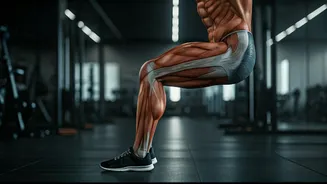
Many traditional strength-building exercises, like heavy barbell squats and deadlifts, involve axial loading. This means a significant amount of weight is placed directly along your spine. While these movements are effective for building muscle and strength,
they also compress the vertebrae and the fluid-filled discs that cushion them. [21, 22] Over time, and especially with improper form, this constant compression can contribute to back stiffness, pain, and potentially long-term issues. [21, 22] For those who spend much of the day sitting, the spine is already in a compressed state, and adding heavy loads without a counterbalance can exacerbate the problem. [7]
The Simple Power of Decompression
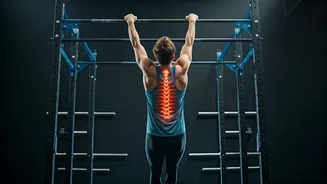
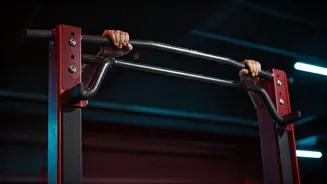
This is where the pull-up bar hang, often called a "dead hang," comes in. By simply hanging from a bar, you allow gravity to work in your favor. [8] The weight of your lower body gently pulls downwards, creating space between your vertebrae. [5] This process, known as spinal decompression, can help alleviate pressure on your spinal discs and nerves. [1, 7] Think of it as a natural, gravity-assisted stretch for your entire back. Regularly incorporating hangs can help counteract the compressive forces from both daily life and heavy lifting, promoting better spinal health and mobility. [1, 2, 8]
More Than Just Back Relief
The benefits of dead hangs extend far beyond your spine. One of the most significant advantages is a massive improvement in grip strength. [5, 10] Your forearms, hands, and wrist flexors are working hard the entire time you hang, which is crucial for everything from opening a jar to improving performance in other lifts like rows and pull-ups. [1, 2] Hanging also provides a fantastic stretch for your shoulders, lats, and even your abdominal muscles, enhancing shoulder mobility and potentially relieving tightness. [1, 3, 12] A strong, stable shoulder joint is key to preventing injuries, and hanging helps strengthen the surrounding musculature. [5, 12]
How to Perform a Perfect Dead Hang
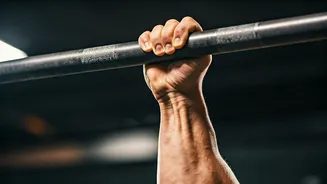
Getting started with dead hangs is straightforward. You'll need a sturdy, secure pull-up bar. [1] If you can't easily reach it, use a step or bench. [1] Grab the bar with an overhand grip (palms facing away from you), with your hands placed slightly wider than your shoulders. [4] Step off the bench and let your body hang, keeping your arms straight. [1, 6] Try to relax your entire body, letting your shoulders rise up towards your ears; the only muscles that should be working hard are in your hands and forearms. [6] Keep your core slightly engaged to prevent swinging. [4] Aim to hold for 10-20 seconds to start, gradually working your way up to a minute or more as your grip improves. [1, 9]
Making It Work For You
If a full dead hang is too challenging at first, there are plenty of ways to modify it. Beginners can start by keeping their feet on a box or the floor, supporting some of their body weight while still getting a good stretch. [13] Another option is using an assisted pull-up machine to reduce the load. [1] As you get stronger, you can try variations like a neutral grip (palms facing each other) or an underhand grip to target muscles differently. [9] For an advanced challenge, the one-armed hang is an incredible test of grip and shoulder stability. [1, 9] Consistency is key; even 30-60 seconds of hanging, broken into smaller sets, performed a few times a week can make a significant difference. [1, 18]