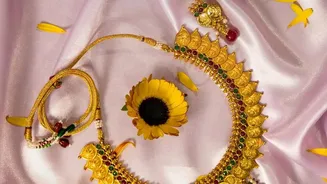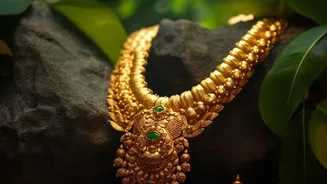







Dhanteras is the perfect time to upgrade your jewellery collection by exchanging old pieces for new ones. To ensure you get the best value for your treasured heirlooms, it’s crucial to understand the calculations involved. Here's your guide.
Assess Your Old Gold's Purity and Weight
The first
step is determining the actual gold content in your old ornaments. Gold purity is measured in carats (K). 24K is pure gold, while 22K (91.6% pure) and 18K (75% pure) are commonly used for jewellery because they are more durable. If your ornament is hallmarked, it will have its purity stamped on it. Modern pieces must have a six-digit alphanumeric Hallmark Unique Identification (HUID) number, which guarantees purity and traceability. If your gold is not hallmarked, the jeweller will test its purity. They will also weigh the ornament after removing any stones or beads, as you are only paid for the net weight of the gold. Always ask for this process to be done in your presence for transparency.
Understand the Deductions on Old Gold
When you exchange old gold, jewellers will deduct certain charges from its total value. A common deduction is 'wastage' or 'melting charges', which accounts for the small amount of gold lost when your old ornament is melted down and refined. This typically ranges from 2% to 7% but can be higher for intricate designs. Some jewellers might have a standard deduction policy for old gold they accept. For example, they might value your gold at 95-98% of its pure gold value to cover these costs. It's essential to ask for a clear breakdown of all deductions. Don’t hesitate to get quotes from a few different reputable jewellers to compare their policies.
Calculate the Exchange Value
The formula to calculate the value of your old gold is straightforward. First, determine the value based on purity and weight: (Net Weight of Gold in grams) x (Today’s Gold Rate for its Purity). For instance, if you have 10 grams of 22K gold and the rate is ₹6,400 per gram, the initial value is ₹64,000. From this amount, the jeweller will subtract the deductions. If the wastage charge is 5% (₹3,200), the final exchange value offered for your old gold would be ₹60,800. Always ensure the jeweller uses the correct gold rate for the day of the transaction.
Factor in the Cost of Your New Jewellery
The price of your new ornament also involves a specific calculation. It includes three main components: the price of gold, making charges, and Goods and Services Tax (GST). The price of gold is calculated as (Weight of Gold in new item) x (Today's Gold Rate). Making charges, which cover the craftsmanship, can be a fixed amount per gram or a percentage of the gold's value (often ranging from 8% to 25%). Finally, a 3% GST is applied to the total sum of the gold price and the making charges.
The Final Bill: Putting It All Together
The final step is to set the value of your old gold against the cost of the new piece. The total cost of the new jewellery (gold value + making charges + GST) is calculated first. Then, the final exchange value of your old gold is subtracted from this total. For example, if your new jewellery costs ₹1,00,000 and the exchange value of your old gold is ₹60,800, the amount you need to pay is ₹39,200. It's a common misconception that the GST is applied after deducting the old gold's value; the 3% GST is always calculated on the full price of the new item before the exchange credit is applied. Always ask for an itemised bill showing each of these components clearly.