








The Challenge of Unexpected Visitors
In 2017, astronomers detected something unprecedented: an object from outside our solar system, named ‘Oumuamua, tumbling through our cosmic backyard. It was a stunning discovery, offering the first chance to study material from another star system up
close. The problem? It was moving incredibly fast, at a speed far greater than any spacecraft we've ever launched. By the time we fully understood its significance, it was already heading back into the void, far beyond our reach. This created a frustrating new challenge for space agencies and scientists: how can we possibly react in time to study these fleeting interstellar visitors? Launching a mission from scratch takes decades of planning and construction, but these objects can appear with only months or weeks of notice.
What Are 'Sleeping' Space Assets?
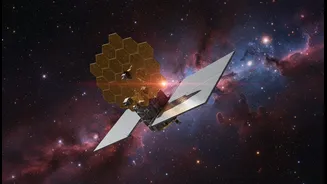
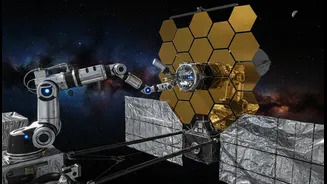
The solution might already be in orbit, just waiting for a wake-up call. The concept of 'waking space assets' refers to activating spacecraft that are in a dormant or hibernation state. This isn't just science fiction; spacecraft like NASA's New Horizons probe are regularly put into hibernation to conserve power and reduce wear-and-tear during long cruise periods between objectives. During hibernation, most non-essential systems are powered down, but the spacecraft can still be commanded to come back to life. The idea is to apply this proven technique in a new way: either by repurposing older, still-functional satellites that have completed their primary missions or by pre-launching dedicated interceptor probes that 'park' in a stable orbit, like the Sun-Earth L2 point, and wait silently for a target to be identified.
The Technology of the Wake-Up Call
Waking a spacecraft billions of kilometers away is a delicate process. It begins with a command signal sent from a deep space network on Earth. This signal instructs the craft's main computer to begin its wake-up sequence. This involves powering up heaters to warm critical components that have been sitting in the cold of deep space, reactivating orientation systems, and running health checks on all scientific instruments and thrusters. As NASA demonstrated with the Voyager 1 probe's decades-old thrusters in 2025, it's even possible to revive hardware that has been dormant for years to give a spacecraft new life. For an intercept mission, the wake-up call would also include a massive data upload: the precise trajectory needed to chase down the interstellar object.
From Dormant to Dynamic: A Race Against Time
The term 'instant response' is relative in the vastness of space. It doesn't mean intercepting an object the next day. Instead, it means reacting in months rather than the decades a new mission would require. This transforms the impossible into the challenging-but-feasible. Once awake, the spacecraft would fire its engines to break from its parking orbit and begin the chase. Mission concepts like Project Lyra, initiated by the Initiative for Interstellar Studies, have explored complex flight paths to catch objects like 'Oumuamua. These often involve a powered flyby of a giant planet like Jupiter or even a daring dive towards the Sun to perform a gravity-assist maneuver, using the star's immense gravity to slingshot the craft to incredible speeds.
The Scientific Goldmine of an Intercept
The rewards for successfully intercepting an interstellar object are immense. A close flyby would allow a probe to capture high-resolution images, revealing its size, shape, and surface features. Scientific instruments could analyze its composition, determining if it's a rocky asteroid, an icy comet, or something entirely new. We could learn about the chemical makeup of planet-forming materials in other star systems, essentially getting a free sample delivered to our doorstep. Even a fast flyby would resolve intense debates, such as whether 'Oumuamua was a nitrogen iceberg, a hydrogen iceberg, or an object of artificial origin. The European Space Agency's Comet Interceptor mission, planned for launch around 2028, is based on this very principle of waiting in space for a suitable target, providing a blueprint for future interstellar object missions.