





Your Pocket Planetarium
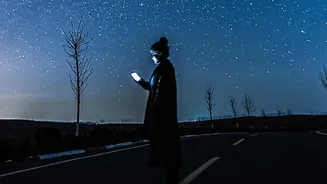
The magic behind modern stargazing apps is the powerful combination of sensors already built into your phone. They use your device's GPS to know your exact location on Earth, the compass (magnetometer) to know which direction you're facing, and the gyroscope
to determine the angle at which you're holding the phone. By combining this data, an app can create a precise, real-time map of the celestial objects visible from your specific vantage point. It's like having a personal planetarium that knows exactly where you are and what you're looking at, instantly calculating the position of every star and planet.
Augmented Reality Meets the Cosmos
Where these apps truly shine for beginners is their use of augmented reality (AR). By activating this feature, the app uses your phone’s camera to show you the real world, but overlays a map of the stars and planets on top of it. Simply point your phone at a bright object in the night sky, and the app will display its name, from the planet Mars to the star Sirius. Many apps even draw the constellation lines and artwork, helping you finally visualize the shapes of Leo the Lion or Orion the Hunter. This AR function works day or night, effectively removing the guesswork and making identification as simple as pointing your camera.
Top Apps for Novice Stargazers
While there are dozens of apps available, a few are consistently recommended for their user-friendly design. SkyView Lite is a popular free option for both iOS and Android, celebrated for its simplicity and beautiful AR interface. Just point it at the sky to identify stars, planets, and satellites. Star Walk 2 is another favourite, praised for its stunning visuals and wealth of information. It offers features like an astronomical calendar and a 'What's Visible Tonight' guide to help you plan your stargazing. For those wanting a straightforward, no-frills map, the open-source Sky Map (originally from Google) for Android is a clean and simple choice.
Spotting the International Space Station
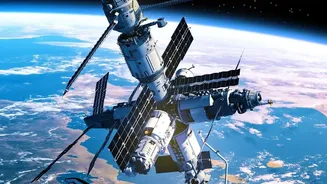
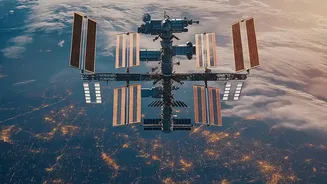
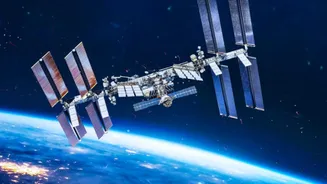
One of the biggest thrills for any backyard astronomer is spotting the International Space Station (ISS) as it glides silently across the sky. Moving at over 17,000 miles per hour, it can be brighter than any star. This is another area where apps make it incredibly simple. Many general stargazing apps like SkyView can track and identify the ISS as it passes overhead. For dedicated trackers, NASA offers its official Spot The Station app, which is designed specifically to provide notifications and schedules for when the ISS will be visible from your location. These apps will tell you exactly when to look up and in which direction to face, so you never miss a flyover opportunity.