







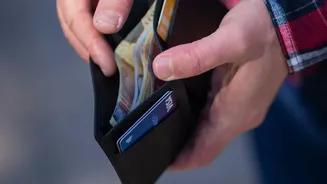
The Psychology of a Thousand Small Cuts
Each ten-rupee tea or fifty-rupee auto ride feels insignificant. Paid with a quick scan, the money leaves your account without the psychological friction of handing over physical cash. This is the core of the issue: digital payments reduce the “pain of paying,”
making it easier to spend impulsively. Studies have consistently shown that consumers tend to spend more when using digital methods compared to cash. One survey found that nearly 74% of college students felt they spent more after adopting UPI. This isn't a personal failing; it's a feature of how frictionless transactions are designed. They remove hesitation. Over a month, these dozens of tiny, almost invisible transactions can add up to a significant portion of your discretionary income, a phenomenon often described as 'death by a thousand cuts'.
Create a Dedicated 'Spending' Account
One of the most effective strategies is to create separation. Don't link your primary salary account to your everyday UPI apps. Instead, open a separate, perhaps even a zero-balance, digital savings account. At the beginning of each month or week, transfer a fixed budget for your discretionary spending—like food, transport, and entertainment—into this account. This is the only account you should link to apps like GPay, PhonePe, or Paytm for daily expenses. When the balance in this account runs low, your spending automatically stops. This method reintroduces a sense of scarcity that digital payments otherwise erase, acting as a natural brake without requiring constant willpower.
Shift from Autopilot to Active Tracking
While many UPI apps provide a transaction history, it’s a passive record. To truly understand your habits, you need to engage with your spending actively. While some find that UPI helps them track expenses better, this is only true if you review the data. Make it a habit to conduct a weekly review. Every Sunday, sit down for 15 minutes and scroll through your UPI transaction list. Categorise your spending to see exactly where your money is going. You can do this manually in a notebook or use an expense tracker app. Several apps are designed to work with Indian payment systems, some even reading your transaction messages to automate the process. This simple ritual transforms unconscious spending into concrete data, revealing patterns you might not have noticed.
Introduce Intentional Friction
The speed of UPI is its biggest advantage and its biggest challenge for savers. The solution is to intentionally add small 'speed bumps' back into your payment process. One simple trick is the 24-hour rule for any non-essential purchase over a certain amount, say 500 rupees. If you see something you want to buy online, wait a day before completing the purchase. This cooling-off period helps distinguish between a genuine need and a fleeting impulse. Another strategy is to disable features designed for ultimate convenience, like UPI Lite's auto-refill function, which can obscure the flow of small payments. You can even try using cash for specific categories, like your morning coffee, to make the spending feel more tangible again.
Connect Small Savings to Big Goals
Saving money for the sake of it can feel like a chore. The key to staying motivated is to give your savings a purpose. Instead of thinking about the 100 rupees you 'can't' spend on snacks today, think about what that 100 rupees is 'for'. Is it for a down payment on a new bike? A weekend trip? A new phone? Create a specific savings goal and visualise it. Every time you consciously decide not to make a small, unnecessary UPI payment, mentally transfer that amount toward your goal. This reframes saving from an act of deprivation into a positive step toward something you truly want. Seeing that goal get closer, one small decision at a time, provides the powerful motivation needed to build and maintain a new financial habit.