

The 'Goldilocks' Zone Isn't Everything
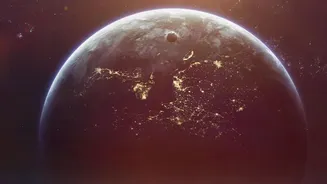
Scientists often talk about the 'habitable zone', nicknamed the 'Goldilocks zone'. This is the orbital region around a star where conditions are just right—not too hot and not too cold—for liquid water to potentially exist on a planet's surface. Since
all life as we know it requires liquid water, this is a crucial starting point. However, being in this zone is no guarantee of life. A planet could have the right temperature but lack a protective atmosphere, be bombarded by radiation from its star, or have a toxic chemical environment. Venus and Mars sit on the edges of our own sun's habitable zone, and while one is a scorching furnace and the other a frozen desert today, there's evidence Venus may have once had oceans. A planet is a complex system, and its location is just one piece of the puzzle.
Hunting for Atmospheric Clues
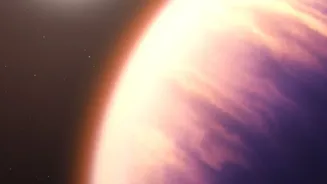
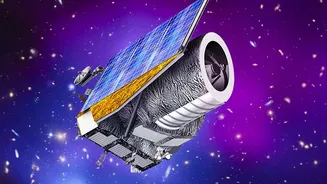
To move beyond just location, astronomers use powerful tools like the James Webb Space Telescope (JWST) to peer into the atmospheres of distant exoplanets. They do this using a technique called transmission spectroscopy. When a planet passes in front of its star, a tiny fraction of the starlight filters through the planet's atmosphere. By analysing this light, scientists can identify the chemical elements and molecules present, like looking for ingredients in a recipe from light-years away. JWST has already provided incredible chemical portraits of distant worlds, detecting molecules and even signs of clouds. This allows scientists to determine if a planet has an atmosphere and what it's made of, which is the next critical step in assessing its potential for life.
The Search for Biosignatures
The ultimate goal of analysing an atmosphere is to find a 'biosignature'—a substance, element, or pattern that provides evidence of life. On Earth, the presence of abundant oxygen in our atmosphere is a powerful biosignature, as it's primarily produced by living things through photosynthesis. Other potential biosignatures include gases like methane and nitrous oxide. The key is not just finding a single gas, but a specific combination that suggests a chemical imbalance. For example, finding both oxygen and methane together is compelling because they tend to destroy each other, so their continued presence suggests something is actively replenishing them—and that something could be life.
When Chemistry Mimics Biology
The biggest challenge in this hunt is the problem of 'false positives'. Nature can be tricky, and many non-biological (abiotic) processes can create what looks like a biosignature. Oxygen, for instance, can be produced when intense starlight breaks down water molecules in a planet's atmosphere. Methane can be released by geological activity, like volcanoes. Scientists must act like cosmic detectives, working to rule out every possible non-biological explanation. This might involve looking for other associated gases that point to a geological rather than a biological source. For example, if a lot of oxygen is found with a lot of carbon monoxide, it could be a sign of photolysis, not photosynthesis. Even surface features that look like pigments from life could be mimicked by certain minerals. It's a painstaking process of elimination.
The High Bar for an Extraordinary Claim
Because of these complexities, the scientific community has an extremely high bar for proof. A single piece of evidence is never enough. Confirming extraterrestrial life would likely require multiple lines of evidence from different observations, all pointing to the same conclusion. It would mean not just detecting a potential biosignature, but also having a complete understanding of the planet's environment—its star, its geology, its atmosphere—to confidently rule out all other possibilities. The difference between a 'habitable' planet (one that could support life) and an 'inhabited' one is vast. So while every newly discovered rocky planet in a habitable zone is an exciting candidate, it represents the very beginning of a long and careful investigation, not the finish line.