




From Splashdown to Teardown
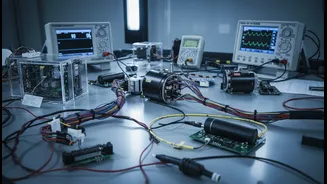
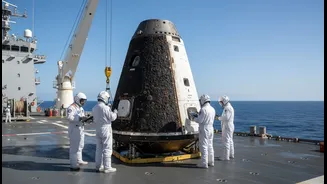
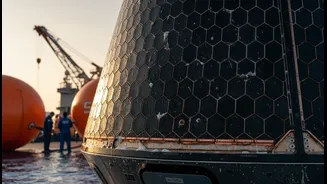
After its precise splashdown in the Pacific Ocean, the Orion capsule was carefully recovered by the U.S. Navy and transported to NASA's Kennedy Space Center. There, a painstaking process of disassembly began. Engineers are treating the spacecraft less
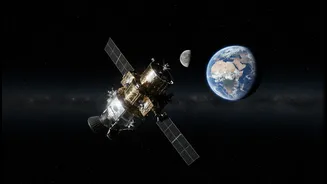
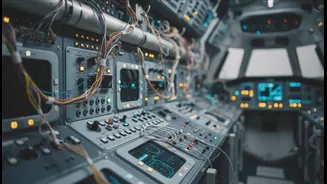
like a vehicle and more like a time capsule, filled with invaluable information from its 10-day, nearly 700,000-mile journey around the Moon. Components are being removed, cataloged, and sent for detailed analysis, from the crew's seats and control panels to data recorders and even the toilet's vent line, which experienced a minor clog during the flight. Every piece tells a part of the mission's story, providing ground truth for the computer models that will shape future flights.
The Heat Shield's Fiery Trial
The single most critical component under review is the 16.5-foot diameter heat shield. There is no backup for this system; it simply has to work. After the uncrewed Artemis I mission showed unexpected erosion and charring, engineers were intensely focused on its performance this time around. Initial inspections right after splashdown and on the recovery ship brought good news: the char loss was significantly reduced and performed as predicted in ground tests. Commander Reid Wiseman noted that while they came in "fast and hot," the heat shield looked "wonderful" from their perspective. Now, the shield will undergo extensive analysis, including sample extraction and internal X-rays, to verify its integrity and refine models for the even more demanding re-entry profiles of future lunar landing missions.
Keeping Humans Alive in Deep Space
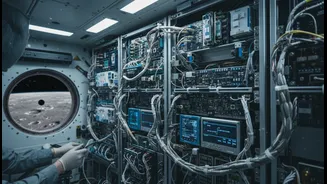
Artemis II was the first time Orion’s Environmental Control and Life Support System (ECLSS) was tested with a human crew in deep space. This system is responsible for maintaining a breathable atmosphere, managing temperature and humidity, and providing clean water. Post-flight data analysis is now confirming how well the CO2 scrubbers, oxygen tanks, and other life-support hardware performed under the sustained load of supporting four astronauts far from Earth. This data is vital for ensuring the ECLSS can handle the longer duration and greater demands of Artemis III, when astronauts will not only fly to the Moon but descend to its surface.
The Human Element: Crew Health Data
Beyond the spacecraft's hardware, the mission generated an unprecedented amount of data on how the human body reacts to deep space. For the first time since the Apollo era, researchers are analyzing physiological data from astronauts who have traveled beyond the protection of Earth's magnetic field. Using wearable sensors, biological samples collected before, during, and after the flight, and cognitive tests, scientists are building a comprehensive picture of spaceflight's impact. This research investigates everything from immune system responses and radiation exposure to balance and sleep quality, providing critical information to keep future crews safe and effective on missions to the Moon and, eventually, Mars.
Paving the Way for a Lunar Return
Every byte of data from Orion, every observation from the crew, and every post-flight inspection serves one ultimate purpose: to certify the spacecraft for Artemis III and the return of humans to the lunar surface. The successful performance of the SLS rocket, the precision of Orion's maneuvering, and the resilience of its critical systems have given NASA confidence. Mission Commander Reid Wiseman expressed his faith in the vehicle, stating that in his opinion, the Artemis III Orion could launch the next day and the crew would be in good shape. The detailed checks now underway will turn that confidence into certainty, ensuring that when the next crew flies, they are doing so in the safest, most reliable spacecraft possible, built on the lessons learned from Artemis II.