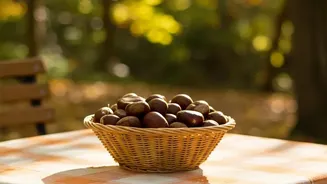


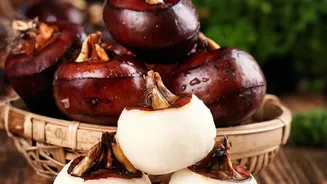


In the world of nuts, we often think of the savoury crunch of an almond or the earthy bite of a walnut. But there’s an outlier with a completely different profile: the humble chestnut, which offers a soft texture and a surprising natural sweetness.
The Familiar Savoury Nuts
For
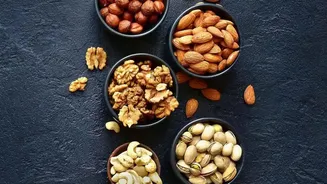
many of us, almonds and walnuts are kitchen staples. Almonds are prized for their mild, buttery flavour and satisfying crunch, making them perfect for everything from trail mixes to being ground into flour for baked goods. Walnuts have a more robust, earthy taste with a characteristic hint of bitterness, a flavour that pairs beautifully with strong cheeses and adds depth to salads and brownies. Both are known for their high content of healthy fats and oils, which contribute to their rich flavour and firm texture. They are the reliable, savoury workhorses of the nut world, lending richness and texture wherever they go.
The Chestnut: A Sweet Anomaly
Enter the chestnut, which plays by a completely different set of rules. Unlike its fatty cousins, the chestnut is compositionally more like a grain or a potato. It is low in fat and high in carbohydrates, specifically starch. When raw, a chestnut can taste bland and starchy, but applying heat—especially roasting—transforms it entirely. The roasting process unlocks a delicate, natural sweetness and a soft, crumbly texture that melts in your mouth, more akin to a baked sweet potato than any other nut. This unique profile makes it a standout, offering a comforting warmth and gentle flavour.
The Science of Sweetness
The magic of a roasted chestnut lies in simple food science. The nut's high starch content is the key to its transformation. During roasting, the heat triggers chemical reactions, including the Maillard reaction, that break down these complex carbohydrates (starches) into simpler sugars like sucrose. This process caramelises the natural sugars, creating the chestnut's signature sweet, nutty, and slightly smoky flavour. While walnuts and almonds are rich in oils that toast and deepen in flavour, chestnuts rely on their starches to create sweetness, which explains why they deliver such a different eating experience.
A Different Nutritional Profile
This fundamental difference in composition also means chestnuts have a unique nutritional makeup. They are significantly lower in calories and fat compared to almonds and walnuts. For instance, 100 grams of walnuts contain about 65 grams of fat, whereas the same amount of chestnuts has only about 2 grams. Furthermore, chestnuts are the only nut to contain a significant amount of Vitamin C, a nutrient typically found in fruits and vegetables. So while almonds and walnuts are celebrated for their heart-healthy omega-3 fatty acids and protein, chestnuts offer a lighter, gluten-free, carbohydrate-based energy source.
Beyond a Festive Snack
While roasted chestnuts are a beloved street-side snack, especially in winter, their culinary uses are vast. Their soft texture and sweet flavour make them incredibly versatile in both sweet and savoury dishes. They can be puréed into creamy soups, incorporated into stuffings for poultry, or folded into stews to add body and a subtle sweetness. In desserts, they are a classic pairing with chocolate and vanilla, often featured in elegant pastries, cakes, and mousses. Chestnut flour is also a popular gluten-free alternative for making pancakes and breads. This versatility stands in contrast to walnuts and almonds, which are more often used for crunchy toppings or textural additions.