

Ghent, Belgium: A Fairytale Without the Crowds
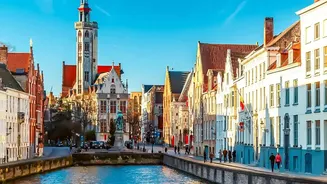
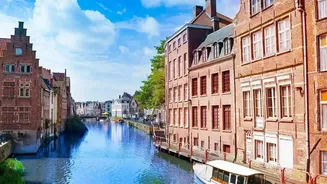
Often living in the shadow of Bruges and Brussels, Ghent is arguably one of Belgium's most exciting destinations. This city combines stunning medieval architecture with a vibrant, modern energy, thanks in part to its large student population. The historic
center is a wonderland of canals, cobbled streets, and towering Gothic structures like the Gravensteen castle. Unlike its more famous neighbours, Ghent feels more like a living city than an open-air museum, offering the beauty of Bruges but with a more authentic local vibe. You can explore the iconic Graslei and Korenlei quays, climb the Belfry for panoramic views, or simply get lost in the charming Patershol neighbourhood. It’s the perfect place to enjoy world-class Belgian beer and fries without the tourist rush.
Bologna, Italy: The Heart of Italian Food Culture
Known as 'La Dotta, La Rossa, e La Grassa' (the Learned, the Red, and the Fat), Bologna offers a more authentic slice of Italian life than the crowded hubs of Florence or Venice. As home to the oldest university in the world, it has a lively, intellectual atmosphere. The city is famous for its endless porticoes—UNESCO-listed covered walkways that stretch for kilometres, making it exceptionally walkable. But Bologna's true claim to fame is its food. This is the capital of the Emilia-Romagna region, the birthplace of ragù (bolognese), mortadella, and Parmigiano Reggiano. You can indulge in a food tour, explore bustling markets, or simply enjoy an aperitivo in the grand Piazza Maggiore. It's a city for those who travel with their stomachs.
Ljubljana, Slovenia: Europe's Green Gem
Slovenia's capital is one of Europe's greenest and most liveable cities. Awarded the title of European Green Capital in 2016, Ljubljana's city center is largely car-free, allowing for peaceful strolls along the willow-lined Ljubljanica River. The city is presided over by a medieval castle perched on a hill, offering stunning views. Its compact old town is a charming mix of Baroque and Art Nouveau architecture, designed by the famed architect Jože Plečnik. Cross the iconic Triple Bridge or the Dragon Bridge, explore the bustling Central Market, and relax in one of the many riverside cafes. Ljubljana feels unhurried and welcoming, serving as a perfect base to explore nearby wonders like Lake Bled and Lake Bohinj.
Porto, Portugal: Charm on the Douro River
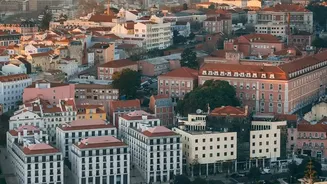
While Lisbon gets much of the attention, Portugal's second city offers a uniquely captivating experience. Built on the hills overlooking the Douro River, Porto is a city of colourful tiled facades, dramatic bridges, and, of course, world-famous port wine. The Ribeira district, a UNESCO World Heritage site, is a vibrant maze of narrow, cobbled streets and riverside cafes. A must-do is crossing the magnificent Dom Luís I Bridge to Vila Nova de Gaia on the opposite bank, where you can tour the historic port cellars and enjoy a tasting. From the stunning azulejo tiles at São Bento railway station to the panoramic views from the Clérigos Tower, Porto feels more intimate and arguably more authentic than its larger southern sister.
Krakow, Poland: A City of History and Resilience
Krakow is a city that wears its long history with pride. Miraculously spared from major destruction during WWII, its Old Town is a beautifully preserved medieval core, centered on one of Europe's largest market squares, Rynek Główny. Dominating the skyline is Wawel Hill, home to the Royal Castle and Cathedral, the historic heart of the Polish nation for centuries. You can wander through the historic Jewish Quarter of Kazimierz, with its vibrant mix of synagogues, shops, and cafes. While the city is beautiful, it also serves as a poignant base for visiting the nearby Auschwitz-Birkenau Memorial and Museum, a sobering reminder of 20th-century history. Krakow offers a deep, multifaceted travel experience that is both beautiful and thought-provoking.