



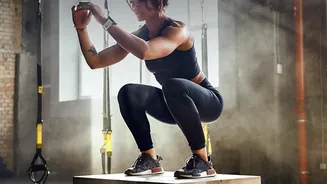
Squats and lunges are foundational for building powerful thighs and a strong lower body. But moving from the basics to more challenging variations requires a smart approach. Here’s your guide to mastering form and progressing safely.
Why These Exercises Work
Squats and lunges
are considered two of the most effective lower-body exercises for a reason. They are compound movements, meaning they engage multiple muscle groups simultaneously. Primarily, they target the quadriceps (front of the thighs), hamstrings (back of the thighs), and glutes. Because they recruit such large muscles, they are incredibly efficient for building strength, toning muscles, and even boosting calorie burn. Furthermore, lunges are a unilateral exercise, working one leg at a time. This is excellent for improving balance, coordination, and identifying and correcting strength imbalances between your left and right sides that bilateral (two-legged) exercises like squats might mask.
Mastering the Bodyweight Squat
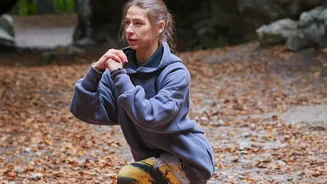
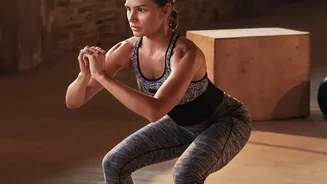
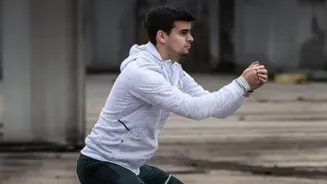
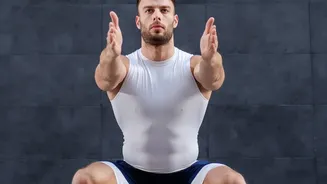
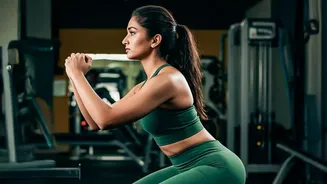
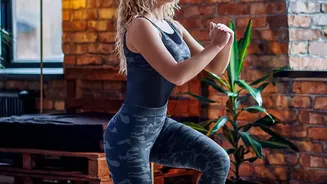
Before you can progress, you must master the basics. Proper form prevents injury and ensures you're working the right muscles. For a bodyweight squat, stand with your feet slightly wider than shoulder-width apart, with your toes pointing slightly outwards. Keep your chest up and engage your core. Begin the movement by pushing your hips back as if you're about to sit in a chair. Lower yourself until your thighs are at least parallel to the floor, keeping your weight in your heels. Your knees should track in line with your toes, not cave inwards. Drive through your heels to return to the starting position. A common beginner modification is the box squat, where you squat down to lightly touch a chair or bench behind you, which helps build confidence and proper mechanics.
How to Progress Your Squat
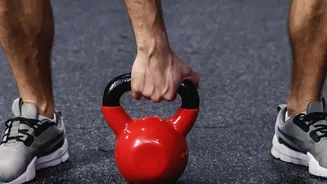
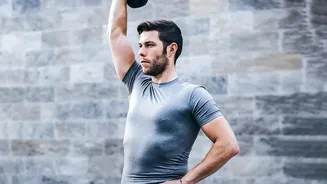
Once you can comfortably perform multiple sets of bodyweight squats with perfect form, you're ready to increase the difficulty. Progression isn't just about adding weight. You can slow down the movement (tempo squats), increasing the time your muscles are under tension. For example, try taking three to five seconds to lower yourself into the squat. Another option is adding a pause at the bottom of the movement for a few seconds before pushing back up. When you are ready for weights, the Goblet Squat is an excellent starting point. Hold a single dumbbell or kettlebell close to your chest. This positioning acts as a counterbalance and helps you maintain an upright torso, reinforcing good form while adding resistance. More advanced variations include the classic barbell back squat and the single-leg pistol squat, which intensely challenges strength and balance.
Mastering the Lunge
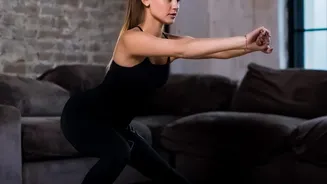
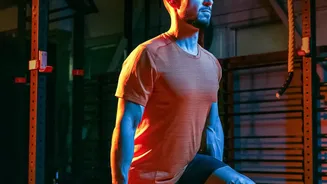
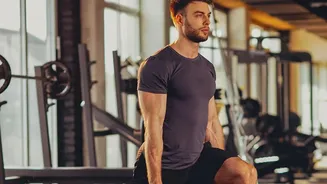
The forward lunge is the standard variation. Start by standing with your feet together. Take a controlled step forward with one leg. Lower your hips until both knees are bent at approximately a 90-degree angle. Your front knee should be aligned over your ankle, not drifting past your toes, and your back knee should hover just above the ground without touching it. Keep your torso upright and your core engaged to maintain balance. Push off your front foot to return to the starting position. Many find the reverse lunge, where you step backward instead of forward, to be easier on the knees and more focused on the glutes. For beginners, performing stationary lunges (also called split squats) or holding onto a chair for balance can help build stability.
How to Progress Your Lunge
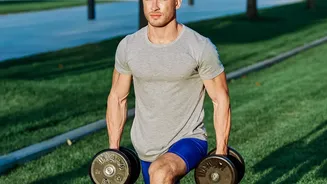
Similar to squats, lunges can be progressed in several ways. Once you've mastered the stationary lunge, you can move to walking lunges, which add a dynamic coordination challenge. For an even greater stability test, try the Bulgarian Split Squat, where your rear foot is elevated on a bench or chair. This increases the load on your front leg significantly. You can also add plyometrics with jumping lunges, where you explosively switch legs in mid_air, which is excellent for building power. Of course, adding weight with dumbbells or a barbell is also a highly effective way to progress. Other methods include increasing the range of motion by elevating your front foot on a small platform (a deficit lunge) or by slowing down the tempo to increase time under tension.
Principles of Safe Progression
The key to getting stronger without getting hurt is progressive overload—the principle of gradually asking your body to do more work. This can mean adding more weight, performing more repetitions or sets, reducing rest time, or moving to a more complex exercise variation. However, the golden rule is to never sacrifice form for the sake of progression. If you find your form breaking down—for instance, your knees caving in on a squat or your torso tipping forward in a lunge—it's a sign to scale back. Master each stage before moving to the next. Consistency is more important than intensity. Aiming to improve just a little bit each week, whether it's one extra rep or a slightly heavier weight, is the sustainable path to building powerful thighs.