
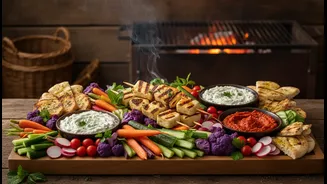


The Rise of the Veggie Board
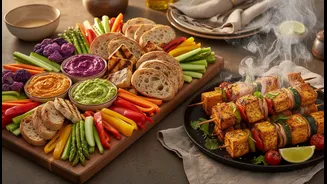
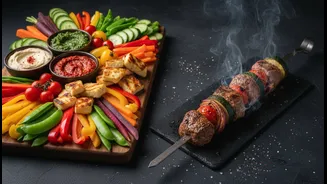
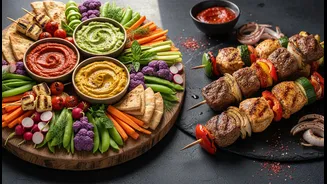
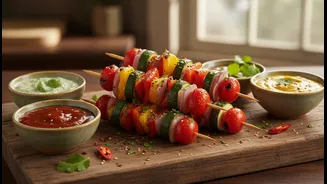
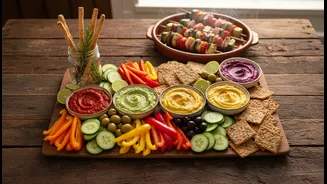
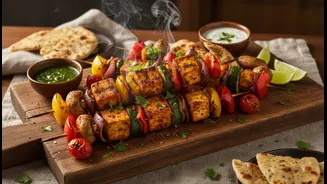
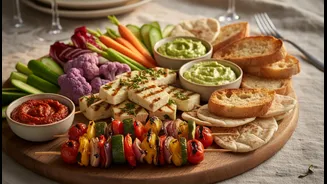
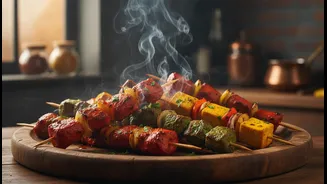
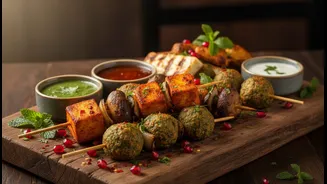
Walk into any trendy eatery or browse a food delivery app, and you'll find them. Colourful, inviting, and entirely meat-free, vegetarian kebab platters have become a sensation. These boards are typically laden with inventive options like hara bhara kebabs
made from spinach and peas, creamy dahi ke kebab, and hearty jackfruit or mushroom galoutis. Their popularity makes perfect sense. They cater to a growing vegetarian population and offer a lighter, yet flavourful, alternative for all diners. No longer a simple side dish, the vegetarian kebab now commands its own spotlight, offering a diverse array of textures and tastes that stand proudly on their own. They are an inclusive, modern take on a classic, ensuring everyone has a seat at the table.
A Question of Culinary Identity
This meatless evolution has sparked a quiet debate among purists. The word 'kebab' itself, with roots in Middle Eastern languages, generally refers to roasted meat. Historically, the dish was carried to India by Mughal-era soldiers and royals, who grilled chunks of mutton or lamb over open fires. Over centuries, it was refined in the royal kitchens of Awadh and Hyderabad into a culinary art form. So, when a platter features no meat, is it truly a 'kebab' platter? While some see the vegetarian versions as a dilution of tradition, others argue it's a natural evolution. This friendly tension, however, is having an unexpected and wonderful side effect: it’s pushing food lovers to look beyond the generic and rediscover the rich, complex world of authentic regional kebabs.
A Smoky, Meaty Renaissance
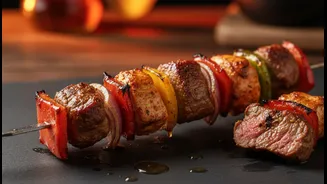
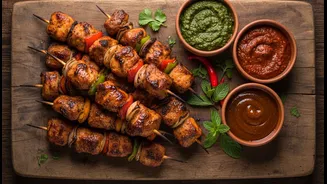
Paradoxically, the more popular veggie kebabs become, the more chefs and diners are championing their traditional, meat-based counterparts. There is a renewed appreciation for the techniques that cannot be easily replicated with vegetables—the specific char from a charcoal grill, the deep flavour penetration of a multi-day marinade, and the unmistakable aroma of smoke. This isn't about rejecting vegetarian options but about celebrating the unique qualities of dishes that have been perfected over generations. This revival puts the focus back on the mastery of fire, fat, and spice, reminding us that the soul of many classic kebabs lies in their smoky, succulent, and unapologetically meaty character. It’s a movement to preserve the heritage and stories behind India’s most iconic grilled delicacies.
Spotlight On: The Kakori Kebab
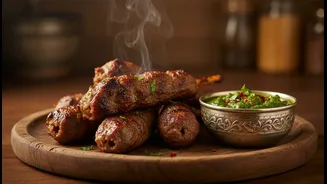
Perhaps no dish better represents this heritage than the Kakori kebab from Uttar Pradesh. Legend has it the dish was invented after a British officer insulted a Nawab by calling his seekh kebabs too coarse. The offended Nawab ordered his chefs to create a kebab so tender it would melt in the mouth. They succeeded by using finely minced mutton, a host of secret spices, and raw papaya as a tenderiser. The result is a seekh kebab of unparalleled softness and delicate flavour, so fine it barely holds its shape on the skewer. Unlike its chunkier cousins, the Kakori is about sublime texture and aromatic subtlety, a true masterpiece of Awadhi cuisine.
Spotlight On: The Bihari Kebab
Hailing from Bihar, the Bihari kebab offers a completely different but equally masterful experience. Instead of minced meat, it uses thin strips of beef tenderloin marinated for hours, sometimes overnight, in a potent mixture of yogurt, raw papaya paste, and a signature blend of spices that includes mustard oil. Traditionally grilled over charcoal, the meat becomes incredibly succulent and infused with a deep, smoky flavour. The use of mustard oil gives it a distinct pungent sharpness that sets it apart from other regional kebabs. Served with onions and chutney, the Bihari kebab is a rustic, robust, and profoundly flavourful dish that showcases a completely different school of kebab artistry.
Beyond the Familiar Favourites
The rediscovery doesn't end there. Food lovers are also championing other regional legends, like the famous Galouti kebab, another melt-in-the-mouth creation born from the desire to please a toothless Nawab of Lucknow. Made with finely minced meat and rumoured to contain over 100 spices, it is pan-fried rather than skewered. This renewed focus encourages us to explore the vast tapestry of Indian kebabs, from the fiery flavours of the South to the tandoor-smoked specialties of Punjab. Each one tells a story of its region's history, ingredients, and culinary ingenuity, proving that the world of kebabs is far richer than any single platter can contain.