

A New Treasure Map for the Moon
Scientists have long theorized that water ice could exist in the permanently shadowed craters of the Moon's poles, but finding it and knowing its form has been a major challenge. Recent data from instruments like NASA's Stratospheric Observatory for Infrared
Astronomy (SOFIA) has confirmed water's presence. The latest breakthrough involves a high-resolution map that doesn't just show where water might be, but suggests where it is most accessible. This map, created using advanced spectrometer data and sometimes paired with artificial intelligence techniques, analyzes how light and temperature interact with the lunar surface to pinpoint areas with high potential for ice. Unlike earlier, lower-resolution maps, this new level of detail allows mission planners to distinguish between different types of deposits, a crucial step in preparing for robotic and human landings.
Not All Lunar Water Is Created Equal
Finding water on the Moon is one thing; being able to use it is another. For decades, the focus was on deep, dark craters where temperatures are cold enough to trap ice for billions of years. While these 'cold traps' may hold vast reserves, they are incredibly difficult and dangerous to access. The significance of the new mapping is its ability to identify water that may be more widespread. This includes water molecules bound to minerals in the lunar soil (regolith) or small ice crystals mixed in with the dust, potentially even in sunlit areas. This type of water might be shallower and easier to reach than the deep-crater ice sheets. The term 'accessible' means astronauts or robotic miners wouldn't need to venture into the coldest, darkest, and most treacherous parts of the Moon to find it, fundamentally changing the logistics of a future lunar base.
The Game-Changer: Living Off the Land
The high cost of space exploration is driven by one simple fact: every single kilogram launched from Earth is incredibly expensive. The ability to find and use resources on-site—a practice NASA calls In-Situ Resource Utilization (ISRU)—is the key to making long-term space missions affordable and sustainable. Water is the ultimate resource. It can be purified for drinking and used to grow food. More importantly, using electricity, its molecules can be split into hydrogen and oxygen. This provides breathable air for astronauts and, critically, the two primary components of rocket fuel. Being able to refuel on the Moon would transform it from a temporary visiting spot into a strategic outpost and a launching pad for deeper space exploration, including missions to Mars.
Fueling the Artemis Generation
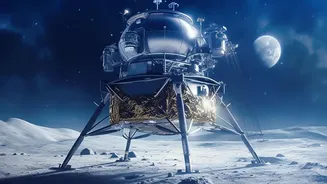
This discovery is not just an academic exercise; it directly supports NASA's Artemis program, which aims to establish a sustained human presence on the Moon. The entire strategy of the Artemis missions is centered on the lunar South Pole precisely because of the likelihood of finding water ice there. This new spectrometer map acts as a critical guide, helping mission planners select the safest and most resource-rich landing sites for astronauts. Future robotic missions, like the Volatiles Investigating Polar Exploration Rover (VIPER), are designed to go to these mapped locations, drill into the surface, and confirm the exact quantity and state of the water ice. This ground-truth data will be the final step before sending astronauts equipped to extract and process this lunar resource.
The Next Steps: From Map to Mission
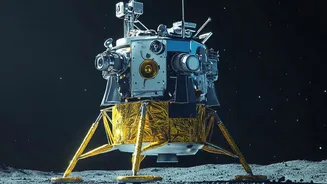
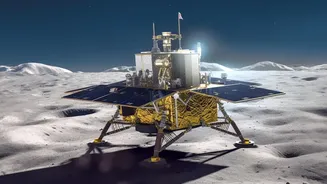
While the new map is a monumental achievement, it's important to remember it is a highly advanced prediction, not a physical confirmation of reserves. The next phase of lunar exploration will be dedicated to verifying these findings. Some scientists are even exploring novel ways to use moonquakes to detect subsurface ice, as seismic waves travel differently through frozen and dry soil. Missions from international partners, like China's Chang'e-7, are also targeting the South Pole to search for resources. The combined data from these upcoming robotic missions will build a comprehensive water resource map, paving the way for the infrastructure needed to support human life. What was once the realm of science fiction is now becoming a detailed engineering and logistical plan.