






The Great Monsoon Myth
Let’s bust the most common myth first: clouds do not block harmful UV radiation. While the thick monsoon cloud cover reduces visible sunlight and heat, it’s far less effective at stopping ultraviolet (UV) rays. According to dermatologists, up to 80% of
UV rays can penetrate through clouds, mist, and fog. This creates a false sense of security. You may not feel the sun's warmth, but your skin is still being exposed to radiation that causes long-term damage, such as premature ageing, pigmentation, and tanning. Some studies even suggest that certain types of broken cloud cover can scatter and reflect UV rays, increasing their intensity.
Understanding the Invisible Threat
The sun emits two main types of UV rays that affect our skin: UVA and UVB. Think of UVB as the 'burning' rays; they are more intense during sunny weather and are the primary cause of sunburns. Clouds do block a significant portion of UVB rays. However, UVA rays, known as the 'ageing' rays, are a different story. They have a longer wavelength, allowing them to penetrate deep into the skin's dermal layer, where they break down collagen and elastin. UVA rays are present with consistent intensity throughout the year, from sunrise to sunset, regardless of the weather. They can pass through clouds and even window glass, silently contributing to wrinkles and fine lines.
Humidity and Rain: A Tricky Combination
The challenges of the Indian monsoon go beyond just clouds. The high humidity and frequent downpours create a unique set of problems for sunscreen application. Extreme humidity increases sweat and oil production, which can cause traditional sunscreens to feel heavy, sticky, and greasy. This sticky feeling often discourages people from applying sunscreen at all. Furthermore, both sweat and rain can dilute and wash away your sun protection, compromising its effectiveness. Even a brief walk in a drizzle can remove the protective film from your skin, leaving it vulnerable. This is why simply applying sunscreen once in the morning isn't enough during the monsoon.
Choosing Your Monsoon Armour
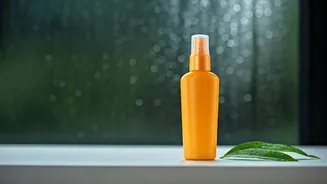
The key to consistent sun protection during the monsoon is choosing a formula that feels comfortable and can withstand the humid conditions. Look for labels that say “water-resistant” or “sweat-resistant.” While no sunscreen is completely waterproof, these formulas are designed to maintain their SPF level for a set period (typically 40 or 80 minutes) even when exposed to moisture, giving you better protection. The texture is equally important. Gel-based, water-based, or fluid sunscreens are ideal for humid weather as they are lightweight, absorb quickly, and don't feel greasy or clog pores. Always opt for a “broad-spectrum” sunscreen with at least SPF 30, and preferably SPF 50 with a PA+++ rating or higher, to ensure you are protected from both UVA and UVB rays.
Application and Reapplication Are Key
Even the best sunscreen is useless if not applied correctly. For your face and neck, use the 'two-finger rule': squeeze sunscreen along the length of your index and middle fingers and apply the entire amount. This ensures you are using enough to achieve the stated SPF protection. Most people apply far too little. During the monsoon, reapplication is non-negotiable. You should reapply every two hours if you are outdoors, and immediately after getting wet from rain or excessive sweating. Pat your skin dry before reapplying. Keeping a sunscreen stick or powder in your bag can make mid-day touch-ups quick and easy, even over light makeup.