





What is Microgravity and Why Does It Matter?
Microgravity is a state of near-weightlessness, like the continuous freefall experienced by objects and people on the International Space Station (ISS). On Earth, gravity’s pull masks or overpowers more subtle physical forces. By removing it from the equation,
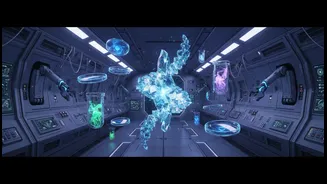
scientists can observe phenomena that are otherwise impossible to study. For instance, without gravity, fluids behave differently, crystals can grow with near-perfect structure, and flames burn in a spherical shape. This unique environment allows researchers to understand the fundamental mechanics of everything from material science to human biology, leading to breakthroughs that have direct applications back on Earth. Discoveries made in microgravity can lead to stronger alloys, more effective medicines, and a deeper understanding of diseases like cancer and osteoporosis.
India’s Leap into Microgravity Research
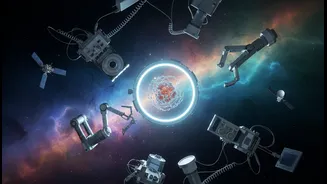
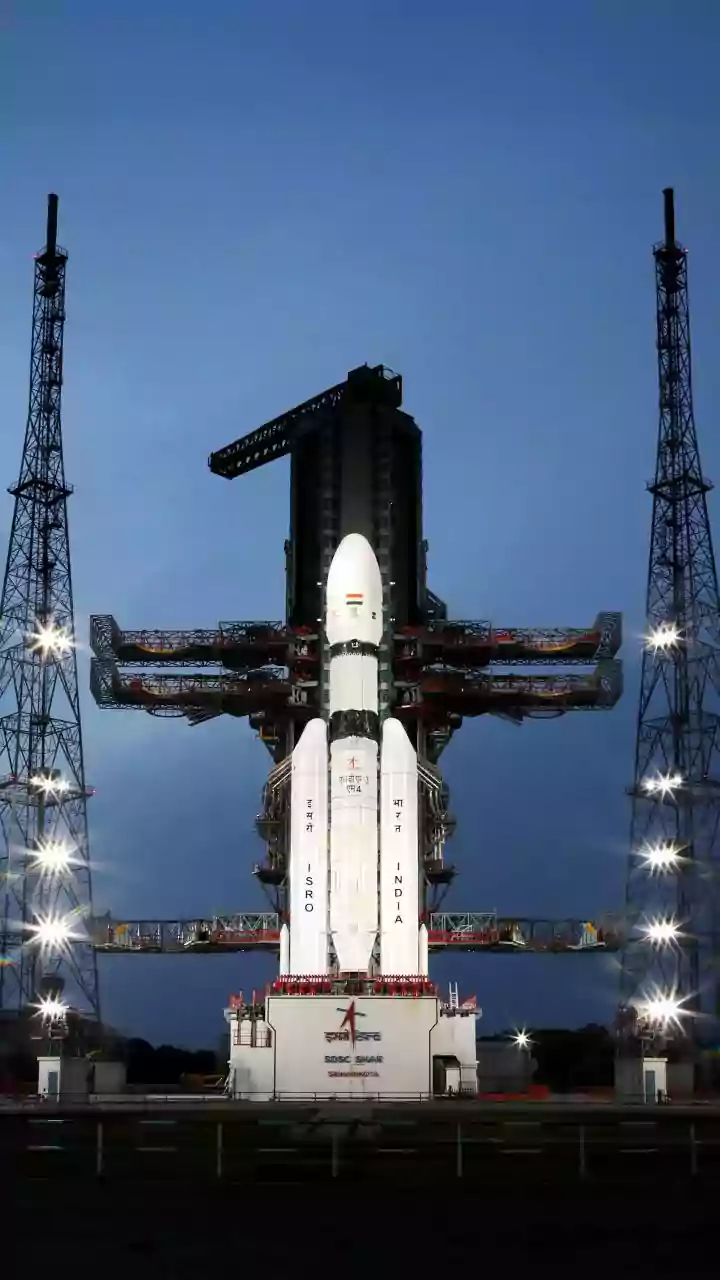
India is aggressively carving out its place in this specialised field. The Indian Space Research Organisation (ISRO) is at the forefront, with plans to conduct a suite of microgravity experiments as part of its Gaganyaan programme. These missions will serve as platforms for cutting-edge science. To foster a robust ecosystem, the government has empowered IN-SPACe, the national space authorisation body, to encourage participation from startups and academic institutions. ISRO has already announced opportunities for the Indian research community to propose and develop experiments for upcoming missions, including the ambitious Bharatiya Antariksh Station planned for 2035. This strategy is not just about national prestige; it is a calculated move to build a self-reliant space economy and nurture a domestic talent pool capable of leading future research.
The Experiments Taking Flight
The scope of India's planned research is vast. Experiments are being designed across multiple disciplines. In life sciences, researchers will study how microgravity affects human cells, which can provide insights into ageing, disease progression, and the development of new drugs. There's also a focus on biotechnology and growing organisms like microalgae, which could become a sustainable food and oxygen source for long-duration missions. In materials science, experiments will explore the creation of novel alloys and crystals that can only be formed in a weightless environment, potentially leading to next-generation semiconductors and other advanced materials. These experiments, some of which are slated for collaborative missions like the Axiom-4 flight to the ISS, will provide invaluable data and experience for India's scientific community.
The New Frontier of Space Careers
This surge in microgravity research directly translates into a demand for new and highly specialised skills. The obvious need is for research scientists—biologists, physicists, and chemists—who can design these complex experiments. But the ecosystem required is much broader. Payload specialists and aerospace engineers are needed to design, build, and integrate the experimental hardware into spacecraft like the Gaganyaan capsule. As data pours back from orbit, satellite data analysts and computer scientists will be crucial for interpreting the results. Furthermore, the unique challenges of space are giving rise to entirely new fields. Space medicine and bioastronautics professionals will be needed to study and mitigate the effects of space travel on the human body. Even fields like space law and policy are growing, as experts are needed to navigate the regulations governing private and international space activities.
How to Join India's Space Future
For students and young professionals aspiring to be part of this journey, the pathways are becoming clearer. A strong foundation in STEM fields—Physics, Engineering, Biology, and Computer Science—is essential. Institutions like the Indian Institute of Space Science and Technology (IIST) offer direct gateways into ISRO. However, with the rise of private startups in launch services, satellite manufacturing, and data analytics, career opportunities are no longer limited to government agencies. Roles for systems engineers, software developers, and materials scientists are opening up at companies across the country. This diversification means that a career in the space sector is more accessible than ever, driven by a national vision to not just explore space, but to build a thriving economy around it.