


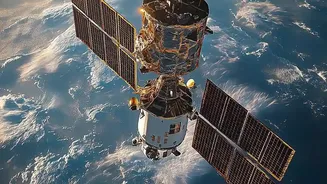
The invisible infrastructure of our modern world—from GPS navigation to global banking—relies on thousands of satellites in orbit. A new simulation reveals just how fragile this system is, modeling the devastating impact of a single nuclear blast in space.
A Threat Born in the Cold War
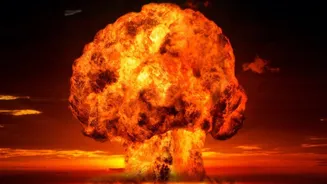
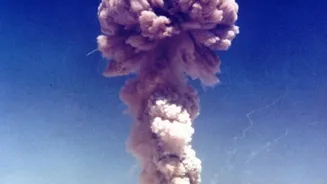
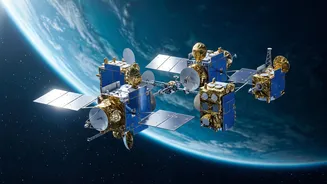
The idea of a nuclear detonation in space isn't new. During the Cold War, both the US and the Soviet Union conducted high-altitude tests. The most famous, the 'Starfish Prime' test in 1962, saw the US detonate a 1.4-megaton warhead about 400 kilometres above the Pacific Ocean. The results were a shock. The blast created a visible aurora, knocked out streetlights in Hawaii over 1,400 kilometres away, and, most consequentially, damaged or destroyed at least a third of the few dozen satellites then in orbit. The explosion supercharged the Earth's natural radiation belts, creating a hostile environment that persisted for years. Today, with over 13,000 active satellites in Low Earth Orbit (LEO), a similar event would be exponentially more catastrophic.
The Real Killer: An Artificial Radiation Belt
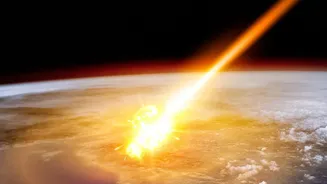
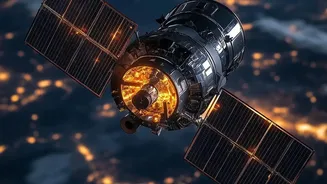
Recent simulations, including a notable new preprint study from researchers at the University of Wisconsin-Madison and Princeton University, provide a grimly detailed picture of the aftermath. They simulated a 1-megaton blast at an altitude of 500 kilometres. Contrary to what sci-fi might suggest, the immediate blast isn't the main danger to the satellite network. Instead, the detonation releases a flood of high-energy electrons from nuclear fission. These particles become trapped by Earth's magnetic field, forming a dense, artificial radiation belt that encircles the globe. Unlike a localised explosion, this belt is a persistent, global hazard. Satellites, travelling at thousands of kilometres per hour, would repeatedly fly through this deadly zone on every orbit.
A Cascade of Failures
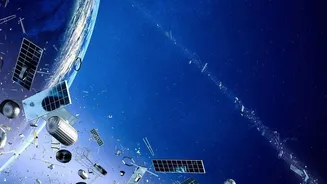
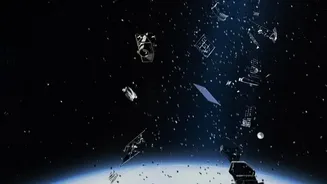
The simulation shows a rapid and near-total collapse of the LEO satellite network. The repeated passes through the artificial radiation belt would steadily degrade sensitive electronics, leading to accumulated damage and eventual failure. The study projects that 25% of the LEO fleet would be disabled in just one day. After three days, that number would jump to 78%, and within a single week, a staggering 98% of satellites would be rendered inoperable. Even satellites specifically 'hardened' against radiation wouldn't be safe for long; the model shows 99% of them would still fail within 30 days. This creates a secondary crisis: dead satellites cannot be moved, leading to a dramatic increase in the risk of collisions and creating vast new fields of space debris that could endanger the orbital environment for decades or even centuries.
The World Goes Dark
The loss of 98% of the LEO satellite constellation would have immediate and profound consequences for life on Earth. Global supply chains, which rely on GPS for tracking and logistics, would falter. Financial services, including ATM transactions and credit card authorisations that depend on satellite timing signals, would be disrupted. Communications would be severely impacted, affecting everything from internet services provided by constellations like Starlink to emergency broadcasts. Weather forecasting would lose critical data, hampering our ability to predict major storms and manage natural disasters. For nations in the Indian subcontinent, this means losing vital tools for monsoon prediction and cyclone warnings. Military operations, which are heavily reliant on space for surveillance, communication, and navigation, would be crippled. Rebuilding the infrastructure would take years, and launching new satellites would be perilous as they would be sent into the same lingering radiation environment.