


More Than Household Dust
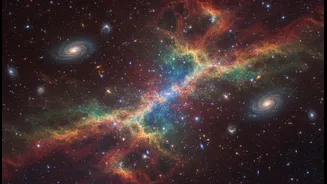
First, let's be clear: the dust in space is nothing like the stuff that collects on your shelves. It's more like a fine smoke, composed of minuscule particles of silicates, carbon, iron, and ice—sometimes smaller than the width of a human hair. These
grains are forged in the atmospheres of dying stars and blasted into space by stellar winds or supernova explosions. They then drift through the vast interstellar medium, the seemingly empty space between stars, waiting for their next cosmic role. Though they make up only about one percent of the interstellar medium's mass, their impact is immense.
The Birthplace of Stars
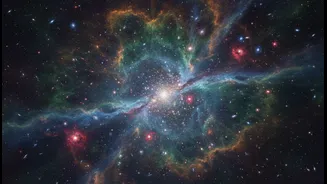
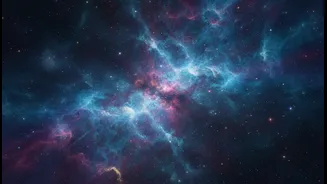
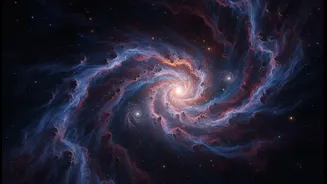
Vast clouds of gas and dust are the universe's stellar nurseries. While gravity is the force that pulls this material together to form a new star, dust is the essential facilitator. The tiny dust grains provide surfaces for gas atoms to stick to, increasing the density of the cloud. More importantly, they help the cloud cool down by radiating away heat. This cooling is critical because, without it, the gas pressure would be too strong for gravity to overcome. By helping the cloud shed heat, dust allows it to collapse under its own weight, eventually becoming dense and hot enough at its core to ignite nuclear fusion and give birth to a star.
Assembling New Worlds
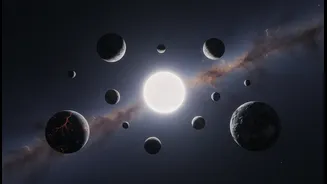
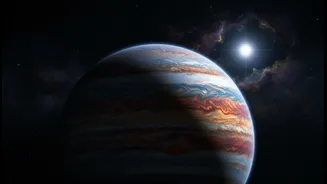
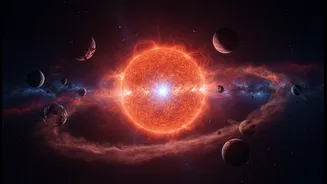
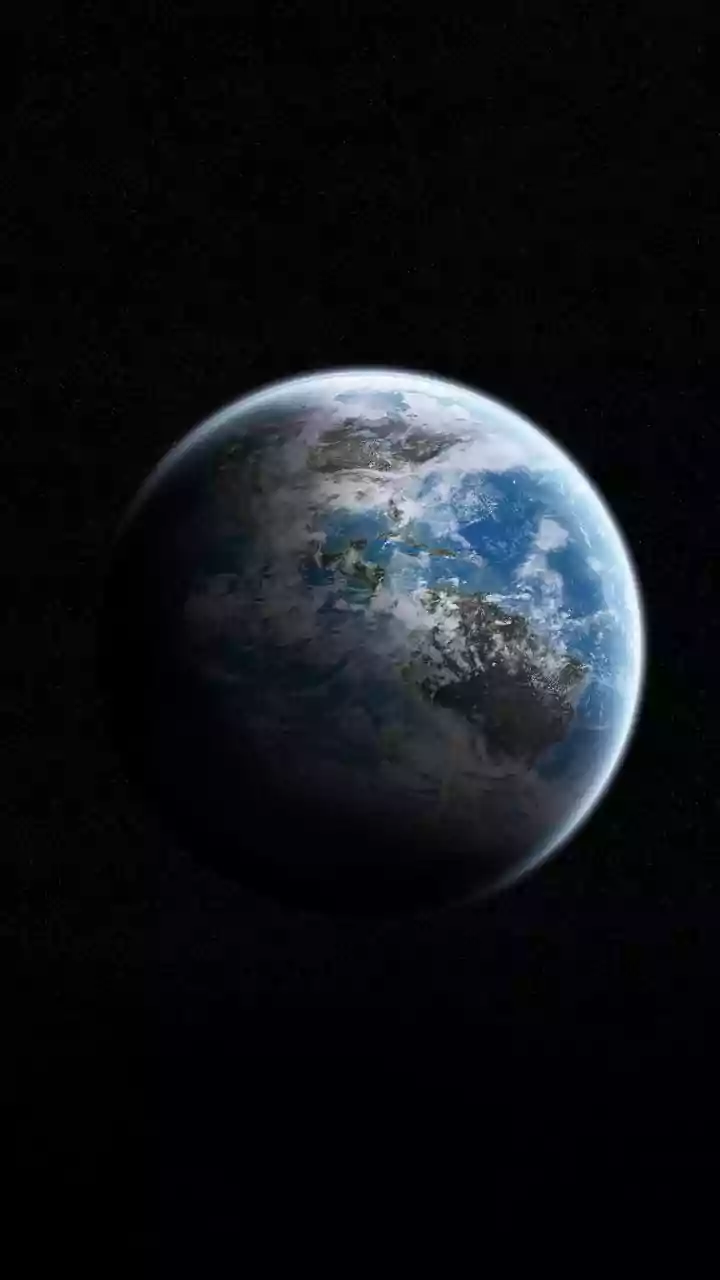
Once a star is born, a rotating disk of leftover gas and dust surrounds it. This is the material from which planets are made. The process, known as accretion, begins with dust grains gently colliding and sticking together, perhaps due to electrostatic forces, like dust bunnies under a bed. These clumps grow into pebbles, then rocks, and eventually into kilometer-sized bodies called planetesimals—the building blocks of planets. Over millions of years, these planetesimals collide and merge, clearing their orbital paths and growing into the rocky planets like Earth or the massive cores of gas giants like Jupiter. Without that initial sticky dust, planets simply wouldn't exist.
A Cosmic Chemistry Lab
Perhaps the most surprising role of cosmic dust is as a chemical factory. The surfaces of these tiny, icy grains act as miniature laboratories, providing a meeting place where simple atoms can react to form more complex molecules. In the cold, sparse environment of space, these reactions would otherwise be impossible. This process creates water, ammonia, methanol, and even complex organic molecules like amino acids and polycyclic aromatic hydrocarbons (PAHs). These are the very building blocks of life. When comets and asteroids, which are themselves collections of this primordial dust and ice, later collide with young planets, they can deliver these vital organic compounds, potentially jump-starting the origin of life.
Hiding and Revealing the Universe
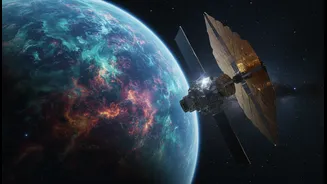
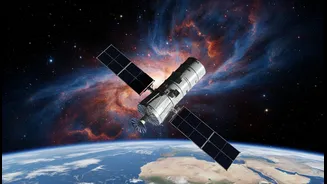
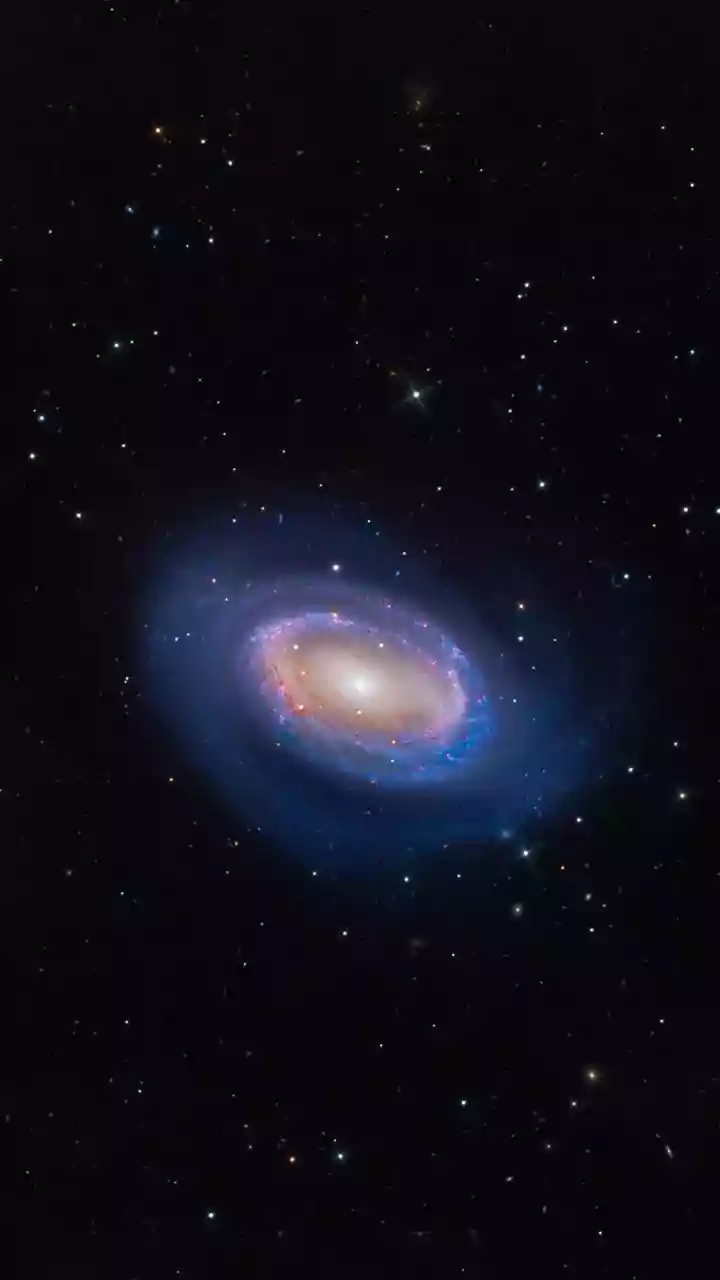
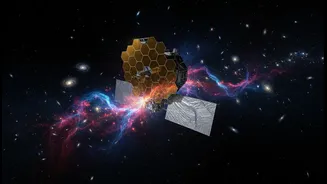
Ironically, the very dust that builds stars and planets also hides them. These dense clouds are opaque to visible light, which is why astronomers once considered dust a nuisance. Entire star-forming regions and the centers of galaxies can be completely obscured. However, this dust also glows when heated by starlight, emitting infrared radiation. Telescopes like the James Webb Space Telescope (JWST) are designed to detect this infrared light, allowing them to peer through the dusty veil. By looking at the universe in infrared, astronomers can witness the birth of stars and study the chemistry of the dust itself, turning what was once an obstacle into a window on creation.