






The All-Important Parachutes
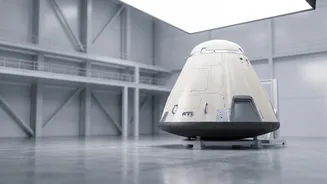
Before astronauts can launch, ISRO must guarantee they can come back safely. A huge part of that guarantee lies in the parachute system, designed to slow the crew module for a gentle splashdown in the sea. In July 2026, ISRO successfully conducted a major
test called the Integrated Main Parachute Airdrop Test (IMAT) in Madhya Pradesh. During this test, a dummy mass simulating the crew module was dropped from an Indian Air Force IL-76 aircraft at an altitude of 2.5 kilometres. The sequence involved deploying a drogue parachute to stabilize the module before the main parachute opened to slow it to a safe speed. This was the fifth such test in the IMAT series, each one designed to qualify the parachutes under the maximum stress they would face during a real mission.
A Symphony of Safety Systems
The return journey for the crew module is a complex ballet of engineering precision. The entire deceleration system for Gaganyaan includes a total of 10 parachutes of four different types. The process begins with two Apex Cover Separation parachutes, which jettison the protective cover. This is followed by two drogue parachutes that drastically reduce speed and prevent tumbling. Finally, three pilot chutes pull out the three main parachutes, which are responsible for the final, gentle descent. Beyond the parachutes, ISRO has also recently validated other critical safety systems. One is the Crew Module Up-righting System (CMUS), a set of flotation bags that inflate to ensure the capsule stays upright after splashing down in the ocean, even in rough seas. Another is the system that ensures the Crew Module separates cleanly from its Service Module before re-entry, a vital step for a safe return.
Why Every Test Is Crucial
Human spaceflight is an inherently risky endeavour, and there is no room for error. The United States, Russia, and China are the only nations to have independently sent humans into space, and their histories are filled with lessons on the importance of redundancy and rigorous testing. For ISRO, astronaut safety is the absolute top priority. These tests are not just about checking boxes; they are about building confidence in every single component. Each successful trial, from parachute deployment to the structural integrity of the module, validates the design and proves that the systems can withstand the intense forces of launch and re-entry. The successful completion of these tests provides the necessary reliability for the first uncrewed Gaganyaan mission, known as G1, which will serve as a full dress rehearsal before any astronaut is on board.
The Road to a Crewed Launch
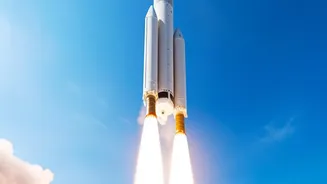
The Gaganyaan programme is a multi-stage effort. Before the first crewed flight (H1), ISRO has planned a series of uncrewed missions to validate all systems in real-world conditions. The G1 mission, the first of these, will carry 'Vyommitra', a humanoid robot designed to simulate human functions and monitor the crew module's environment. These uncrewed flights will test the performance of the powerful LVM3 rocket, the orbital module systems, and the re-entry and recovery operations. While the initial timelines have been adjusted to ensure complete safety and mission success, ISRO is targeting 2027 for its first historic human spaceflight. The four astronaut-designates for the mission are all decorated Indian Air Force test pilots: Prasanth Balakrishnan Nair, Ajit Krishnan, Angad Pratap, and Shubhanshu Shukla. Their flight will mark India's entry into an exclusive club of spacefaring nations.