





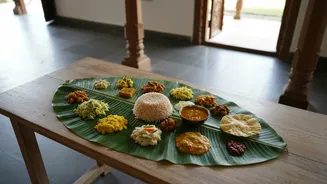
Plan Your Menu Thoughtfully
A traditional Sadhya can feature over two dozen dishes, but you don't need to make them all. Focus on a balanced selection of essentials. A 'must-have' list often includes rice, parippu curry (dal), sambar, avial, a type of thoran, a pickle like puli
inji, and a payasam for dessert. Once you have your core items, you can add one or two other dishes, like a kalan, olan, or erissery. Create a menu on paper a week in advance. This allows you to plan your grocery list and cooking schedule without last-minute stress. Deciding on the number of dishes and guests will also help you estimate quantities, preventing excess food. For instance, with many side dishes, people tend to eat less rice, so you can adjust accordingly.
Master the Art of Prep
The secret to a stress-free Sadhya is preparation that begins days before Onam. Chopping vegetables is the most time-consuming task, so do it a day or two in advance. Store chopped and grated vegetables in airtight containers in the fridge. You can also prepare spice powders, like roasted fenugreek powder, ahead of time. Condiments and pickles, such as inji puli and mango pickle, can be made up to a week before, as their flavours often improve over time. For dishes requiring a ground coconut paste, a common base for avial, thoran, and pachadi, you can grind a large batch and divide it among the different preparations. Similarly, you can cook the dal for sambar and parippu curry ahead of time and refrigerate it.
A Practical Cooking Timeline
Stagger your cooking to ensure everything is fresh without leaving it all for the last minute. The day before, you can tackle dry dishes like avial and some curries. On the day of the feast, focus on the items best served fresh. Start with the side dishes first. Once they are done, you can move on to the main curries like sambar and rasam. A great time-saving hack is to prepare the tempering in bulk. Heat coconut oil in a pan, add mustard seeds, urad dal, dried red chillies, and curry leaves, and then distribute this tempering across multiple dishes like pachadi, moru curry, and sambar. Cook the rice last, so it remains hot and fresh for serving.
Embrace a Less-Waste Approach
A sustainable Sadhya starts with smart shopping. Buy fresh, local produce where possible. Instead of buying pre-cut vegetables, purchase them whole. This allows you to use different parts for various dishes and reduces packaging waste. For example, use vegetable peels and stems to make a simple thoran. When it comes to serving, use traditional banana leaves, which are fully biodegradable. Avoid single-use plastic cups and plates. After the feast, manage leftovers wisely. Sambar and other curries often taste even better the next day and can be enjoyed with idli or dosa. A heavy lunch calls for a light dinner, so consider having fruit or a simple salad instead of consuming more heavy leftovers in the evening.
Serve with Tradition and Love
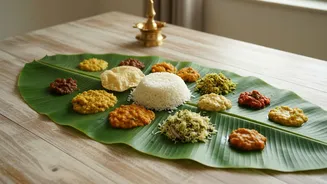
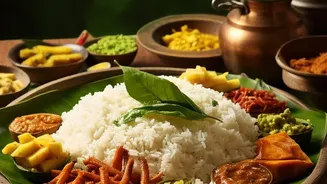
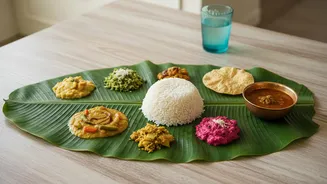
The way a Sadhya is served is as important as the food itself. Traditionally, the meal is served on a banana leaf with the narrow end pointing to the left of the guest. There's a specific order and placement for each dish. Pickles and chips are placed on the top left corner. The dry side dishes like thoran and avial occupy the upper half of the leaf. Rice is served on the lower-middle portion, followed by parippu with ghee, sambar, and other liquid curries. Following this tradition not only honours the culture but also enhances the dining experience.