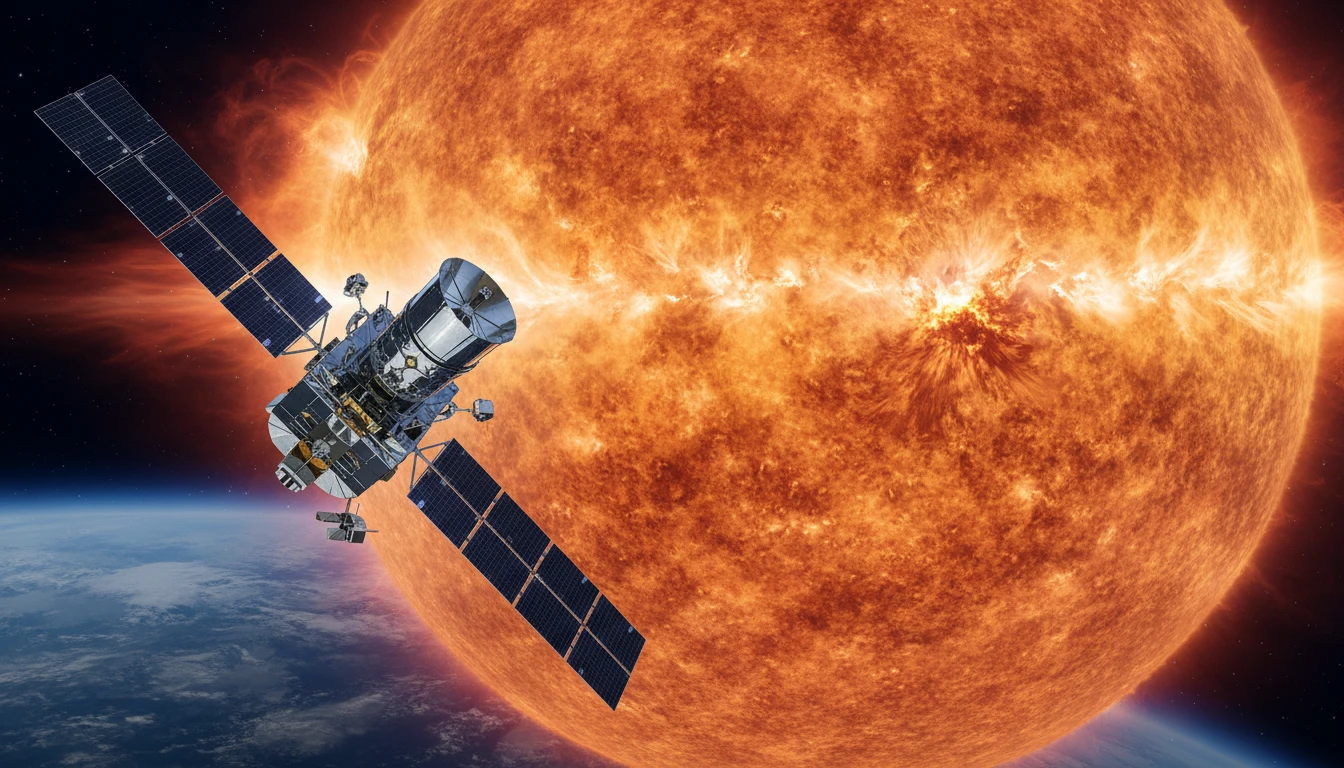




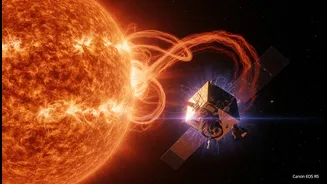


Beyond Auroras: What Is Space Weather?
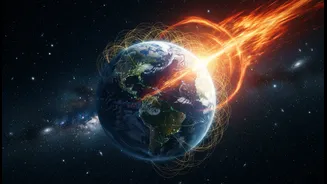
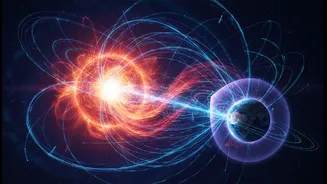
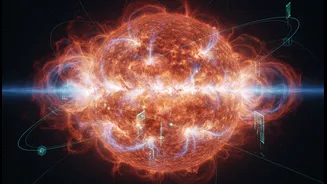
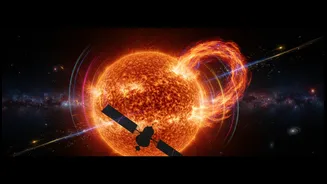
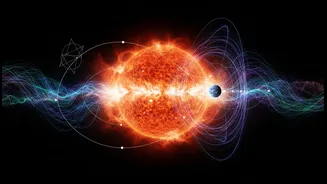
Space weather refers to the changing conditions in space, driven primarily by the sun. Unlike weather on Earth, it doesn't involve wind or rain in the traditional sense. Instead, it’s about phenomena like solar flares (intense bursts of radiation), coronal
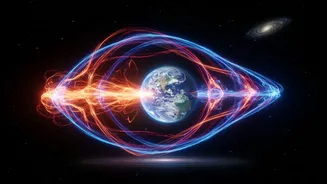
mass ejections (CMEs) which are massive clouds of plasma and magnetic fields, and the constant stream of charged particles known as the solar wind. These events originate 93 million miles away but can have significant effects when they interact with Earth's own magnetic field and upper atmosphere. While they can create beautiful auroras, these solar storms also pose a serious risk to our technological infrastructure.
Why Our Digital World Depends on It
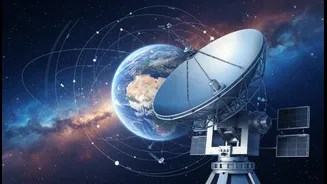
Our increasing reliance on technology makes us more vulnerable to space weather. A severe solar storm can have wide-ranging consequences. It can damage satellite electronics, disrupt communications, and degrade GPS navigation systems. Strong solar events heat and expand Earth's upper atmosphere, which increases drag on satellites in low-Earth orbit, potentially causing them to lose altitude and even risk collisions. On the ground, geomagnetic storms can induce currents that overload and damage power grids, as seen in the 1989 Quebec blackout. The field is crucial for protecting astronauts from harmful radiation and ensuring the safety of air travel, especially on polar routes. Essentially, a space weather forecaster's job is to protect the vast digital and electrical systems that underpin our economy and daily lives.
The Forecaster: A Guardian of the Grid
The role of a space weather scientist is part detective, part data wizard. They analyse a constant flow of information from ground-based observatories and satellites to monitor the sun's activity in real-time. Using complex computer models, they predict when solar events will occur and how they might impact Earth. This isn't just about spotting a solar flare; it's about interpreting data to issue timely warnings to satellite operators, power grid managers, airlines, and government agencies. With India's Aditya-L1 mission now providing crucial data from a strategic point in space, the country's capability in this domain is growing, creating a greater need for skilled analysts. This mission provides advance warning, giving us critical time to take protective measures.
The Ideal Candidate for a Cosmic Career
This field is a perfect fit for students who are curious, analytical, and passionate about the bigger picture. If you enjoyed physics, mathematics, and computer science in school, you have the right foundation. The ideal candidate is someone who gets excited by big data, loves solving complex problems, and has a natural interest in astronomy and technology. Strong skills in programming languages like Python or MATLAB are increasingly important for analysing data and running simulations. It’s a career for those who look at the sun and see not just a star, but a dynamic engine that shapes our technological existence.
Charting Your Path in India
The journey to becoming a space weather forecaster starts with a strong academic foundation. A bachelor's degree in fields like physics, mathematics, atmospheric science, or engineering is the typical starting point. Many professionals in the field go on to pursue a Master's or a Ph.D. in a specialized area like space physics or heliophysics. In India, institutions like the Indian Institutes of Technology (IITs), the Indian Institute of Science (IISc), and the Indian Institute of Tropical Meteorology (IITM) offer relevant programs and research opportunities. Projects sponsored by the Indian Space Research Organisation (ISRO) at various universities also provide a direct path into this domain, often looking for graduates with strong quantitative and programming skills.