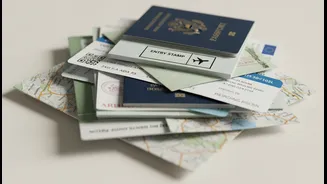









The End of an Era: Visa-Free Travel Is Over
The biggest change for Indian tourists is the end of the 60-day visa-free entry scheme. This popular arrangement, which made spontaneous trips incredibly simple, was officially discontinued in May 2026. Now, Indian passport holders have reverted to the Visa
on Arrival (VoA) system for short stays. This means that instead of just showing up, you'll need to go through the VoA process at the airport, which involves more documents and a fee. For trips longer than the 15 days typically granted under VoA, you must apply for a tourist e-Visa online before you travel. This shift is part of a broader move by Thai authorities to tighten immigration controls and prevent misuse of tourist entries.
Your New Essential Document Checklist
Being prepared is key to a smooth arrival. Airlines and immigration officials are now stricter with checks. Based on recent advisories from the Indian Embassy in Bangkok, every traveller should have these documents ready. First, your passport must have at least six months of validity from your date of arrival. You will also need a confirmed return or onward flight ticket, proof of hotel bookings for your entire stay, and a clear travel itinerary. On top of this, you must complete the mandatory Thailand Digital Arrival Card (TDAC) online before you fly. Think of this as your new digital landing card; you'll get a QR code that officials will scan. Airlines may even check for this QR code before you board in India.
Decoding the Visa on Arrival (VoA) Process
With the return of the Visa on Arrival system, you need to be ready for the process at the airport. The VoA allows for a stay of up to 15 days and is not extendable. To apply, you'll need a completed VoA application form (TM88), which can be filled out at the airport, though it's faster to do it online beforehand. You'll also need a recent 4x6 cm passport photo. The visa fee is typically around 2,000 THB, and it's highly recommended to carry this amount in Thai Baht cash to avoid delays at currency exchange counters. Having all your documents—passport, photo, return ticket, and accommodation proof—in a single, easily accessible folder will save you significant time and stress in the immigration queue.
The 'Show Money' Rule Is Back and Enforced
One of the most significant changes is the strict enforcement of the proof of funds requirement. While this rule has always existed, it is now being more frequently checked. For travellers using the Visa on Arrival facility, you may be asked to show that you have at least 10,000 THB per person (or 20,000 THB per family). For those with a pre-arranged tourist visa, the requirement can be higher, at 20,000 THB per person (or 40,000 THB per family). While some officers might accept a digital bank statement, official advice strongly suggests carrying this amount in cash, either in Thai Baht or an equivalent major currency like USD or EUR. Failure to show sufficient funds can lead to being denied entry.
Digital Prep: The Mandatory TDAC Form
The Thailand Digital Arrival Card (TDAC) has completely replaced the old paper-based TM6 form you used to fill out on the plane. This is now mandatory for all foreign nationals entering Thailand. You must complete the form online via the official government portal within 72 hours of your arrival. The process is free. You will need to enter your passport details, flight information, and the address of your accommodation in Thailand. Once submitted, you'll receive a QR code. It's crucial to save this code on your phone or have a printout, as immigration officers and potentially your airline will ask to see it.