







A Subdued July on the Horizon
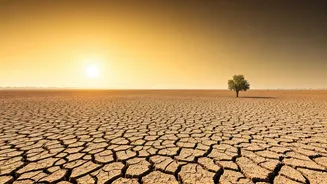
After one of the driest Junes in over a century, all eyes are on the crucial month of July. The India Meteorological Department (IMD) has predicted that rainfall for the country as a whole is likely to be 'below normal'. Specifically, the forecast points
to rainfall at 94% of the Long Period Average (LPA), the benchmark used to measure the monsoon's performance. This comes after a significant nationwide deficit of around 40% in June, a month that saw the fifth-lowest rainfall since records began in 1901. The sluggish start to the season has left many parts of the country waiting anxiously, with central India being particularly hard-hit, experiencing a rain deficit of over 50% in June.
The El Niño Influence
So, what's behind this weaker forecast? Meteorologists point primarily to the strengthening El Niño conditions over the equatorial Pacific Ocean. In simple terms, El Niño is a warming of the ocean surface in that region, an event that has a powerful, domino-like effect on global weather patterns. For India, it typically means a weaker monsoon. It disrupts the atmospheric circulation, reducing the temperature difference between the land and sea that drives the moisture-laden monsoon winds towards the subcontinent. While not every El Niño year results in a drought, stronger events are historically linked with suppressed rainfall across India, making this a key factor in the current forecast.
A Patchwork of Rainfall
The national forecast, however, doesn't tell the whole story. The monsoon's performance is expected to be a classic case of 'patchy', with significant regional variations. While most of the country is expected to see below-normal rain, there are pockets of hope. Parts of northwest and northeast India, east-central India, and the eastern peninsular region are likely to receive normal to even above-normal rainfall. This offers a sliver of relief for these areas. Meanwhile, the monsoon has been making its delayed advance. As of the end of June, it has pushed into more parts of Uttar Pradesh, Uttarakhand, Himachal Pradesh, and Ladakh, with its arrival in Delhi anticipated in the first few days of July.
Crunch Time for Farmers
The monsoon's rhythm is most critical for India's farmers, and the slow start is already having a tangible impact. The total area sown with kharif (summer) crops has fallen by nearly 23% compared to the same period last year, according to data from the Ministry of Agriculture. This is a direct consequence of inadequate soil moisture, which has forced many to delay planting. The impact is visible across key crops. The acreage for rice, the main kharif staple, is down by about 25%. The situation is even more concerning for pulses, a vital source of protein, where sowing has dropped by over 30%. Oilseeds have seen the steepest decline, with cultivation nearly halving as farmers wait for rain.
Cities Feel the Heat
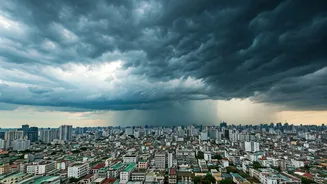
The delayed and deficient rains aren't just a rural concern. In urban centres, a weak monsoon has a different, though equally significant, impact. The delayed onset in the north has meant prolonged, searing heatwaves in cities like Delhi, with warmer-than-usual conditions prevailing. The IMD's forecast for above-normal temperatures to continue across most of the country in July suggests that the discomfort from high heat and humidity will persist. While a good monsoon is crucial for refilling city reservoirs and groundwater tables for the year ahead, a below-normal season raises concerns about future water security, even as it offers a temporary reprieve from urban flooding.