





The World's Largest Ear
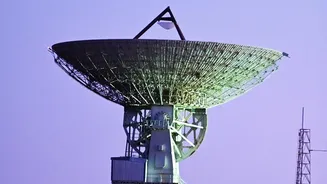
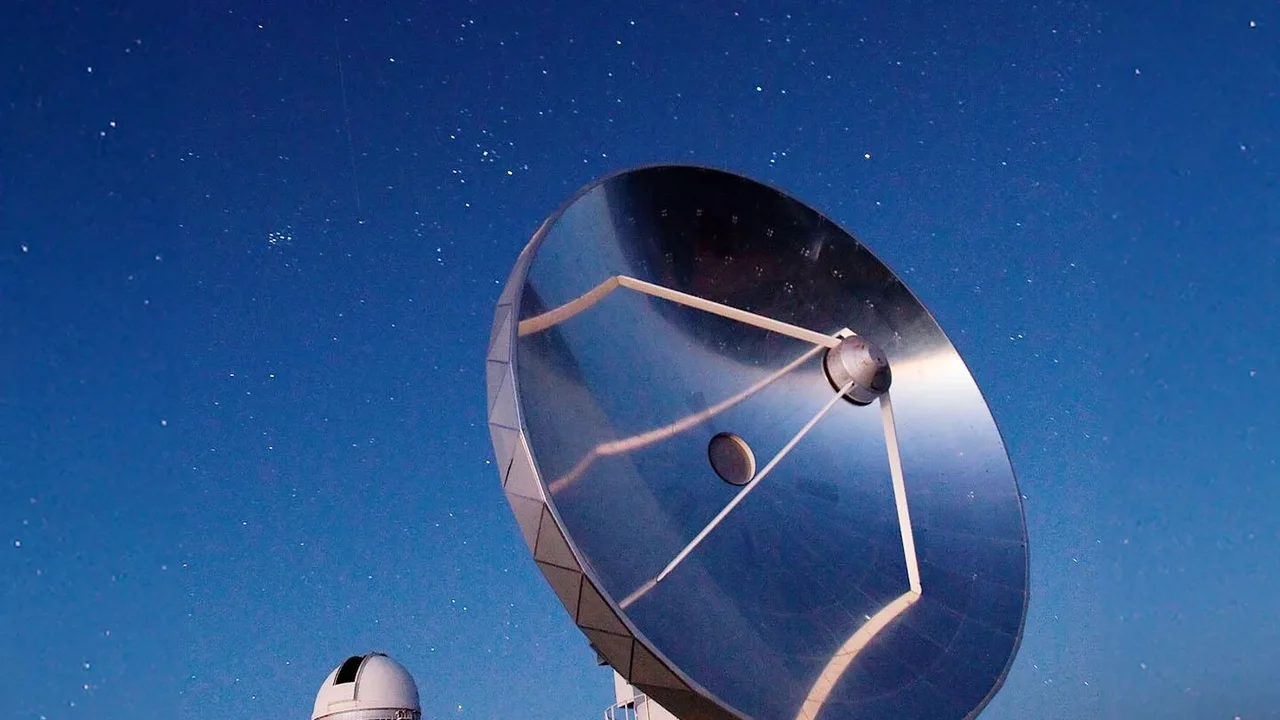
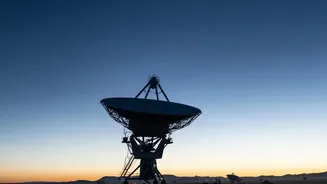
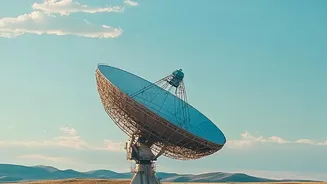
The Square Kilometre Array (SKA) is not a single telescope but a global scientific endeavour of immense scale. It is an international effort to build the world's largest and most sensitive radio telescope. The project involves two main sites: one in the remote
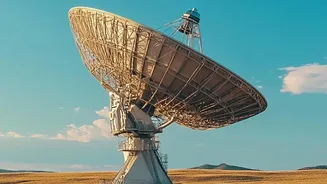
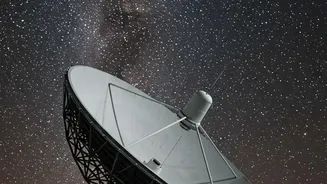
Karoo region of South Africa and the other in Western Australia. The South African site, known as SKA-Mid, will feature hundreds of traditional dish antennas, including the existing 64-dish MeerKAT array. The Australian site, SKA-Low, will consist of over 130,000 tree-like antennas designed to capture low-frequency radio waves. Together, these sites will have a combined collecting area of approximately one square kilometre, giving the project its name. With headquarters in the UK, this intergovernmental observatory involves more than a dozen countries, pooling resources and expertise to answer some of the biggest questions in astrophysics.
Signals from the Cosmic Dawn
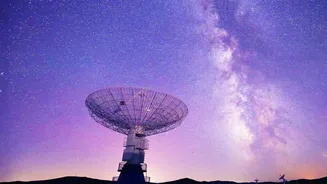
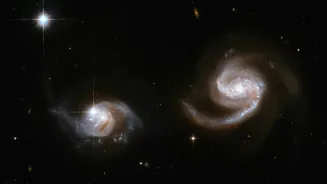
The latest breakthrough involves the detection of faint radio signals originating from a period known as the 'Cosmic Dawn'. This era, which occurred hundreds of millions of years after the Big Bang, is when the first stars and galaxies began to form, ending the cosmic 'dark ages'. The signals detected are from neutral hydrogen, the most abundant element in the early universe. This gas emits a specific radio signal, known as the 21-centimetre line. By capturing these ancient whispers, astronomers can effectively create a 3D map of the universe as it was more than 13 billion years ago. Precursor telescopes like South Africa's MeerKAT have already made direct detections of these faint emissions from billions of light-years away, paving the way for the even more sensitive SKA to explore this hidden chapter of cosmic history in unprecedented detail.
Why These Echoes Matter
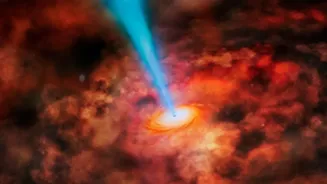
Detecting these signals is like finding a fossil from the universe's birth. It allows scientists to test theories about how the universe evolved from a dark, empty space into the star-filled cosmos we see today. The faintness of the hydrogen signal provides clues about the temperature and structure of the early universe. For instance, initial findings suggest the universe might have been warmer than some models predicted, implying that the first stars and black holes were already starting to heat their surroundings sooner than expected. The SKA's transformational power will allow astronomers to monitor the entire sky thousands of times faster than any current system, probing the nature of dark energy, testing Einstein's theories of relativity near black holes, and even searching for faint signals that could indicate extraterrestrial life.
India’s Crucial Role
India is a full member of the SKA project, playing a pivotal role in its development and future scientific discoveries. With a committed contribution of ₹1,250 crore, India's involvement is significant. Indian institutions, led by the National Centre for Radio Astrophysics (NCRA) in Pune, have been instrumental since the project's early days. A key contribution has been the development of the Telescope Manager, the complex software 'neural network' that will control and operate the entire telescope array. This involvement not only provides Indian scientists with access to a world-class facility but also drives advancements in domestic technology, particularly in high-performance computing and data management. Furthermore, India plans to host an SKA Regional Centre, which will process and store vast amounts of data for the scientific community.
What Comes Next
The SKA is being built in phases, with construction having started in late 2022 and initial science operations expected by the end of the decade. The recent detections are milestones achieved with precursor arrays and early configurations of the main telescopes, confirming that the hardware and software are working together. As more antennas are brought online in both Australia and South Africa, the telescope's sensitivity will grow exponentially. This will enable astronomers to move from simply detecting these faint signals to mapping them with incredible precision. The ultimate goal is to create detailed images of the Cosmic Dawn, revealing the structure of the very first stars and galaxies. This will not only revolutionise our understanding of cosmology but could also lead to completely unexpected discoveries about the nature of the universe.