
A Frozen Treasure Map
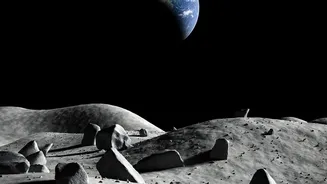
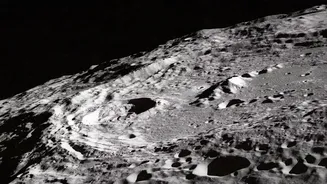
For decades, scientists have known that the Moon isn't entirely dry. Orbiters and impact probes have provided mounting evidence of water, especially in the form of ice hidden in permanently shadowed craters at the lunar poles. These are some of the coldest
places in the solar system, where sunlight has not reached for billions of years, allowing ice deposits to remain stable. Recent data from a variety of instruments, including NASA's Moon Mineralogy Mapper and upcoming missions under the Commercial Lunar Payload Services (CLPS) initiative, are now moving beyond mere detection. Scientists are creating detailed resource maps, pinpointing the location, concentration, and accessibility of this lunar ice. These are not just scientific curiosities; they are foundational documents for the future of space exploration, indicating where the most valuable real estate on the Moon might be.
From Ice to Rocket Fuel
The excitement surrounding lunar water isn't about quenching an astronaut's thirst, though that's a bonus. The real prize is its potential as a source of rocket fuel. Through a process called electrolysis, water (H2O) can be split into its constituent elements: hydrogen and oxygen. When chilled to liquid form, these two elements are the most powerful and efficient chemical rocket propellants known. The ability to produce propellant on the Moon—a concept known as in-situ resource utilization (ISRU)—would be revolutionary. Launching anything from Earth is incredibly expensive, largely because of the fuel required to escape our planet's strong gravity. Every kilogram of water or fuel launched to the Moon adds thousands of dollars to a mission's cost. By manufacturing fuel on-site, the Moon could transform from a destination into a logistics hub.
The Game-Changer for Deep Space
Imagine a petrol station in Earth orbit. A spacecraft destined for Mars could launch from Earth with just enough fuel to reach the Moon. There, it would top up its tanks at a lunar refuelling station before embarking on the long journey to the red planet. This scenario drastically changes the economics of deep space exploration. It would allow for larger spacecraft, heavier payloads, and more ambitious missions. The immense amount of fuel needed to get a crewed Mars mission off the ground could be sourced from the Moon, fundamentally lowering the cost and complexity of the entire endeavor. This capability is central to the long-term vision of agencies like NASA and their Artemis program, which aims to establish a sustainable human presence on the Moon as a stepping stone to Mars.
A New Lunar Gold Rush
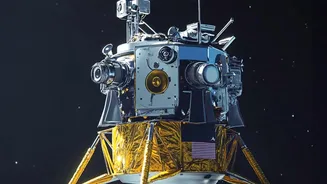
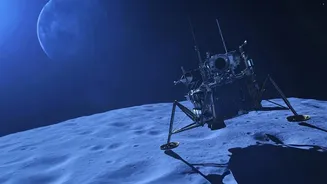
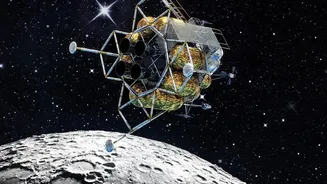
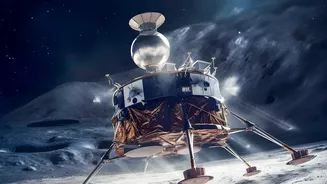
The potential for lunar refuelling has ignited a new space race, but this one is as much commercial as it is national. Private companies are developing technologies for landing, drilling, and processing lunar resources. NASA is actively encouraging this commercial development through programs like CLPS and NextSTEP, funding the creation of landers, drills, and spectrometers needed to turn resource maps into tangible assets. International players are also in the race, with China's Chang'e-7 mission specifically targeting lunar ice at the south pole with a planned launch in the near future. The establishment of a lunar economy, built on the foundation of water ice, could define geopolitical and commercial power for decades to come.
From Map to Reality
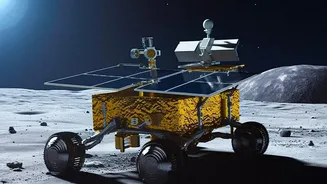
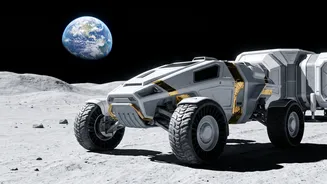
Despite the promise, significant hurdles remain. The new maps point to where the ice is, but getting to it and extracting it is another matter. The permanently shadowed craters where ice is most abundant are incredibly harsh environments, with temperatures colder than Pluto. Robotic systems will need to operate in near-total darkness at cryogenic temperatures. Missions like the now-discontinued VIPER rover were designed to be the first step in tackling these challenges by prospecting on the ground and analyzing the ice up close. Future robotic missions from both national agencies and private companies will have to prove that mining and processing lunar ice is not just theoretically possible, but practically achievable. The data being gathered now is creating the roadmap, but the real work of building the off-world infrastructure has just begun.