



Panchamrit: The Divine Elixir
No Janmashtami puja is complete without Panchamrit, a sacred concoction that is as significant as it is simple. The name translates to "five nectars," representing the five essential ingredients: raw cow's milk, curd (yogurt), honey, ghee (clarified butter),
and sugar or jaggery. Each element holds symbolic meaning, with milk representing purity, curd for prosperity, honey for unity, ghee for strength, and sugar for bliss. This uncooked offering is used for the ritual bathing of the deity's idol (abhishekam) and is then distributed as prasad. To prepare it, simply combine the five ingredients in a clean bowl, often with torn tulsi leaves, and stir gently. It is served as a blessed liquid, believed to purify the body and soul.
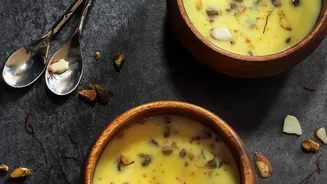
Makhana Kheer: A Creamy Vrat-Friendly Pudding
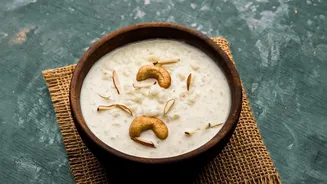
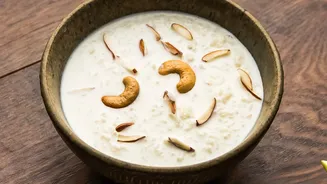
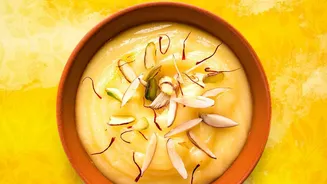
Makhana Kheer, or fox nut pudding, is a beloved dessert, especially for those observing a fast (vrat) during Janmashtami. Makhana (puffed lotus seeds) are light, nutritious, and create a wonderfully creamy texture when slow-cooked in milk. The preparation involves roasting the makhana in a little ghee until they are crisp. Half of them are then coarsely crushed to help thicken the kheer, while the other half are left whole for texture. These are added to simmering full-fat milk along with sugar, cardamom powder, and a few strands of saffron for colour and aroma. Garnished with chopped almonds and pistachios, this kheer is a comforting and sattvik (pure) offering fit for the midnight feast.
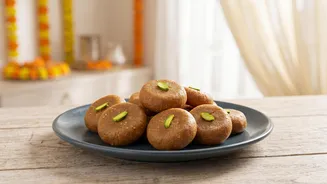
Mathura Peda: An Authentic Taste of Krishna's Birthplace
Deeply connected to Lord Krishna's birthplace, Mathura Peda is more than just a sweet; it's a taste of tradition. Made from mawa (milk solids or khoya), this delicacy has a unique, slightly caramelized flavour and a dense, grainy texture. The process involves roasting mawa in a heavy-bottomed pan with ghee over low heat until it turns a rich brown colour. This slow roasting is what gives the peda its characteristic taste and hue. Once roasted, the mixture is cooled slightly before being blended or mixed with powdered sugar, cardamom, and sometimes a hint of nutmeg. While still warm, the mixture is shaped into small, round pedas and often rolled in coarse sugar. Offering Mathura Peda is a tribute to the land of Krishna's birth.
Rabri: A Labor of Love
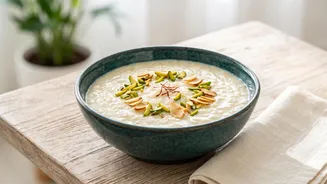
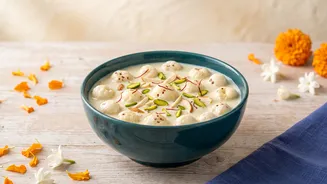
Rabri is the epitome of slow-cooked indulgence. This classic dessert is made by simmering full-fat milk in a wide, heavy-bottomed pan for an extended period until it reduces to a fraction of its original volume, becoming thick and creamy. The magic of rabri lies in its texture, which is achieved by repeatedly collecting the layer of cream (malai) that forms on top of the simmering milk and pushing it to the sides of the pan. Towards the end, the collected cream is scraped back into the reduced milk, creating luscious, flaky layers. Sweetened with sugar and flavoured with saffron and cardamom, rabri is a rich, decadent sweet that requires patience but rewards with unparalleled flavour. It can be served warm or chilled, often garnished with nuts.
Gopalkala: Krishna’s Savoury Favourite
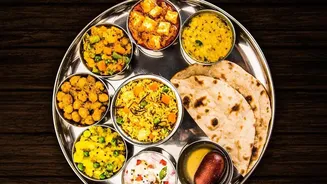
While most bhog offerings are sweet, Gopalkala provides a refreshing, savoury contrast. This dish is believed to be a favourite of Lord Krishna, reminiscent of the meals he shared with his cowherd friends. It’s a simple, no-cook preparation that combines soaked poha (beaten rice) with yogurt, finely chopped cucumber, grated coconut, and a hint of green chilli. A tempering of ghee and cumin seeds is often poured over the mixture, adding a fragrant finishing touch. Salt is added just before offering. Gopalkala is not just flavourful but also light and wholesome, perfectly balancing the richer sweets in a festive thali. Its simple, rustic nature connects directly to the stories of Krishna's childhood in Vrindavan.